

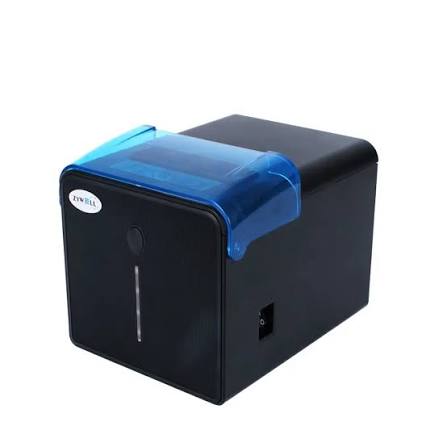
Receipt printers are essential devices in retail stores, restaurants, supermarkets, banks, and many other business environments. They help businesses generate transaction records, customer receipts, and order information quickly and accurately. Behind every reliable receipt printer is a manufacturing process that combines product design, electronic engineering, component selection, assembly, and quality testing.
Understanding how these devices are manufactured provides useful insight into the technology and processes involved in producing dependable printing equipment. From the initial concept to the final product, each production stage contributes to the printer’s performance, durability, and overall quality.
1. Product Research and Requirement Analysis
The manufacturing process typically begins with market research and product planning. Manufacturers study customer expectations, industry requirements, and technological developments to determine which types of receipt printers are needed.
Different industries require different printing capabilities. Retail businesses may prioritize high-speed printing, while restaurants might need reliable kitchen printers that can handle continuous order processing.
During this stage, manufacturers evaluate important requirements, including:
- Printing speed and resolution.
- Supported paper widths and roll sizes.
- Connectivity options.
- Printer dimensions and appearance.
- Compatibility with POS systems.
- Expected operating conditions.
This information helps engineers establish product specifications before beginning the design process.
2. Product Design and Engineering
Once the requirements are defined, engineers begin developing the printer’s design. This stage involves creating the external structure, internal component layout, electronic architecture, and mechanical systems.
Computer-aided design (CAD) software is commonly used to develop detailed product models. Engineers consider the placement of the print head, paper-feeding mechanism, control buttons, circuit boards, and other components.
The design must balance functionality, durability, and ease of use. For example, compact printers should save counter space without making paper replacement or maintenance difficult.
Prototypes may also be developed to evaluate dimensions, component placement, and mechanical performance before mass production begins.
3. Selection of Materials and Electronic Components
Material selection has a direct impact on product durability and manufacturing costs. Receipt printers contain several mechanical, electrical, and structural components that must work together reliably.
Common components include thermal print heads, motors, control boards, sensors, power supplies, and cutting mechanisms.
The printer housing is generally manufactured using suitable engineering plastics designed to provide structural support and protect internal electronics.
Manufacturers must also select reliable electronic components that meet the required performance specifications. The quality of these parts influences printing consistency, operational stability, and equipment lifespan.
4. Development of Printing Technology
Most modern receipt printers use direct thermal printing technology. This method creates text and images by applying controlled heat to specially coated thermal paper.
Unlike traditional printing systems, direct thermal printers do not require ink cartridges or ribbons. This makes them convenient for businesses that print receipts frequently.
During development, engineers configure the thermal print head, heating elements, paper-feeding system, and control electronics to produce clear and consistent output.
They also optimize printing speed, resolution, temperature control, and paper movement to reduce printing errors and maintain stable performance.
5. Manufacturing Individual Components
After the design and component specifications are finalized, production moves to component manufacturing and preparation.
Different parts are produced through specialized processes. Plastic housings may be created through injection molding, while electronic circuit boards are manufactured using printed circuit board production and component mounting techniques.
Mechanical components, such as rollers and cutting assemblies, are also prepared according to the product design.
At this stage, manufacturers inspect incoming materials and components to identify defects before they enter the assembly process. Proper component preparation helps reduce production problems later.
6. Printer Assembly and Integration
Assembly is one of the most important stages in receipt printer manufacturing. During this process, individual mechanical and electronic components are brought together to create a functioning device.
Technicians or automated production equipment install the circuit board, thermal print head, motor, paper-feeding mechanism, sensors, and other essential parts.
The components are connected and positioned according to the engineering specifications. Engineers must ensure that electrical connections are secure and mechanical systems operate smoothly.
The external housing is then fitted to protect the internal components and provide the finished product with its intended appearance.
7. Firmware and Software Configuration
Modern receipt printers depend on firmware and communication protocols to process printing commands and interact with connected devices.
Manufacturers configure the firmware to control printing operations, paper detection, error notifications, and other functions.
Compatibility is also an important consideration. Depending on the model, printers may support USB, Ethernet, Bluetooth, or Wi-Fi connections.
Software testing helps verify whether the printer can communicate correctly with compatible POS systems and operating environments.
8. Quality Control and Performance Testing
Before products are approved for shipment, manufacturers conduct quality inspections and functional testing.
These procedures help identify defects that could affect printing performance, reliability, or user experience.
Common testing activities include:
- Print quality testing: Checking text clarity, alignment, and printing consistency.
- Speed testing: Evaluating whether the printer meets its specified performance.
- Paper feeding tests: Confirming smooth paper movement.
- Cutter testing: Checking automatic cutting functionality where available.
- Connectivity testing: Verifying communication through supported interfaces.
- Durability testing: Evaluating performance under repeated operating conditions.
Manufacturers may also inspect the external housing, buttons, connectors, and packaging to ensure the finished product meets established standards.
9. Packaging and Distribution
After passing quality inspections, receipt printers move to the packaging stage. Manufacturers prepare the devices for transportation by using suitable protective materials and packaging designs.
Depending on customer requirements, packaging may include power adapters, interface cables, user manuals, installation instructions, and other accessories.
For international orders, manufacturers must also consider shipping requirements, labeling, and appropriate export documentation.
Efficient inventory management and distribution planning help ensure that products reach wholesalers, distributors, retailers, and end users on schedule.
The Importance of Choosing an Experienced Manufacturer
Every stage of production contributes to the final quality of a receipt printer. Businesses purchasing printing equipment should therefore evaluate a manufacturer’s engineering capabilities, component standards, production capacity, and quality assurance procedures.
An experienced Receipt Printer Manufacturer can provide useful information about available models, printing technologies, product specifications, and customization possibilities.
Buyers should also ask about sample testing, warranty coverage, technical support, and delivery schedules before placing large orders. These considerations help reduce purchasing risks and support long-term business operations.
Conclusion
Receipt printer manufacturing involves several interconnected stages, beginning with market research and product design and continuing through component production, assembly, software configuration, and quality testing. Each step plays an important role in creating equipment that delivers consistent printing performance.
Understanding this process helps businesses make more informed purchasing decisions. By working with manufacturers that emphasize engineering quality, reliable components, and comprehensive testing, buyers can obtain receipt printers that meet their operational needs and provide dependable service over time.
