

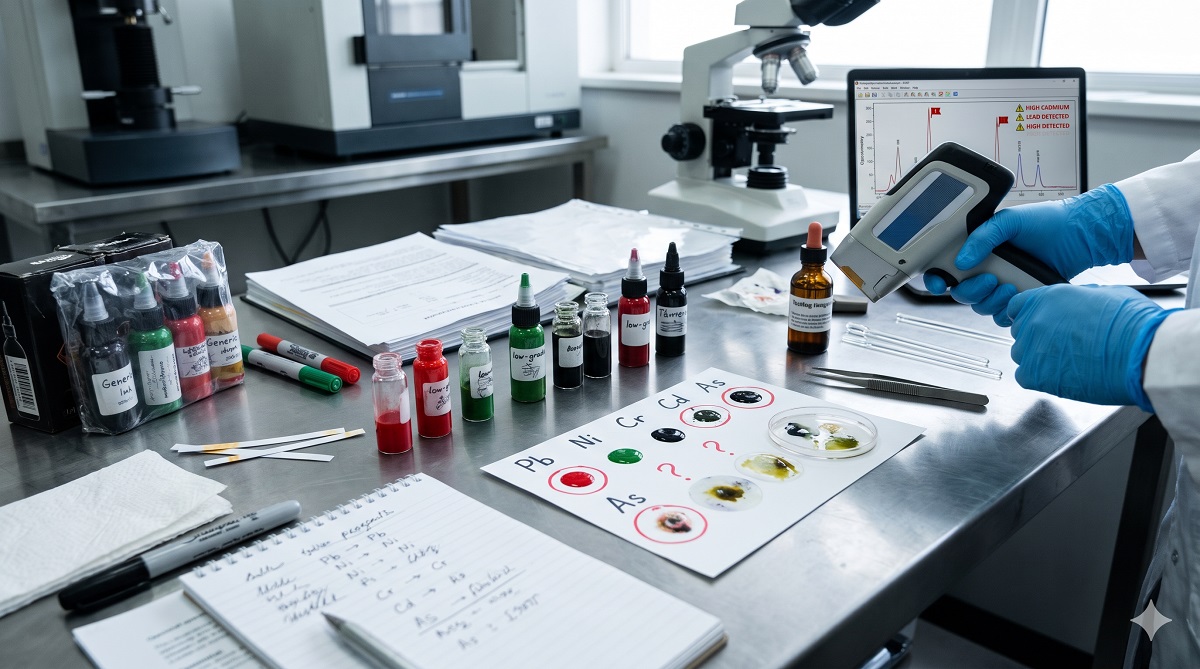
Pure and high-grade pigments must be used to ensure freedom from health problems. Low-grade, non-approved, or counterfeit tattoo inks commonly include toxic industrial solvents and/or heavy metals such as lead, mercury, nickel, arsenic, etc. Being aware of such toxic ingredients and maintaining safe studio habits is important for both the reputation of the artist and the health of the client.
What heavy metals and toxins are found in low-grade tattoo inks?
Many unregulated, low-quality pigments use low-quality industrial dyes and heavy metal oxides to achieve color saturation:
- Mercury and Cadmium: Common in inexpensive red, orange, and yellow colours; can cause severe contact dermatitis and allergic reactions.
- Lead & Arsenic: Both are low-cost colour stabilizers, and lead may bioaccumulate in the body and cause chronic skin toxicity.
- Nickel & Chromium: Very common triggers for chronic inflammation, swelling, and hypersensitivity.
- Industrial Solvents: Low-tier pigments may combine dyes with antifreeze, formaldehyde, or non-sterile carrier liquids that irritate human tissue.
How can you inspect ink bottle documentation for toxic ingredients?
Any original, high-purity inks will always be accompanied by clear labelling and documentation. There are three sources on which you can rely to spot potentially poisonous formulas. The best tattoo shop in Phuket or elsewhere keeps toxic ingredients away from its ink.
- Safety Data Sheets (SDS): A reputable manufacturer will supply an SDS that is a detailed description of the chemical composition, CAS number, and toxicology information. In case a distributor doesn’t have an SDS, steer clear of the ink.
- Regulatory Compliance Labels: Look for regulatory-compliant labels such as EU REACH compliance or US FDA cosmetic standard tracking, which have strict concentration limits for heavy metals.
- Batch and Lot Numbers: If a bottle has a batch number and expiration date, it is a legitimate bottle. Bottles that are unlabeled, repackaged, or are much too inexpensive to be genuine are likely not to contain the correct formula or may be counterfeit and contain heavy metals.
What physical signs indicate the presence of heavy metals during tattooing?
Although chemical analysis needs to be done in a laboratory, there are some physical clues for low-grade ink:
- Unusual Pigment Separation: Low-grade pigments are frequently grainy, chalky, and may settle unevenly at the bottom of the bottle.
- Immediate Skin Flare-Ups: During the application of needles, there are likely to be burning sensations, heightened bleeding, or hives that will occur in a skin area and may be quite intense and rapid.
- Delayed Chronic Reaction: Tattoos dyed with heavy metal pigments can develop into thick keloids, granulomas (hard tissue bumps), or photo-allergy (aggressive reaction to direct sunlight) months after healing.
How should studios handle and prevent toxic pigment exposure?
There are many precautions for the procurement and handling of heavy metals in professional studios to remove heavy metal hazards:
Prevent counterfeits by purchasing directly from authorized distributors or the direct supply chain.
Use Certified Vegan Inks: All modern vegan and mineral-based pigments use carriers of organic carbon, witch hazel, and vegetable glycerin instead of heavy metal salts.
Complete Pre-Session Screening: Inquire if there are any metal sensitivities (such as nickel) and conduct a 48-hour patch test prior to full color sessions. The bamboo tattoo from Patong or another place keeps a tap on the entire process of tattooing.
Conclusion
Toxic tattoo pigments need careful label reading, sourcing of brands that provide verified vegan products, and SDS documentation. The removal of low-quality inks ensures that body art stays bright and keeps you safe.
