

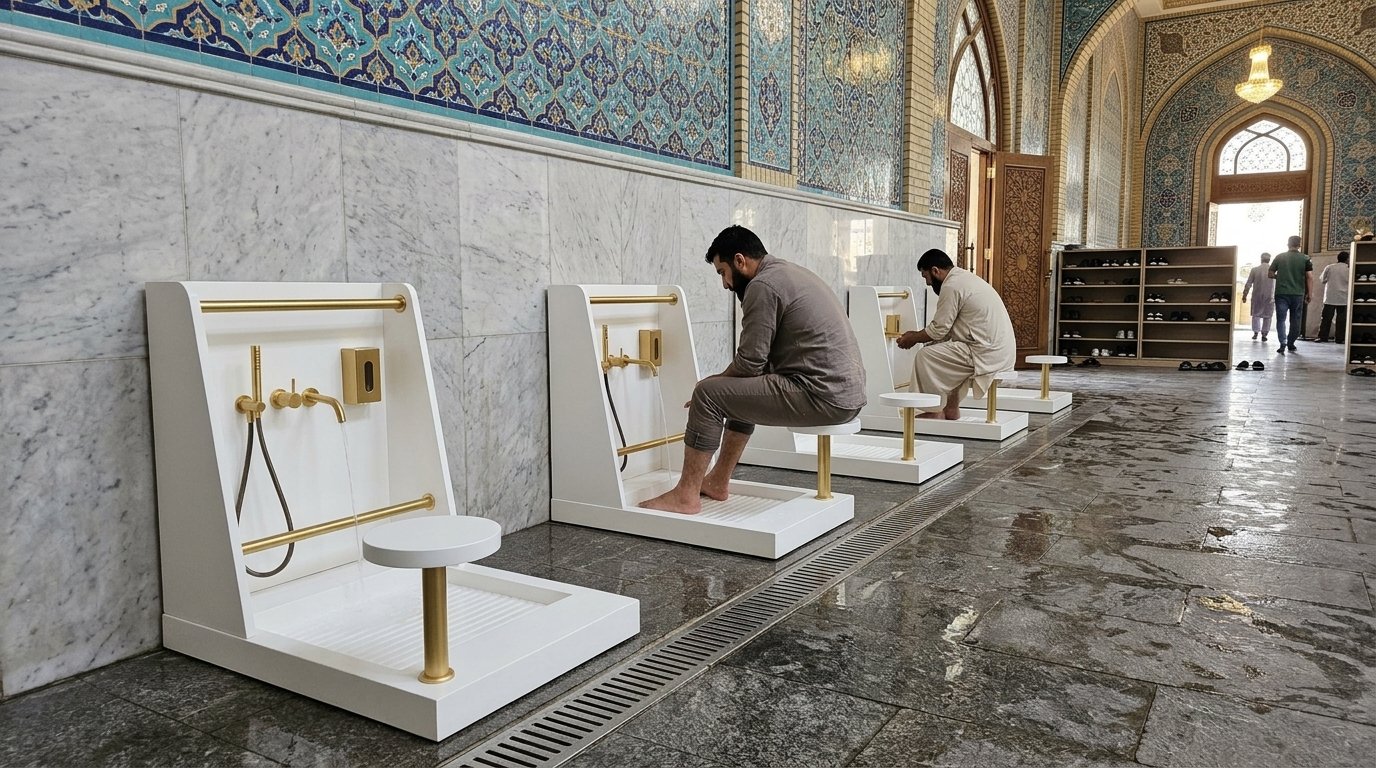
Choosing a basin for a home renovation involves more than finding a product that fits the available wall space. The fixture needs to work with the bathroom’s layout, connect to the existing plumbing, and provide a comfortable washing position for the people who will use it. When the basin is intended for ablution, these considerations become particularly important because the washing routine may involve movements that an ordinary vanity was not designed to accommodate.
A bathroom Wudu basin should be evaluated according to its actual dimensions, shape, and intended use. Some models include a lower section for washing the feet, while others offer a wider or specially contoured bowl. The right option depends on the household’s preferences and the available room, so it is worth comparing practical specifications before deciding which style best suits the home.
Assess the Bathroom Before Looking at Products
Begin by measuring the proposed installation area. Record the available width, depth, and height, then note the position of doors, showers, toilets, cabinets, and existing plumbing connections. This will help establish which basin sizes are realistic.
Remember to include the space in front of the fixture. Users need room to approach, stand, and move without hitting nearby fittings. In a narrow bathroom, a basin that fits against the wall may still make the room difficult to use if its approach area is too restricted.
Decide Which Washing Features Matter
Different models are designed with different washing arrangements. A lower foot-washing section may be helpful for users who prefer a dedicated area for this task. Other products use a broad bowl that provides additional room for rinsing.
Think about who will use the fixture most often. Adults, children, and older relatives may have different reach and mobility needs. Check the height and shape of the washing area rather than assuming that a specialist product will automatically be comfortable for everyone. If possible, inspect a full-size display model or ask the supplier for a detailed drawing.
Compare Wall-Mounted and Floor-Supported Designs
Wall-mounted basins can make a small bathroom feel more open because the floor beneath remains visible. They may also make cleaning easier. However, the wall must be capable of supporting the fixture, and suitable mounting hardware is essential.
A floor-supported basin may be a better option where wall reinforcement is not practical or where the existing plumbing arrangement favours this installation style. Consider how its base will affect floor cleaning and movement. The choice should be based on the building’s construction and the manufacturer’s installation requirements.
Review Material Quality and Maintenance
Ceramic and solid-surface products are common in modern bathrooms. Ceramic offers a familiar smooth finish, while solid-surface materials may allow more varied forms. Individual products differ in quality, so check their specifications rather than relying on general descriptions of the material.
Ask the supplier which cleaning products are recommended and whether the surface is resistant to common stains and everyday wear. A basin with accessible corners and a straightforward shape can make routine cleaning easier. Also check warranty coverage and whether repair or replacement components are available.
Confirm Tap and Waste Compatibility
The basin’s tap arrangement must match the fittings you plan to use. Some models have holes for deck-mounted taps, while others are designed for wall-mounted fixtures. Check spout reach and height so water flows into the bowl rather than striking its edge.
The waste outlet must also match the home’s drainage system. Confirm its position and size using the technical drawing. If existing connections do not align, a plumber can advise on the changes required. Include any plumbing work in the renovation budget.
Plan the Surrounding Wet Area
Choose flooring suitable for occasional splashing and make sure joints are sealed. Good drainage helps prevent water from collecting near the basin, while ventilation allows the room to dry after repeated use. Keep towels and accessories within reach without occupying the main standing area.
Compare Total Value, Not Just Price
The complete cost includes the basin, tap, waste fitting, mounting hardware, delivery, plumbing alterations, waterproofing, and installation labour. A slightly more expensive product may offer better value if it is easier to install and maintain.
Make the Choice with Confidence
The right basin should fit the bathroom, accommodate its users, and remain practical over time. By checking measurements, washing features, material quality, fittings, and installation requirements before purchase, homeowners can select a fixture that supports ablution without compromising the rest of the room.
