

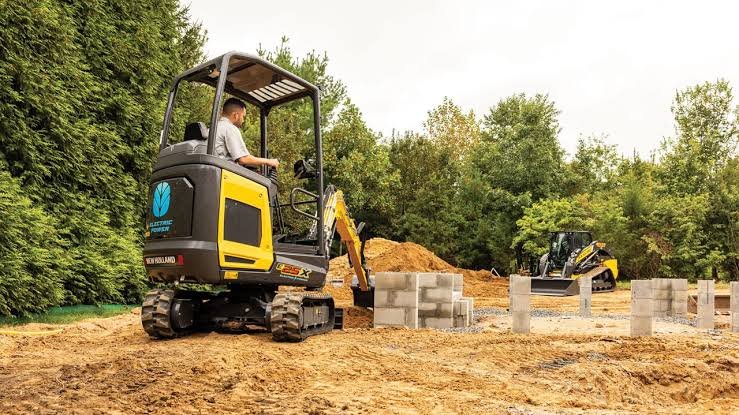
Construction activity does not always take place far from people. Excavation may be required beside residential buildings, near offices, inside commercial properties, around healthcare facilities, or within educational environments. In these locations, noise management can become a significant part of project planning. Contractors must consider not only their own workforce but also people who occupy or use the surrounding area.
This is one reason electric diggers are being considered for certain construction applications. Their power systems avoid the continuous sound produced by conventional diesel engines, which may help make excavation less disruptive under suitable conditions. Whether they are the right choice requires an understanding of noise sources, site restrictions, machine performance, and operating procedures.
Understanding Construction Noise
Excavation machinery produces sound from several different sources. A conventional diesel excavator generates noise from its engine, cooling systems, exhaust, hydraulic equipment, tracks, and interaction with the ground. The sound level and character can change according to engine speed, load, attachment type, soil conditions, and the way the operator uses the machine.
When a diesel engine is removed from the powertrain, one significant source of continuous operating noise is eliminated. Electric machines can therefore offer a different acoustic profile. This may be beneficial in locations where people are particularly sensitive to construction disturbance.
However, excavation is not a silent activity. Digging into hard soil, moving materials, operating hydraulic systems, and travelling over uneven surfaces can still produce noticeable sound. Contractors should evaluate the complete operation rather than focusing only on the power source.
Residential Construction and Neighbouring Properties
Projects in residential neighbourhoods often involve limited space and close proximity to homes. Contractors may need to prepare foundations, install drainage, excavate landscaping areas, or undertake small renovation works.
Noise-sensitive conditions can influence how these projects are scheduled. Residents may work from home, have young children, or require quiet periods for rest. Electric machinery may help reduce engine-related disturbance, particularly when excavation is performed during permitted working hours.
Contractors should communicate with affected residents before work begins. Explaining the schedule, expected activities, and measures being taken to manage noise can help establish reasonable expectations. Equipment selection should form part of a broader approach that includes considerate working practices.
Commercial and Public Environments
Electric excavation equipment may also be relevant to commercial developments, retail areas, pedestrian environments, and public facilities. Work in these settings can require machinery to operate while surrounding activities continue.
Lower engine noise may support communication between operators and ground workers, although it does not remove the need for clear hand signals, radios, or other communication methods. Site managers must ensure that personnel remain aware of moving machinery and other hazards.
The machine’s dimensions and operating footprint are equally important. Public-facing work often involves barriers, pedestrian diversions, restricted access, and limited space for materials. Equipment should be selected to fit the work area without compromising safety or productivity.
Indoor and Partially Enclosed Applications
Some excavation or demolition-related tasks take place within buildings, underground structures, warehouses, or partially enclosed areas. Conventional diesel machinery can introduce exhaust emissions into these environments, creating additional ventilation requirements and potential health concerns.
Electric machines avoid producing diesel exhaust directly during operation, while reduced engine noise may also improve the working environment. Nevertheless, indoor excavation requires careful planning. Battery charging should occur in suitable designated areas, and site teams must consider electrical safety, ventilation requirements, battery-related hazards, and emergency arrangements.
The absence of diesel exhaust does not mean that an indoor work area is automatically safe. Dust, silica-containing materials, fumes from other activities, and airborne contaminants may still be present. Appropriate risk assessments and ventilation measures remain essential.
Evaluating the Machine’s Acoustic Performance
Contractors should obtain reliable information about the equipment’s noise characteristics before selecting it for a sensitive site. Manufacturer specifications, operating conditions, attachment requirements, and relevant testing methods can help establish what to expect.
It is important to compare machines under similar conditions. Different models may vary in hydraulic performance, travel speed, machine size, and operating configuration. A quieter powertrain may not be sufficient if the equipment cannot complete the required work efficiently.
Where noise restrictions are strict, contractors may need to arrange site-specific assessments and identify additional controls such as barriers, work sequencing, or limited operating periods.
Operator Practices Still Matter
Operators can influence the noise generated during excavation. Avoiding unnecessary travel, selecting appropriate attachments, maintaining equipment, and using smooth operating techniques can help reduce avoidable disturbance.
Regular inspections are important because damaged components, loose parts, worn tracks, or poorly maintained attachments may create additional sound or vibration. Training should cover site noise expectations and procedures for working near occupied buildings.
A More Considerate Approach to Excavation
Electric diggers can be suitable for noise-sensitive work areas because they eliminate conventional engine noise and may offer operational benefits in restricted environments. Their suitability depends on the nature of the task, the remaining noise sources, machine performance, and the site’s requirements.
Contractors who combine appropriate equipment with communication, scheduling, maintenance, and effective site controls can approach noise management more responsibly. This balanced strategy supports construction productivity while helping reduce unnecessary disruption to people nearby.
