

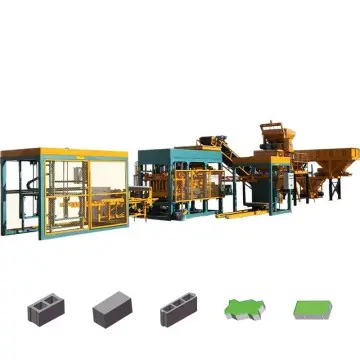
Concrete block manufacturers need a forming process that can produce consistent units while accommodating the physical demands of repeated production cycles. The equipment must shape the concrete mixture accurately, operate safely, and fit into the factory’s wider material-handling system. Hydraulic technology is commonly used in industrial machinery because it can deliver controlled mechanical force through a compact arrangement of components.
A Hydraulic Concrete Block Making Machine uses hydraulic power to operate selected movements involved in forming concrete blocks. Depending on the design, the system may control mold movement, pressing, lifting, or other machine functions. Vibration may also be incorporated to help compact the mixture. The exact configuration determines how the machine operates and which block products it can manufacture.
How Hydraulic Technology Supports Block Formation
A hydraulic system uses pressurized fluid to transmit force through components such as pumps, valves, cylinders, and hoses. In a block-making machine, these components can control movements required during the forming cycle.
The concrete mixture is prepared separately and transferred into the mold. The machine carries out its forming sequence, applying the required mechanical action to shape and compact the material. After forming, the block is released and moved to the curing area.
The pressure settings, movement sequence, and vibration arrangement depend on the machine’s engineering. Operators should follow the manufacturer’s instructions rather than changing settings without technical guidance.
1. Controlled Mechanical Force
One important feature of hydraulic equipment is its ability to apply controlled force through the machine’s operating components. This can support repeatable mold movement and compaction when the equipment is correctly adjusted.
Consistent forming conditions are useful for manufacturers producing large quantities of similar blocks. However, product quality also depends on the mixture, mold condition, filling process, and curing method.
Operators should inspect sample products regularly to confirm that dimensions and visible characteristics remain consistent.
2. Support for Different Block Designs
Hydraulic concrete block machines may be available with different mold arrangements. Depending on the model, they can be configured for solid blocks, hollow blocks, or other concrete products.
Manufacturers should identify their intended product range before selecting equipment. Mold compatibility, block dimensions, replacement availability, and changeover time should all be confirmed.
If several products are required, ask the supplier to demonstrate each relevant configuration. This helps establish whether the machine can meet the business’s actual requirements.
3. Potential Improvements in Production Workflow
Hydraulic movements can make repetitive forming operations more structured. When the machine is integrated with suitable feeding and handling arrangements, it can support a coordinated production process.
The impact on output depends on the entire factory. A machine may complete its forming cycle quickly, but production can still be limited by mixing capacity, material delivery, block removal, or curing space.
Manufacturers should assess the flow of materials from storage through to finished-product dispatch. Identifying bottlenecks across the operation provides a more accurate picture of productivity.
4. Machine Construction and Key Components
When evaluating a hydraulic machine, buyers should examine the frame, hydraulic power unit, cylinders, hoses, valves, control system, mold assembly, and vibration components where fitted.
The frame must support the forces generated during operation. Hydraulic connections should be properly routed and protected from damage. Controls should be clearly arranged so operators can manage the machine safely.
Ask the supplier for technical documentation, recommended operating conditions, and details of the components used in the hydraulic system.
5. Maintenance and Hydraulic System Care
Hydraulic equipment requires regular inspection. Fluid levels, hoses, seals, fittings, filters, and connections should be checked according to the manufacturer’s schedule. Leaks or unusual movement should be investigated promptly.
Contaminated hydraulic fluid can affect system performance and component life. Correct fluid specifications and suitable servicing practices are therefore important.
Other machine components also need attention. Molds should be cleaned, fasteners checked, moving parts inspected, and electrical controls maintained. Keeping maintenance records helps identify recurring problems.
6. Operator Safety and Training
Hydraulic systems can generate substantial force, so safe operation is essential. Workers should understand the machine’s operating sequence, emergency stops, guards, and procedures for dealing with faults.
No one should reach into a moving mold assembly or attempt to clear a blockage while the machine is operating. Servicing must follow appropriate isolation procedures and the manufacturer’s safety instructions.
Training should be provided before operators work independently. Clear procedures also help maintain consistent operation across different shifts.
Evaluating the Investment
The right hydraulic machine should match the required block dimensions, production target, available infrastructure, and budget. Buyers should compare cycle time, mold options, power requirements, hydraulic specifications, maintenance needs, and technical support.
A demonstration using the intended block design can provide valuable evidence of the machine’s capabilities. Ask for realistic output estimates and clarify what equipment is included in the quoted price.
Building a Consistent Production Process
A hydraulic concrete block-making machine can provide controlled mechanical movement for manufacturers seeking a structured forming process. Its benefits depend on correct selection, suitable materials, regular maintenance, and trained operators.
When these elements are managed together, hydraulic equipment can become a dependable part of a concrete block manufacturing operation.
