

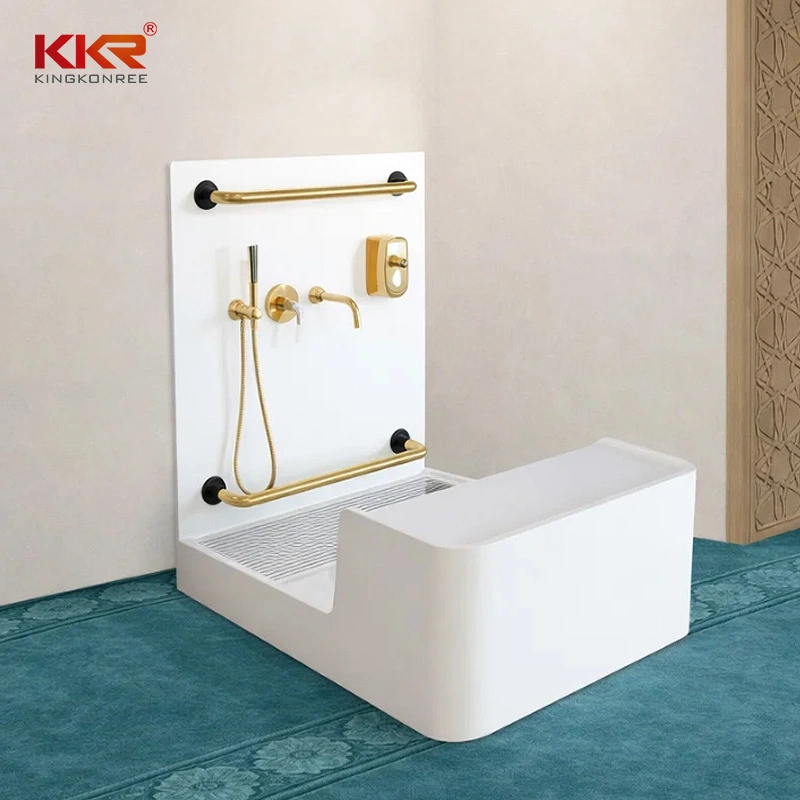
Choosing the right material for a wudu sink is essential for long-term durability, hygiene, and ease of maintenance. Because ablution involves frequent contact with water, the sink must withstand regular use, repeated cleaning, and exposure to moisture. The material also influences the fixture’s appearance, installation requirements, and overall cost.
Whether the sink is intended for a residential bathroom, a mosque, or a dedicated prayer room, it is important to compare material properties before making a decision. A well-selected Muslim Wudu Sink can provide a practical washing area while complementing the surrounding interior design.
1. Why Material Selection Matters for a Wudu Sink
A wudu sink may be used several times each day, making durability and maintenance important considerations. A material that performs well in a lightly used guest bathroom may not be the best choice for a busy communal ablution area.
The right material should offer several practical benefits:
- Water resistance: The surface should tolerate frequent exposure to water without deteriorating under normal use.
- Durability: It should resist everyday wear, minor impacts, and damage associated with routine cleaning.
- Hygiene: A smooth, easy-to-clean surface helps prevent residue and buildup.
- Stain resistance: The material should withstand common bathroom deposits and suitable cleaning products.
- Maintenance: Routine care should be straightforward and should not require unnecessarily specialized products.
- Appearance: The finish should suit the bathroom’s design and remain attractive with regular use.
No material is ideal for every installation. The best option depends on the expected traffic, budget, cleaning routine, and design requirements.
2. Ceramic: A Practical and Familiar Choice
Ceramic is a widely used material for bathroom fixtures because it offers a smooth surface, a clean appearance, and relatively straightforward maintenance.
Durability and performance
Quality ceramic basins generally resist water, stains, and many common bathroom products. Their glazed surfaces are easy to wipe clean, making them suitable for households and shared washing areas.
However, ceramic can chip or crack if subjected to a strong impact. The quality of the glaze and the way the fixture is installed also influence its long-term performance.
Maintenance requirements
Routine cleaning usually requires a soft cloth or sponge and a mild, non-abrasive cleaner. Harsh chemicals and abrasive pads should be avoided unless the manufacturer specifically approves them.
Best applications
Ceramic is a practical choice for residential bathrooms, guest facilities, and installations where a traditional basin appearance is preferred. It is especially suitable for users who want a familiar material with simple cleaning requirements.
3. Porcelain: A Smooth and Refined Surface
Porcelain is a type of ceramic material commonly used in bathroom fixtures and surfaces. Its properties depend on the manufacturing process, body composition, and finish.
Durability and water resistance
Porcelain products are generally dense and can offer good resistance to moisture and staining. A suitable glazed porcelain basin can provide a smooth, hygienic surface that performs well in regular bathroom use.
Although durable, porcelain is not immune to cracking or chipping. Correct handling during delivery and installation is important, particularly around edges and corners.
Maintenance requirements
Porcelain is usually easy to clean with mild bathroom cleaners. Regular wiping helps prevent soap residue and mineral deposits from becoming difficult to remove.
Best applications
Porcelain can suit modern homes and shared facilities where a refined appearance and easy cleaning are priorities. Buyers should confirm whether a product is a porcelain basin, a porcelain-tiled installation, or another porcelain-based surface, since these applications have different installation requirements.
4. Solid Surface: Modern Design and Repairability
Solid-surface materials are manufactured from blended mineral fillers and binding resins. They are used in contemporary washbasins, countertops, and integrated bathroom fixtures.
Durability and design flexibility
Solid-surface products can be formed into a variety of shapes and sizes. This makes them useful for custom wudu sinks, integrated basins, and designs that combine the washing area with a surrounding countertop.
Many solid-surface materials have a consistent appearance and can be manufactured with smooth transitions. Depending on the product, minor surface scratches may be repairable through appropriate refinishing.
Performance varies by formulation, so buyers should check the manufacturer’s specifications for impact resistance, heat tolerance, and approved cleaning methods.
Maintenance requirements
Regular cleaning with a soft cloth and a suitable non-abrasive cleaner is generally sufficient. Some products may require occasional refinishing to restore their appearance, while others have specific care requirements.
Avoid assuming that all solid-surface materials can be repaired in the same way. Follow the manufacturer’s instructions, especially for colored or textured finishes.
Best applications
Solid surface is worth considering for modern homes, hotels, and commercial ablution areas where design flexibility is important. It can be particularly useful when a project requires non-standard dimensions or an integrated washing station.
5. Natural Stone: A Distinctive Premium Option
Natural stone, including marble and granite, can create a distinctive appearance in a bathroom or prayer facility. Each piece has its own pattern, color variation, and surface characteristics.
Durability and moisture considerations
Stone performance depends on the type of stone, its finish, and the way it is installed and maintained. Some stones are more porous than others and may absorb moisture or become stained if they are not properly protected.
Marble can be vulnerable to acids found in certain cleaning products, while granite generally offers good hardness but may still require suitable sealing depending on its composition and finish.
Maintenance requirements
Natural stone may require periodic sealing and careful cleaning. Use products specifically approved for the selected stone, and avoid acidic cleaners on surfaces that can be etched.
Water should not be allowed to remain around joints or damaged sealant for long periods. Inspect the surface periodically for staining, cracks, or deterioration around fittings.
Best applications
Natural stone may suit premium residential bathrooms, luxury hospitality settings, and architectural projects where a distinctive finish is desired. It is generally a better choice when the budget and maintenance plan allow for its particular care requirements.
6. Stainless Steel: Practical for High-Use Environments
Stainless steel is often associated with commercial and institutional fixtures. It can be a useful option where durability, cleanability, and resistance to breakage are important.
Durability and corrosion resistance
Suitable stainless-steel grades can withstand frequent use and provide good resistance to corrosion. However, performance depends on the grade, finish, water quality, and exposure to cleaning chemicals.
Stainless steel can scratch, and water spots or fingerprints may be visible on some finishes. Lower-quality products or unsuitable chemical exposure can also lead to corrosion.
Maintenance requirements
Clean stainless steel with a soft cloth and a compatible cleaner. Rinse away cleaning residues and dry the surface when needed to reduce water marks.
Avoid steel wool and abrasive products that can scratch the finish. Chloride-containing cleaners should only be used if the manufacturer confirms they are appropriate for the product.
Best applications
Stainless steel may suit public facilities, institutional washing areas, and locations where the fixture needs to tolerate frequent use. Its appearance is more utilitarian than that of ceramic or stone, so it should be selected with the overall interior style in mind.
7. Comparing Common Wudu Sink Materials
The following table provides a general comparison. Actual performance varies by product quality, finish, installation, and maintenance.
| Material | Durability | Maintenance | Design suitability |
|---|---|---|---|
| Ceramic | Good under normal use; can chip or crack from impacts | Generally easy | Traditional and modern bathrooms |
| Porcelain | Generally dense and moisture-resistant; vulnerable to impact damage | Generally easy | Refined residential and commercial interiors |
| Solid surface | Varies by formulation; some minor damage may be repairable | Easy with product-appropriate cleaners | Contemporary and customized designs |
| Natural stone | Depends on stone type and protective treatment | May require sealing and specialized care | Premium and decorative interiors |
| Stainless steel | Good for many high-use settings when the correct grade is selected | Simple but may show marks and scratches | Institutional and functional spaces |
Rather than relying on the material name alone, compare the manufacturer’s technical information, warranty, cleaning instructions, and suitability for frequent water exposure.
8. Consider the Sink’s Surrounding Materials
The basin is only one part of a wudu installation. Countertops, walls, flooring, joints, and drainage components also affect durability and maintenance.
Countertops and wall finishes
If the sink is installed within a countertop, choose a surface that can tolerate regular splashing and routine cleaning. Seal joints appropriately and ensure that water cannot easily penetrate the surrounding cabinetry or wall structure.
Wall finishes near the basin should be suitable for wet environments. Correct waterproofing and well-finished joints can help reduce the risk of moisture damage.
Flooring and slip resistance
Ablution areas may become wet, especially where users wash their feet. Flooring should offer suitable slip resistance under wet conditions and be compatible with the drainage arrangement.
The surface should also be practical to clean. Avoid choosing flooring solely for its appearance without checking its performance in wet environments.
Faucets and drainage fittings
Faucets, waste fittings, and other plumbing components should be compatible with the sink material and the expected frequency of use. Durable, replaceable fittings can make repairs easier without requiring the entire fixture to be removed.
9. How to Choose the Best Material for Your Setting
The most suitable material depends on where the wudu sink will be installed and how often it will be used.
For residential bathrooms
Ceramic and porcelain are practical starting points because they generally offer easy cleaning and a familiar appearance. Solid surface may be preferable when the bathroom requires a custom shape or integrated countertop.
For mosques and Islamic centers
Shared facilities should prioritize durability, easy cleaning, and reliable replacement parts. Ceramic, suitable porcelain products, solid surface, and appropriate stainless-steel fixtures can all be considered, depending on traffic and maintenance arrangements.
For heavily used installations, also consider whether the basin is easy to inspect and whether damaged fittings can be replaced without extensive renovation.
For premium interiors
Natural stone or high-quality solid surface may suit projects where appearance is a major priority. However, decorative materials should still be evaluated for moisture resistance, cleaning requirements, and suitability for the intended use.
For budget-conscious projects
Compare the complete cost rather than the purchase price alone. Installation, sealing, cleaning products, repairs, and expected service life can all influence the total cost of ownership.
10. Maintenance Practices That Extend Service Life
Even a durable material can deteriorate prematurely if it is cleaned incorrectly or installed poorly. A consistent maintenance routine helps preserve the sink and surrounding surfaces.
- Clean the basin regularly using a product approved for its material.
- Remove mineral deposits before they become difficult to clean.
- Avoid abrasive pads and chemicals that may damage the finish.
- Check faucets and plumbing connections for leaks.
- Keep drains clear and inspect them for slow water flow.
- Examine sealant and joints for cracks or gaps.
- Follow the manufacturer’s instructions for sealing or refinishing when required.
- Repair chips, cracks, or damaged fittings promptly.
In communal facilities, establish a cleaning schedule based on how frequently the washing area is used. Regular inspections can identify minor problems before they require more expensive repairs.
Conclusion
The best material for a Muslim wudu sink depends on the balance between durability, maintenance, design, and budget. Ceramic and porcelain offer practical, easy-to-clean surfaces, while solid surface provides flexibility for contemporary and custom installations. Natural stone can deliver a distinctive premium appearance, and suitable stainless steel may perform well in high-use environments.
Before purchasing, compare product specifications, installation requirements, cleaning instructions, and warranty coverage. Choosing a material that suits the intended setting and maintaining it correctly can help create a hygienic, attractive, and dependable ablution area for years to come.
