

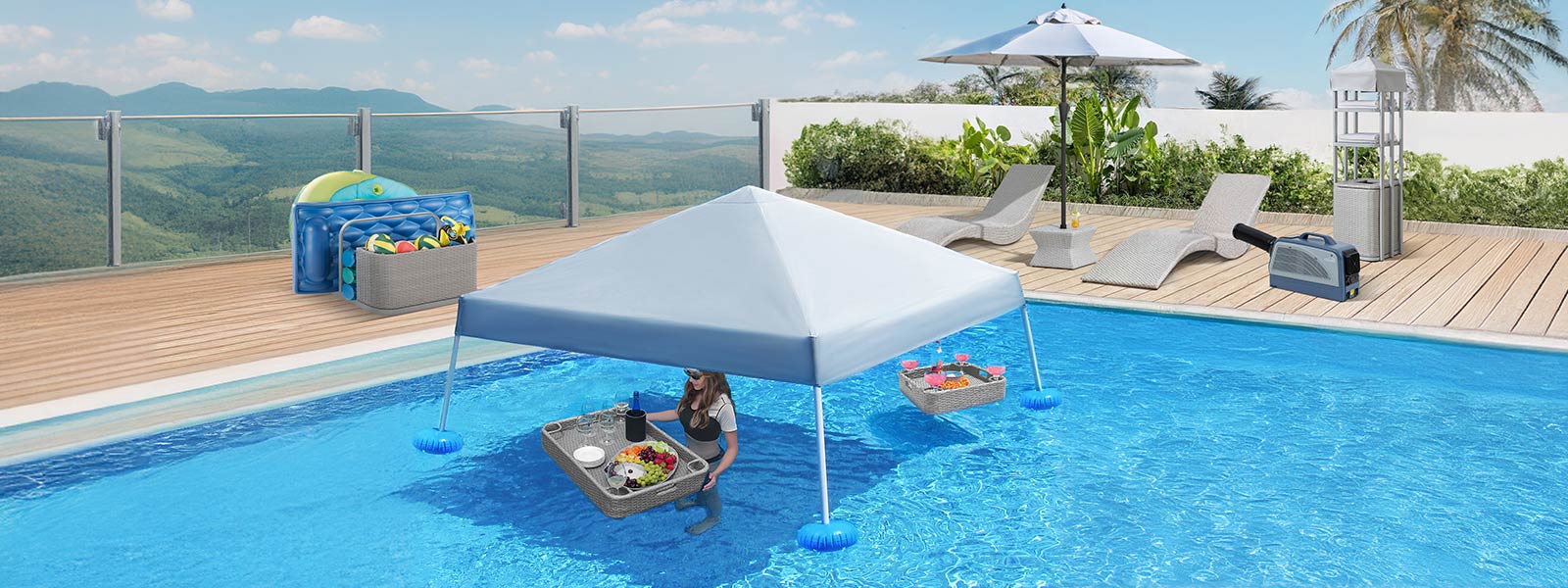
Commercial swimming pools serve a wide range of environments, including hotels, fitness centers, schools, public recreation facilities, apartment complexes, and aquatic training centers. Unlike most residential pools, these facilities often accommodate larger numbers of swimmers and operate for extended periods. As a result, they require reliable equipment, carefully managed water quality, and consistent maintenance procedures.
Selecting the right commercial pool equipment is essential for maintaining safe swimming conditions, supporting efficient operation, and controlling long-term operating expenses. Pumps, filtration systems, chemical treatment equipment, heating systems, cleaning tools, and safety devices all play important roles in keeping a commercial pool functional. Each component must be appropriate for the pool’s size, expected usage, design, and applicable regulations.
Facility managers evaluating swimming pool equipment and supplies should consider more than the initial purchase price. Equipment capacity, energy consumption, maintenance requirements, durability, compatibility, and replacement-part availability can significantly affect the overall cost of ownership. A well-planned equipment system helps commercial operators maintain consistent performance while reducing unnecessary downtime and resource waste.
What Makes Commercial Swimming Pool Equipment Different?
Commercial pool equipment is selected to meet the operational demands of facilities with higher bather loads, more intensive use, and stricter oversight requirements than many residential pools.
A hotel pool may need dependable heating and circulation throughout the day, while a public aquatic center may require sophisticated water treatment, extensive safety measures, and detailed operational records. A school pool may have specific scheduling needs based on lessons and training sessions.
Several factors distinguish commercial equipment requirements:
- Higher operating demands: Pumps, filters, and treatment systems must support the facility’s expected usage.
- Consistent water quality: Frequent swimmer activity introduces contaminants that must be managed effectively.
- Regulatory compliance: Equipment and operating procedures must meet applicable health, building, accessibility, and safety requirements.
- Durability: Components should be suitable for the expected operating hours and environmental conditions.
- Maintenance access: Technicians need practical access to inspect, service, and repair equipment.
- Operational efficiency: Energy and water consumption can represent significant ongoing expenses.
Commercial equipment should therefore be chosen as part of a coordinated system rather than as a collection of unrelated products.
1. Commercial Pool Pumps and Circulation Systems
<AsyncImage query=”large commercial swimming pool mechanical room with industrial pool circulation pumps manifold pipes and valves” aspectRatio=”16:9″ width=”100%” />
Pool pumps move water through the filtration and treatment systems before returning it to the pool. Reliable circulation helps distribute treated water and enables filtration equipment to remove suspended particles.
For commercial facilities, pump selection must account for pool volume, required circulation rates, pipe dimensions, hydraulic resistance, and the operating requirements of connected equipment.
Choosing the Right Commercial Pool Pump
Commercial pumps are available in different configurations and capacities. The appropriate model depends on the facility’s design and operating conditions.
When comparing pumps, assess:
- Required flow rate and total dynamic head
- Motor efficiency and expected operating hours
- Materials suitable for the pool’s water chemistry
- Noise levels and installation requirements
- Serviceability and access to replacement parts
- Compatibility with filters, heaters, and treatment equipment
Oversizing a pump can increase energy consumption and create unnecessary pressure, while undersizing it may prevent the system from achieving the required circulation performance. Proper hydraulic design is essential.
Variable-Speed Pump Technology
Variable-speed pumps allow operators to adjust motor speed to match different operational requirements. Where permitted and suitable for the system, lower-speed operation can reduce energy use during routine filtration.
The savings depend on the pump, plumbing design, flow requirements, and operating schedule. Commercial operators should establish settings that meet applicable circulation and sanitation requirements rather than reducing pump speed solely to minimize electricity consumption.
Regular inspections of pump baskets, seals, motor condition, and operating pressure can help identify problems before they cause service interruptions.
2. Commercial Swimming Pool Filtration Systems
<AsyncImage query=”commercial swimming pool filtration room with large industrial sand filter tanks pressure gauges and pipework” aspectRatio=”16:9″ width=”100%” />
Filtration removes suspended particles such as dirt, dust, and other material from pool water. It works alongside sanitation and circulation to help maintain acceptable water quality.
Commercial filtration systems must be designed to accommodate the pool’s volume, swimmer load, required turnover rate, and the performance characteristics of the selected filter media.
Common Commercial Filter Types
Sand filters: These systems pass water through a bed of filter media. They are widely used in commercial installations and can handle substantial filtration demands when correctly sized and maintained.
Cartridge filters: Cartridge systems trap particles in replaceable filter elements. Depending on the application and design, they may reduce water use associated with routine backwashing, although cartridge cleaning and replacement remain necessary.
Diatomaceous earth filters: These systems use specialized filter elements coated with diatomaceous earth to capture fine particles. They require appropriate handling, maintenance, and disposal procedures.
Each filter type has different installation requirements, maintenance demands, and operating characteristics. There is no single option that is ideal for every commercial pool.
How to Select a Commercial Filter
Consider the required filtration rate, available plant-room space, local water conditions, cleaning procedures, and the facility’s maintenance capabilities.
Operators should also evaluate how filter cleaning affects water consumption and how replacement media or elements will be sourced.
Pressure gauges and other monitoring devices help staff recognize changes in filter performance. Cleaning should follow the manufacturer’s guidance and applicable operating standards rather than relying on guesswork.
3. Commercial Pool Water Treatment and Chemical Control
<AsyncImage query=”commercial swimming pool water treatment equipment with chemical dosing pumps monitoring sensors and control panel” aspectRatio=”16:9″ width=”100%” />
Water treatment is one of the most important responsibilities in commercial pool management. High swimmer turnover introduces sweat, body oils, personal care products, and other contaminants into the water. Effective treatment must control microbiological risks while maintaining appropriate chemical balance.
Chemical Dosing Equipment
Automated dosing systems can help regulate the delivery of approved disinfectants and pH-adjustment chemicals. Depending on the installation, systems may use sensors, controllers, dosing pumps, and chemical storage equipment.
Automation can improve consistency, but it does not remove the need for trained supervision. Sensors require calibration, chemical supplies must be replenished, and equipment faults must be addressed promptly.
Water Testing and Monitoring
Commercial facilities need reliable methods for checking relevant water-quality parameters. Depending on local requirements and the treatment system, these may include disinfectant residual, pH, temperature, and other specified indicators.
Monitoring can combine automated readings with manual verification using approved testing equipment.
A sound water-quality program should include:
- Defined testing schedules
- Documented results and corrective actions
- Regular sensor inspection and calibration
- Appropriate storage and handling of treatment chemicals
- Procedures for responding to out-of-range readings
- Staff training in the facility’s sanitation system
Chemical Storage and Safety
Chemical storage areas should be designed to prevent incompatible products from mixing and to limit risks from spills, fumes, and unauthorized access. Follow the relevant safety data sheets, manufacturer instructions, and local regulations.
Chemical handling, dosing equipment maintenance, and emergency procedures should be assigned to trained personnel. Chemical treatment systems must be designed and operated to protect both swimmers and staff.
4. Commercial Pool Heating Systems
<AsyncImage query=”commercial indoor swimming pool heating system with large heat pump units and insulated water circulation pipes” aspectRatio=”16:9″ width=”100%” />
Heating systems help commercial pools maintain temperatures appropriate for their intended use. Hotels, therapy facilities, fitness centers, and indoor aquatic centers may require dependable temperature control throughout their operating hours.
Types of Commercial Pool Heaters
Gas heaters: These systems can heat water relatively quickly and may suit facilities with substantial or variable heating demand. Operating costs depend on fuel prices, system efficiency, and usage patterns.
Electric heat pumps: Heat pumps transfer heat from the surrounding air to the pool water. Their performance depends on ambient conditions, equipment specifications, and the desired pool temperature.
Solar thermal systems: Solar collectors can supplement pool heating where sufficient sunlight and suitable installation space are available. They may be combined with conventional heating for periods when solar energy is insufficient.
The right choice depends on climate, facility size, operating schedule, available utilities, installation costs, and energy prices.
Improving Heating Efficiency
Commercial operators can reduce avoidable heat loss by using suitable pool covers when the pool is not in use, maintaining heating equipment, and optimizing temperature settings within applicable requirements.
Indoor facilities should also consider humidity control and ventilation because managing the pool environment involves more than heating the water alone.
When evaluating a heating system, compare installation costs, expected seasonal performance, maintenance needs, and total energy consumption.
5. Commercial Pool Cleaning Equipment
<AsyncImage query=”commercial robotic swimming pool cleaner cleaning large indoor swimming pool with professional maintenance equipment” aspectRatio=”16:9″ width=”100%” />
Cleaning equipment helps remove debris, sediment, and buildup that circulation and filtration systems may not capture quickly enough. Commercial pools often require organized cleaning routines because of their size and frequency of use.
Automatic and Robotic Cleaners
Robotic pool cleaners can help clean floors, walls, and selected waterline areas, depending on the model. Some systems use independent filtration, while others have different operational requirements.
Before selecting a cleaner, assess pool dimensions, floor shape, surface material, debris type, cleaning cycle duration, and ease of maintenance.
For large facilities, multiple cleaning units or specialized equipment may be appropriate. Cleaning schedules should be designed around the facility’s usage and sanitation procedures.
Manual Cleaning Tools
Commercial maintenance teams also rely on durable manual tools, including:
- Long-handled brushes
- Leaf skimmers
- Vacuum heads and compatible hoses
- Debris collection equipment
- Tile and waterline cleaning tools
- Approved tools for inspecting hard-to-reach areas
Selecting robust tools with replaceable components can help control ongoing costs. Staff should use cleaning products suitable for the pool’s surfaces and water-treatment system.
6. Commercial Pool Covers and Water Conservation
Pool covers can help reduce evaporation, retain heat, and limit the entry of leaves and other debris. For heated commercial pools, these benefits may translate into lower water and energy consumption.
Types of Pool Covers
Depending on the facility, options may include thermal covers, solar covers, and purpose-designed safety covers. Large commercial pools may require motorized systems or specialized storage arrangements to make routine use practical.
The cover should match the pool’s dimensions, shape, operating requirements, and applicable safety standards.
Practical Benefits
When used appropriately, a pool cover may help:
- Reduce evaporation and replacement-water demand
- Limit heat loss from heated pools
- Reduce debris entering the water
- Lower some cleaning and maintenance demands
- Improve the efficiency of pool heating
The actual benefit depends on climate, pool temperature, frequency of use, and how consistently the cover is deployed.
A standard thermal or solar cover should not be treated as a safety barrier. Where a safety cover is required, it must meet the applicable standards and installation specifications.
7. Commercial Pool Safety Equipment
<AsyncImage query=”public swimming pool safety equipment including rescue pole life ring first aid station and clearly marked poolside safety signage” aspectRatio=”16:9″ width=”100%” />
Safety equipment is essential in commercial swimming environments, where operators have a responsibility to manage risks for swimmers, staff, and visitors.
The exact equipment requirements depend on the facility type, local regulations, pool design, occupancy, and whether lifeguards are required.
Essential Safety Items
Commercial facilities may need:
- Approved rescue equipment, such as reaching poles and life rings
- First-aid supplies and appropriate emergency equipment
- Clearly visible depth markers and warning signs
- Emergency communication equipment
- Suitable barriers and controlled access points
- Required anti-entrapment drain covers and related protective systems
- Appropriate personal protective equipment for maintenance staff
Lifeguard equipment and staffing requirements should be established according to the applicable rules and the facility’s risk assessment.
Safety Is More Than Equipment
Even a well-equipped facility needs documented emergency procedures, staff training, regular inspections, and clear communication.
Rescue equipment must remain accessible and in serviceable condition. Drain covers and suction-related safety components require particular attention because damaged or unsuitable components can create serious hazards.
Commercial operators should maintain an inspection schedule and promptly remove defective safety equipment from service until it is repaired or replaced.
8. Commercial Pool Testing Kits and Monitoring Instruments
Accurate water testing supports safe operation and helps staff identify treatment problems before they become more serious.
Commercial facilities may use manual testing kits, photometers, digital meters, and automated monitoring systems. The best combination depends on the required parameters, testing frequency, staff expertise, and regulatory expectations.
Manual Testing Equipment
Manual kits can provide useful checks for disinfectant levels, pH, and other parameters supported by the selected kit. They are also useful for independently verifying certain automated readings.
Products should be suitable for the facility’s treatment system, and reagents must be stored and replaced according to their instructions.
Digital and Automated Monitoring
Digital instruments can simplify repeated measurements and help maintain records. Automated systems may provide continuous monitoring of selected parameters and alerts when readings move outside configured ranges.
However, automated measurements are only useful when sensors are maintained, calibrated, and verified appropriately.
Keeping Reliable Records
Commercial pool records should reflect the requirements of local authorities and the facility’s operating procedures. Records may include test results, treatment adjustments, equipment inspections, maintenance activities, and incidents.
Accurate documentation helps demonstrate that procedures are being followed and supports more effective troubleshooting.
9. Pool Plant-Room Equipment and Accessories
The plant room houses many of the systems responsible for circulation, filtration, heating, and water treatment. Its layout and supporting components can have a major impact on maintenance efficiency and operational safety.
Important Plant-Room Components
Depending on the system design, the plant room may contain:
- Isolation and control valves
- Pressure and flow gauges
- Chemical dosing lines and pumps
- Flow meters
- Strainers and pump baskets
- Drainage and spill-control provisions
- Control panels and monitoring equipment
- Replacement seals, gaskets, and other approved service parts
Each component should be selected for the operating pressure, flow, chemical exposure, and environmental conditions it will experience.
Designing for Maintenance
Equipment should be arranged so technicians can inspect, isolate, clean, and replace components safely. Adequate lighting, ventilation, drainage, and access clearance are important.
Clearly labeled valves and documented system diagrams can reduce troubleshooting time. Keeping essential spare parts available may also prevent minor failures from causing extended pool closures.
10. Energy-Efficient Equipment for Commercial Pools
Energy is often a significant operating expense for commercial swimming facilities. Pumps, heaters, ventilation equipment, lighting, and water-treatment systems can all contribute to consumption.
Efficiency improvements should begin with an assessment of how the facility uses energy and which systems offer the greatest potential for savings.
Recommended Efficiency Measures
Use appropriately sized pumps. Equipment should match the hydraulic requirements rather than being oversized without a clear reason.
Optimize operating schedules. Circulation and treatment must meet applicable requirements, but avoid unnecessary operation of ancillary equipment.
Install efficient lighting. Suitable LED fixtures can reduce electricity use compared with many older lighting technologies.
Improve heating controls. Temperature settings and schedules should reflect the facility’s operating needs and applicable standards.
Reduce evaporation. Suitable covers can help conserve water and reduce heating demand.
Maintain equipment regularly. Dirty filters, worn seals, and restricted plumbing can increase energy use or reduce performance.
Measure the Results
Track electricity, fuel, and water consumption over time. Compare usage against operating hours, seasonal conditions, and pool occupancy to determine whether changes are delivering measurable improvements.
A structured energy review can help prioritize investments with the strongest potential financial and environmental benefits.
11. How to Choose Commercial Swimming Pool Equipment and Supplies
Selecting equipment for a commercial facility involves more than choosing individual products. The equipment must work together, satisfy relevant standards, and remain serviceable throughout its operating life.
Assess the Facility’s Requirements
Begin with the pool’s volume, design, anticipated occupancy, operating hours, water temperature requirements, and intended use. A therapy pool, competitive training pool, and hotel leisure pool may require very different equipment configurations.
For new installations or major renovations, involve qualified pool designers and engineers to establish circulation, filtration, treatment, and heating requirements.
Check Standards and Regulatory Compliance
Commercial pools may be subject to specific requirements for water quality, circulation, sanitation, accessibility, electrical safety, barriers, and emergency equipment.
Requirements vary by jurisdiction and facility type. Confirm the applicable rules with local authorities and qualified professionals before purchasing or installing equipment.
Evaluate Long-Term Costs
Compare the full cost of ownership rather than focusing only on purchase price. Include installation, electricity, fuel, water, consumables, maintenance labor, replacement parts, and expected service life.
A product with a higher upfront cost may be more economical if it reduces operating expenses or offers better reliability.
Confirm Parts and Service Availability
Commercial pool operators should consider what happens when equipment fails. Ask suppliers about spare-part availability, warranty conditions, service support, and expected maintenance intervals.
For critical systems, it may be appropriate to keep selected replacement components in stock based on the facility’s maintenance plan and the consequences of downtime.
12. Creating a Commercial Pool Maintenance Schedule
A structured maintenance plan helps protect equipment, maintain water quality, and reduce unexpected closures. The exact schedule should reflect the equipment manufacturer’s instructions, the facility’s operating conditions, and local regulatory requirements.
A typical framework may include the following activities.
| Frequency | Example maintenance activities |
|---|---|
| Daily or each operating day | Check water quality, inspect circulation, review chemical systems, and confirm safety equipment is accessible |
| Weekly | Inspect baskets and accessible fittings, review waterline cleanliness, and assess filter performance |
| Monthly or as specified | Review pump operation, inspect selected valves and sensors, and check equipment records |
| Seasonally or periodically | Service heating and ventilation systems, inspect covers, assess energy use, and review the maintenance plan |
| Manufacturer-defined intervals | Complete filter servicing, sensor calibration, component replacement, and specialist inspections |
This table is a general planning guide, not a substitute for legally required inspection intervals or manufacturer instructions.
Maintenance activities should be documented, with clear responsibility assigned to trained staff. Any equipment affecting sanitation, circulation, or swimmer safety should be addressed promptly when a fault is identified.
13. Common Mistakes to Avoid When Buying Commercial Pool Equipment
Poor purchasing decisions can increase operating costs, create compliance issues, or cause equipment to fail prematurely.
Choosing Equipment That Is Too Small or Too Large
Incorrect sizing can compromise performance and increase energy consumption. Use appropriate hydraulic calculations and manufacturer specifications when selecting pumps, filters, and related equipment.
Focusing Only on Purchase Price
A cheaper product may have higher energy consumption, more frequent servicing needs, or limited replacement-part availability. Consider total cost of ownership instead.
Ignoring Compatibility
Pumps, filters, valves, chemical dosing systems, and controllers must work together. Confirm that new equipment is compatible with the existing installation and treatment process.
Neglecting Staff Training
Even advanced automated systems need trained operators. Staff should understand normal operating conditions, alarms, testing procedures, and emergency responses.
Delaying Equipment Maintenance
A small leak, worn seal, or malfunctioning sensor can eventually affect other parts of the system. Prompt repairs can reduce downtime and help prevent larger expenses.
Overlooking Documentation
Missing equipment records, maintenance logs, or operating procedures can make troubleshooting and compliance more difficult. Keep technical documents and service histories accessible to authorized staff.
Conclusion
Commercial swimming pool equipment and supplies are essential to maintaining clean water, reliable circulation, effective heating, efficient cleaning, and safe operating conditions. Because commercial pools often serve many swimmers and run for extended periods, equipment selection must account for performance, durability, regulatory requirements, and long-term operating costs.
A coordinated system of appropriately sized pumps, effective filtration, reliable water treatment, suitable heating, cleaning equipment, safety devices, and monitoring instruments can help a facility operate consistently. Regular maintenance, accurate water testing, staff training, and access to compatible replacement parts are equally important.
By evaluating the facility’s needs carefully and considering total ownership costs, commercial pool operators can make informed purchasing decisions, improve operational efficiency, and support a dependable swimming environment for their users.
