

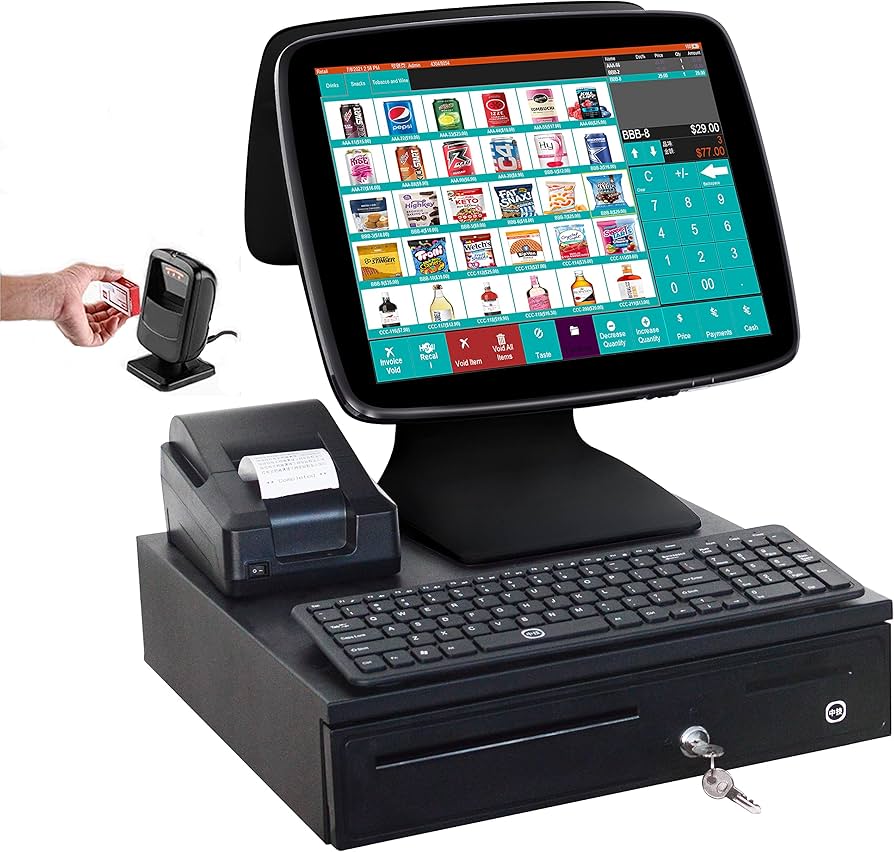
Technology has transformed the way businesses handle sales and customer service. One of the most significant advancements is the touch screen cash register, which combines intuitive hardware with powerful software to simplify transactions and daily operations. Compared to traditional cash registers, these systems offer greater speed, accuracy, and functionality, making them a popular choice for modern businesses.
A touch screen cash register is designed to streamline the checkout process while integrating features such as inventory management, sales reporting, and payment processing. To learn more about the capabilities of a modern Touch Screen Cash Register, you can explore how these systems support efficient retail and hospitality operations.
What Is a Touch Screen Cash Register?
A touch screen cash register is a point-of-sale (POS) system that uses a touchscreen interface instead of physical buttons or keyboards. Employees can easily navigate menus, select products, process payments, and access business functions through a user-friendly display.
These systems are commonly used in retail stores, restaurants, cafés, supermarkets, pharmacies, and many other businesses where fast and accurate transactions are essential.
How Does a Touch Screen Cash Register Work?
A touch screen cash register follows a straightforward process during each customer transaction.
- The cashier scans an item’s barcode or selects it from the touchscreen menu.
- The system automatically retrieves the product information and calculates the total price.
- Taxes and discounts are applied based on the transaction settings.
- The customer chooses a preferred payment method, such as cash, card, or digital wallet.
- The transaction is completed, a receipt is generated, and inventory records are updated instantly.
This automated workflow minimizes manual input and helps ensure accurate transaction records.
Main Components of a Touch Screen Cash Register
A complete touch screen cash register typically includes several hardware and software components that work together.
Common components include:
- Touchscreen display
- Barcode scanner
- Receipt printer
- Cash drawer
- Payment terminal
- POS software
- Customer display (optional)
These components allow businesses to process transactions efficiently while managing essential operational tasks.
Key Features
Modern touch screen cash registers offer a variety of features that extend beyond simple payment processing.
Some of the most valuable features include:
- Real-time inventory management
- Sales reporting and analytics
- Multiple payment method support
- Employee login and permission controls
- Product management
- Customer purchase history
- Tax and discount automation
These capabilities help businesses improve efficiency and make informed operational decisions.
Benefits for Businesses
Using a touch screen cash register provides several practical advantages for business owners and employees.
Some key benefits include:
- Faster checkout times
- Improved transaction accuracy
- Reduced manual errors
- Easier employee training
- Better inventory control
- Simplified sales tracking
- Enhanced customer service
These benefits contribute to smoother business operations and a better overall customer experience.
Industries That Use Touch Screen Cash Registers
Touch screen cash registers are widely used across different industries because of their flexibility and ease of use.
They are commonly found in:
- Retail stores
- Restaurants
- Coffee shops
- Grocery stores
- Pharmacies
- Convenience stores
- Electronics retailers
- Service-based businesses
Each business can customize the system according to its specific operational requirements.
Choosing the Right Touch Screen Cash Register
When selecting a touch screen cash register, businesses should consider factors such as transaction volume, inventory size, payment options, software compatibility, and future growth plans.
An easy-to-use interface, dependable technical support, and scalable software can help ensure the system continues to meet business needs over time.
Conclusion
A touch screen cash register is far more than a modern replacement for a traditional cash register. It serves as a comprehensive business management tool that simplifies transactions, improves inventory accuracy, supports multiple payment methods, and provides valuable operational insights. By combining user-friendly technology with advanced POS features, touch screen cash registers help businesses operate more efficiently while delivering a faster and more convenient checkout experience for customers.
