

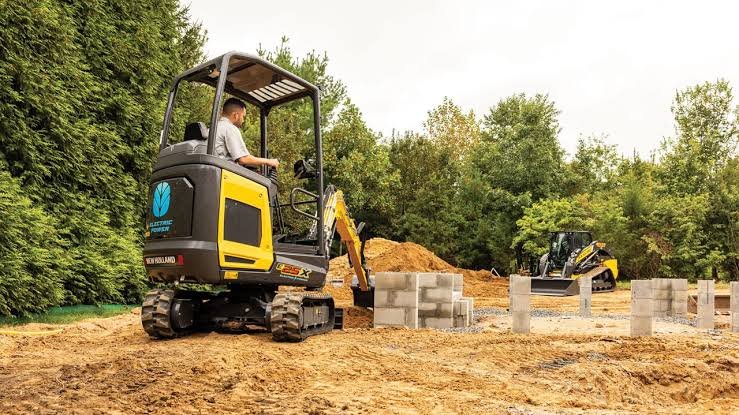
Construction logistics involve the movement of machinery, materials, workers, and waste through a project site. Even a relatively small excavation job can become inefficient when equipment arrives before access is ready, materials obstruct working areas, or machines need to be moved repeatedly. Compact equipment can help address some of these challenges, while battery-powered operation introduces additional planning requirements that site managers must incorporate into their logistics arrangements.
An electric powered mini excavator can support site logistics when its dimensions, transport arrangements, operating range, and charging requirements suit the project. Its potential contribution is not limited to digging. The machine’s placement, movement, energy supply, and relationship with other equipment can influence how effectively the work area is organised.
Start With a Site Logistics Plan
Before machinery arrives, the site manager should establish where equipment will enter, travel, operate, park, and leave. This is particularly important on compact projects where vehicles, material deliveries, workers, and excavation machinery may compete for the same space.
A site plan should identify access gates, turning points, loading areas, pedestrian routes, storage zones, excavation boundaries, and spoil collection locations. The excavator’s transport dimensions and operating envelope should be checked against the available space.
The plan should also account for temporary restrictions. A route that is suitable at the start of a project may become blocked when materials are delivered or another contractor begins work. Regular coordination helps prevent machinery from becoming trapped or requiring unnecessary repositioning.
Reducing the Space Needed for Equipment Movement
Compact excavators can be useful where larger machinery would occupy too much of the available working area. Their smaller dimensions may make them easier to position near buildings, along narrow access routes, or within sections of a developed property.
However, compact size does not automatically eliminate access challenges. Managers should verify the machine’s width, height, tail swing, ground clearance, and turning requirements. They should also assess whether the route can support its operating weight.
The working envelope matters as much as the travel route. The excavator needs enough space to dig, rotate, lift material, and position its bucket without interfering with nearby structures or workers.
Coordinating Spoil Removal
Excavated material can quickly occupy valuable space. If soil is placed too close to the machine, it may restrict movement or create additional handling work. If it is stored along an access route, deliveries and other site activities may be disrupted.
Before excavation begins, determine where spoil will be placed and how it will be removed. Depending on the project, this may involve a designated stockpile, a skip, a dumper, or regular collection by a transport vehicle.
The excavator should be positioned so that material can be transferred efficiently without crossing pedestrian routes unnecessarily. The plan should also account for soil conditions and any requirements for separating reusable material from waste.
Managing Charging as a Logistics Activity
Battery-powered machinery adds an energy-supply task to the site’s logistics plan. The charging location should be selected before equipment is delivered, and the required electrical infrastructure must be confirmed.
Charging areas should not obstruct access roads, fire exits, pedestrian routes, or emergency equipment. Cables need protection from vehicles and other sources of damage. The charging process must follow the manufacturer’s instructions and the site’s electrical safety procedures.
If several machines share a charging facility, the manager should coordinate charging times and review whether the available electrical capacity is sufficient. This can be particularly important when several units return to the depot at the end of a shift.
Planning Equipment Around Other Trades
Excavation rarely takes place in isolation. Groundworkers may need to install pipes, surveyors may need access to measure levels, and other contractors may be preparing materials or completing adjacent work.
A clearly defined work sequence helps reduce conflicts. The excavator should complete the sections needed by the next trade without blocking access to areas that are already ready for installation.
Site managers can improve coordination by using short daily briefings and updating the work plan when conditions change. Operators should know which areas are authorised for excavation and which must remain clear.
Transport and Delivery Considerations
Moving a mini excavator between projects requires appropriate transport equipment and secure loading arrangements. Managers should confirm the machine’s transport weight, dimensions, lifting points, and any requirements for securing it during transit.
Delivery timing should reflect site readiness. If the access route is blocked or the charging arrangement is not available, early delivery may create unnecessary handling and storage problems.
For businesses working across several nearby sites, transport routes can be organised to reduce repeated journeys. However, any efficiency gained must be balanced with safe loading, permitted vehicle weights, and local transport requirements.
How Electric Operation May Influence Site Organisation
An electric excavator produces no direct exhaust emissions at the point of operation. This can be relevant where the machine works near occupied buildings or in certain enclosed areas. Potentially lower engine-related noise may also affect how tasks are scheduled around nearby activities.
These characteristics do not remove other site impacts. Excavation can still create dust, vibration, and noise, while other machinery and vehicles continue to require appropriate controls. The site manager should consider the complete working environment.
Measure Whether Logistics Are Improving
To understand the machine’s contribution, record the time spent transporting, positioning, operating, charging, and waiting. Also note how often the excavator needs to be repositioned and whether material-handling arrangements cause delays.
These observations can help identify improvements in the site layout and work sequence. Comparing planned and actual machine movements may reveal avoidable travel or poor placement of storage areas.
Organisation Is the Real Source of Efficiency
A compact electric excavator can support better site logistics when it is integrated into a carefully planned operation. Its dimensions may help with access, while its energy requirements introduce a need for organised charging.
The strongest results come from coordinating machine movements, spoil handling, deliveries, workers, and charging facilities. By treating the excavator as part of the wider logistics system, contractors can reduce unnecessary disruption and create a more orderly working environment.
