

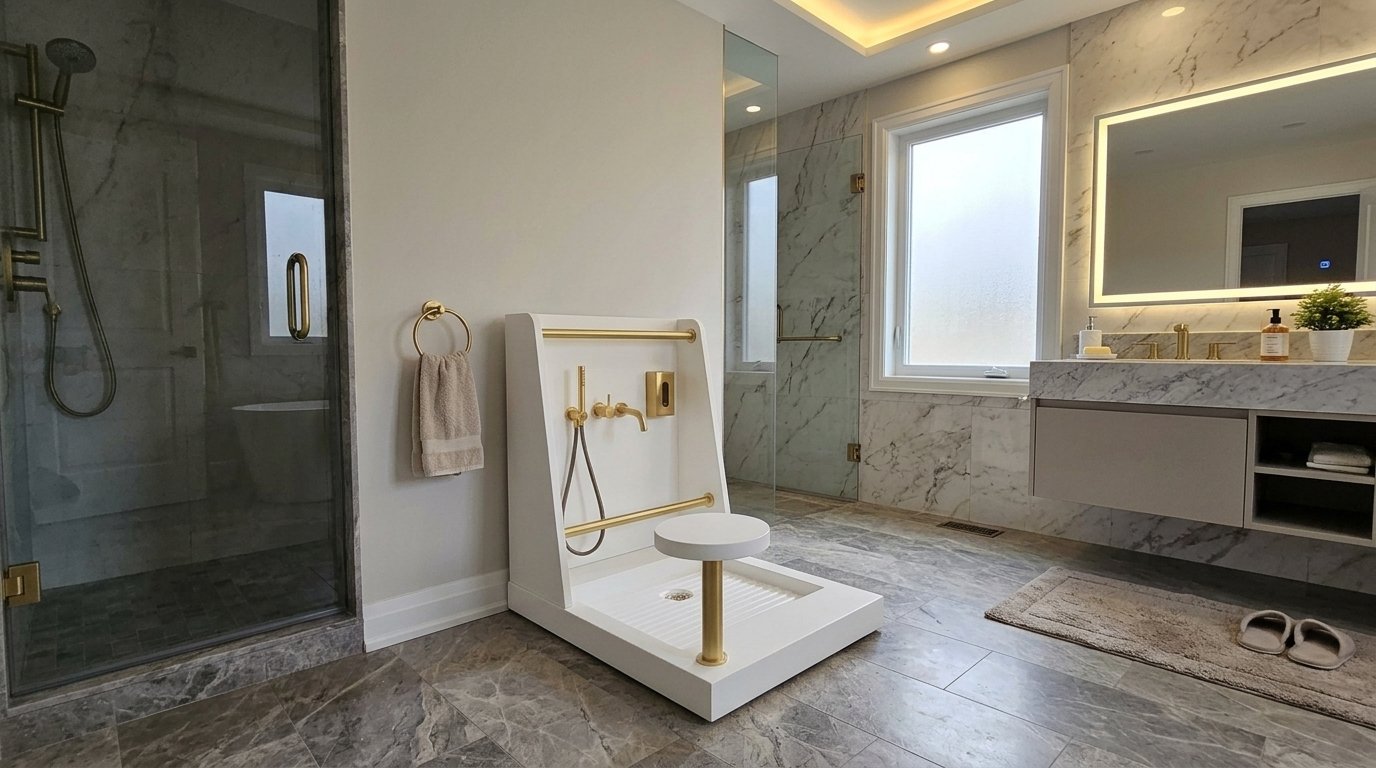
A clean ablution area depends on more than frequent washing of the basin itself. The floor, taps, walls, drainage, and surrounding storage all influence how hygienic and comfortable the space remains. If these elements are poorly arranged, water can collect in awkward places, cleaning may take longer, and users may find it difficult to move around. A well-planned washing station makes cleanliness part of the design instead of treating it as an afterthought.
When planning the fixture, a Muslim Wudu sink should be selected with both user comfort and routine maintenance in mind. Some models provide a lower section for foot washing, while others have a broad or shaped bowl. Whichever configuration is chosen, it should allow convenient access, direct water towards the drain, and leave enough room for users to stand without crowding the surrounding area.
Organize the Wet and Dry Zones
A useful starting point is to identify which parts of the bathroom will receive the most water. The basin and its immediate surroundings form the main wet zone, while storage, towels, and other accessories should ideally be positioned where splashing is less likely. Separating these functions can make the room easier to maintain.
The standing area should remain clear. Avoid placing bins, baskets, or loose accessories where people need to move. If the basin is installed near a shower, consider how water from both fixtures may affect the floor. The layout should allow users to approach and leave without crossing unnecessary obstacles.
Select Surfaces That Are Easy to Maintain
The basin material should be suitable for regular cleaning. Ceramic and solid-surface products are common choices, but their properties and care instructions differ. Ask the supplier which cleaning agents are recommended and whether abrasive tools or strong chemicals should be avoided.
Wall finishes behind and beside the basin should also tolerate moisture. Suitable wall cladding or a properly sealed finish can help protect the surface from repeated splashing. Keep joints and edges accessible so they can be inspected and cleaned. Intricate decorative details may look attractive but can create extra work if they trap residue.
Make Drainage a Priority
Water should leave the basin efficiently rather than collecting in the bowl or around its base. Check the waste outlet’s position and size, and make sure it is compatible with the property’s plumbing. If the fixture is being added to an existing bathroom, a plumber should review the current pipework before installation.
The floor needs similar attention. Choose a finish appropriate for wet conditions and ensure that joints are sealed correctly. A floor drain may be useful in some layouts, but it must be positioned and connected properly. The floor should not be left with low spots where water remains after use.
Choose Tapware That Limits Unnecessary Splashes
A tap that is too short or poorly positioned may send water against the basin edge. Check the spout reach and height against the bowl’s dimensions. Controls should be easy to operate, and the selected fitting must match the basin’s mounting arrangement.
A mixer tap can offer convenient temperature adjustment where hot and cold supplies are available. Whatever fitting is chosen, make sure it is accessible for cleaning and future repairs. Water marks and residue often collect around the base, so a simple design can be easier to maintain.
Support Hygiene with a Regular Routine
Even a well-designed basin needs consistent care. Wipe the bowl and tap after cleaning, remove residue around the drain, and inspect visible seals for signs of wear. Follow the manufacturer’s instructions rather than using a cleaner simply because it works on another bathroom surface.
In a shared household or facility, a written cleaning schedule can help ensure that the washing area receives attention throughout the day. Check floor surfaces as well as the fixture itself, particularly during busy periods.
Provide Good Lighting and Ventilation
Adequate lighting helps users see the washing area and identify water on the floor. Ventilation supports drying and can reduce lingering moisture in bathrooms with limited natural airflow. Keep air vents clear and address persistent dampness promptly.
Create Comfort Through Careful Planning
A clean, comfortable ablution area brings together an appropriate basin, accessible taps, easy-care finishes, and effective drainage. By planning the wet zone and maintenance routine alongside the fixture choice, homeowners can create a space that remains practical and welcoming through everyday use.
