

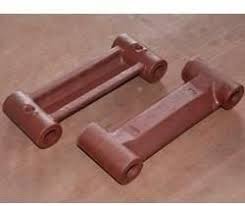
Casting is one of the most widely used manufacturing processes for producing iron components with different shapes, dimensions, and mechanical requirements. It allows manufacturers to create parts that would be difficult or expensive to produce through machining alone. However, several casting methods are available, and each offers different advantages in terms of production cost, dimensional accuracy, surface finish, tooling requirements, and manufacturing flexibility.
Sand casting remains a popular choice for iron components because it can accommodate complex geometries, large parts, and relatively low to high production volumes. Other methods, including investment casting, permanent mold casting, and centrifugal casting, may be more suitable for specific applications. An experienced Iron Castings Manufacturer evaluates component design, material requirements, production quantity, and quality expectations before selecting a casting process. Understanding the differences between these methods helps manufacturers and buyers make informed decisions.
1. Understanding Sand Casting
<AsyncImage query=”industrial iron sand casting foundry pouring molten iron into sand mold” aspectRatio=”16:9″ width=”100%”/>
Sand casting is a manufacturing process in which molten iron is poured into a cavity formed in specially prepared sand. After the metal solidifies, the mold is broken to remove the finished casting.
The process uses a pattern to create the required mold cavity. Depending on the component design, cores may also be placed inside the mold to produce internal passages and hollow sections.
The main stages generally include:
- Pattern preparation.
- Sand mixing and mold making.
- Core preparation and placement, when required.
- Mold assembly.
- Melting and pouring.
- Cooling and solidification.
- Shakeout and casting removal.
- Cleaning, inspection, and machining.
Sand casting is widely used for gray iron and ductile iron components. It is suitable for producing machine bases, engine blocks, pump housings, valve bodies, and various industrial equipment parts.
2. What Makes Sand Casting Suitable for Iron Components?
Sand casting offers several advantages that make it practical for manufacturing iron components across different industries.
Material flexibility: It supports many types of cast iron, including gray iron, ductile iron, and certain alloy cast irons.
Component size flexibility: It can produce relatively small components as well as large industrial castings.
Complex geometry: Cores can create internal passages and cavities that would be difficult to manufacture using other processes.
Tooling economics: Sand molds are generally less expensive to produce than permanent metal molds, especially for smaller production runs.
Design flexibility: Patterns and mold arrangements can be adjusted to accommodate different component requirements.
Although sand casting may require more finishing than some other methods, its flexibility makes it a practical option for a broad range of iron products.
3. Sand Casting vs. Investment Casting
<AsyncImage query=”investment casting ceramic shell mold foundry metal casting process” aspectRatio=”16:9″ width=”100%”/>
Investment casting uses a wax or similar pattern that is coated with ceramic material to create a mold. The pattern is removed before molten metal is poured into the ceramic shell.
This process is known for producing detailed components with good dimensional accuracy and surface finish.
Main differences
| Factor | Sand casting | Investment casting |
|---|---|---|
| Mold material | Prepared sand | Ceramic shell |
| Surface finish | Generally rougher | Generally smoother |
| Dimensional accuracy | Depends on process and tooling | Often higher |
| Component complexity | Suitable for complex shapes | Suitable for intricate details |
| Tooling and preparation | Generally economical | Often more involved |
| Typical production use | Broad range of iron components | Detailed components requiring precision |
Investment casting can be useful when intricate geometry and reduced machining are important. However, it is not automatically the best option for every iron alloy or component size.
Sand casting is often more practical for large iron components and applications where tooling cost and production flexibility are major considerations.
4. Sand Casting vs. Permanent Mold Casting
<AsyncImage query=”permanent mold metal gravity die casting industrial steel mold” aspectRatio=”16:9″ width=”100%”/>
Permanent mold casting uses reusable metal molds, commonly made from steel or cast iron. Molten metal enters the mold through gravity or another controlled filling method, depending on the process.
Because the mold can be reused, this method can provide consistent dimensions and surface quality across repeated production cycles.
Main differences
Mold life: Sand molds are generally used once, while permanent metal molds can be reused many times.
Production volume: Permanent mold casting can be economical for suitable high-volume production, whereas sand casting offers flexibility for lower-volume orders.
Surface finish: Permanent molds can provide smoother surfaces than conventional sand molds.
Component geometry: Sand casting offers greater flexibility for many large and complex shapes, particularly those requiring internal cores.
An important consideration is material compatibility. Conventional permanent mold gravity casting is commonly associated with non-ferrous alloys, especially aluminum. Pouring iron into reusable metal molds creates significant thermal challenges because of its high pouring temperature. Specialized tooling and process arrangements may be required, so permanent mold casting is not a general replacement for sand casting in iron production.
5. Sand Casting vs. Centrifugal Casting
<AsyncImage query=”centrifugal casting industrial metal pipe rotating mold foundry” aspectRatio=”16:9″ width=”100%”/>
Centrifugal casting uses a rotating mold to distribute molten metal through centrifugal force. The process is particularly suitable for producing cylindrical or tubular components.
As the mold rotates, molten metal moves toward the mold wall and solidifies into the required shape.
Main differences
Component geometry: Sand casting can produce many shapes, while centrifugal casting is particularly suited to cylindrical and rotationally symmetrical components.
Material distribution: Centrifugal force helps distribute metal along the rotating mold wall.
Production requirements: Centrifugal casting requires specialized equipment and carefully controlled operating conditions.
Internal features: Sand casting can accommodate complex internal passages through cores, while centrifugal casting is generally more limited in this respect.
Centrifugal casting is used for suitable pipes, sleeves, rings, and other cylindrical iron components. Sand casting is generally more versatile for irregular shapes, housings, and parts with complex external or internal features.
6. Sand Casting vs. Die Casting
Die casting uses high pressure to force molten metal into a reusable metal mold. It is commonly used for producing large quantities of relatively small, detailed components with consistent dimensions.
However, conventional high-pressure die casting is mainly used for non-ferrous materials such as aluminum, zinc, and magnesium alloys.
Iron has a much higher melting temperature than these materials. This creates considerable thermal stress and wear on die-casting equipment, making conventional high-pressure die casting unsuitable for most iron components.
For this reason, sand casting is generally a more practical choice for traditional gray iron and ductile iron production.
| Factor | Sand casting | High-pressure die casting |
|---|---|---|
| Common materials | Gray and ductile iron | Aluminum, zinc, magnesium |
| Mold type | Disposable sand mold | Reusable metal die |
| Production volume | Low to high, depending on setup | Usually high volume |
| Component size | Small to very large | Commonly small to medium |
| Tooling cost | Generally lower | Generally higher |
| Iron compatibility | Widely established | Limited for conventional processes |
7. Comparing Production Costs
Production cost is an important factor when choosing a casting method. The most economical process depends on the number of components required, their dimensions, complexity, material, and finishing needs.
Sand casting often has an advantage for low-volume and customized iron components because its tooling requirements are relatively economical.
Investment casting may involve higher pattern and ceramic shell preparation costs but can reduce machining requirements for intricate parts.
Permanent mold and die casting can provide cost advantages in suitable high-volume applications because reusable molds distribute tooling expenses across many components. However, their suitability for iron must be assessed separately.
Centrifugal casting may be economical for certain cylindrical components when production quantities and equipment utilization justify the investment.
A complete cost comparison should include:
- Pattern and tooling expenses.
- Mold preparation.
- Material consumption.
- Melting and pouring operations.
- Production cycle time.
- Cleaning and finishing.
- Machining requirements.
- Inspection and quality control.
The lowest initial tooling cost does not necessarily mean the lowest total manufacturing cost.
8. Surface Finish and Dimensional Accuracy
Surface finish and dimensional accuracy influence how much additional processing a casting requires after production.
Conventional sand casting generally produces a rougher surface than investment casting or some reusable mold processes. However, the final result depends on sand quality, mold preparation, pattern condition, and production controls.
Dimensional accuracy is influenced by several factors:
- Pattern precision.
- Mold stability.
- Sand properties.
- Casting shrinkage.
- Cooling conditions.
- Mold alignment.
- Component geometry.
For iron components requiring close tolerances, machining is often necessary regardless of the casting method.
Manufacturers should identify critical dimensions and surface requirements during the design stage. This allows appropriate machining allowances and inspection procedures to be incorporated into production planning.
9. Which Casting Method Is Better for Large Iron Components?
Large iron components are commonly produced through sand casting because the method can accommodate substantial mold sizes and complex geometries.
Examples include:
- Industrial machine beds.
- Large pump housings.
- Heavy equipment frames.
- Engine blocks.
- Industrial gearbox housings.
- Large valve bodies.
Sand casting allows manufacturers to create molds tailored to the component’s shape and dimensions without requiring a massive reusable metal mold.
Centrifugal casting may be more appropriate for large cylindrical parts, while investment casting is generally selected for smaller or more intricate components where its precision advantages justify the additional process requirements.
The best method therefore depends on the shape and function of the component rather than size alone.
10. Choosing a Casting Process for Complex Internal Features
Some iron components contain internal cavities, channels, or passages that must be formed during casting.
Sand casting offers considerable flexibility in this area because manufacturers can use sand cores to create internal geometries.
For example, pump housings and valve bodies may require passages that allow fluids to move through the component. Engine components may also contain complex internal spaces for functional or weight-related reasons.
The core system must be designed carefully to maintain its position and withstand the pressure of molten metal.
Investment casting can also produce intricate geometries, but the suitability of the process depends on component dimensions, material, and production requirements.
Centrifugal casting is generally less flexible for complex internal passages because it is primarily designed around rotational geometries.
11. Production Volume and Manufacturing Flexibility
The number of components required has a significant influence on casting method selection.
Sand casting is flexible for prototypes, customized parts, replacement components, and medium- or high-volume production. Its tooling can be adapted when component designs change.
Investment casting can be suitable for repeated production of intricate components, although pattern and shell preparation need to be considered.
Permanent mold and die casting are generally more attractive when high production volumes justify the cost of reusable tooling and the material is compatible with the process.
Centrifugal casting is effective for repeated production of cylindrical parts.
Manufacturers should consider both current demand and expected future orders when selecting a production method.
12. Quality Control Across Different Casting Methods
Every casting method requires suitable quality control procedures. The types of defects and inspection priorities may vary depending on the process.
For sand casting, manufacturers commonly monitor sand properties, mold strength, core positioning, gating design, and pouring conditions.
Other casting methods require different controls, such as ceramic shell integrity in investment casting or mold temperature and filling conditions in permanent mold processes.
Inspection methods may include:
- Visual examination.
- Dimensional measurement.
- Chemical composition analysis.
- Hardness testing.
- Tensile testing.
- Metallographic examination.
- Ultrasonic or radiographic testing where appropriate.
The inspection plan should be based on the component’s material specification, design requirements, and intended operating conditions.
13. How to Select the Best Casting Method for Iron Components
Selecting a casting method requires balancing technical requirements with manufacturing costs and production capabilities.
The following questions can help guide the decision:
- What is the component’s geometry? Complex internal features may favor sand casting or another process with suitable core capabilities.
- How large is the component? Large and heavy iron parts are often practical to produce using sand molds.
- What level of accuracy is required? Precision-focused processes may reduce finishing requirements when suitable for the material and geometry.
- How many components are needed? Production volume influences tooling economics.
- Which iron grade is required? Material compatibility must be considered before choosing a process.
- What finishing operations are necessary? Machining and surface requirements affect total production cost.
- What inspection standards apply? Quality requirements should be included in the process selection from the beginning.
Discussing these points with casting engineers helps identify a manufacturing method that balances quality, cost, and production efficiency.
Conclusion
Sand casting is one of the most versatile and established methods for producing iron components. Its ability to accommodate different cast iron grades, large component sizes, complex shapes, and varied production volumes makes it suitable for many industrial applications.
Investment casting may be preferable for intricate components requiring better surface finish, while centrifugal casting is useful for cylindrical parts. Permanent mold and high-pressure die casting are more commonly associated with compatible non-ferrous alloys and are not general substitutes for conventional iron sand casting.
Ultimately, the best casting method depends on component geometry, material requirements, production quantity, dimensional accuracy, and total manufacturing cost. Evaluating these factors carefully helps manufacturers select a process that delivers reliable iron components and consistent production quality.
