

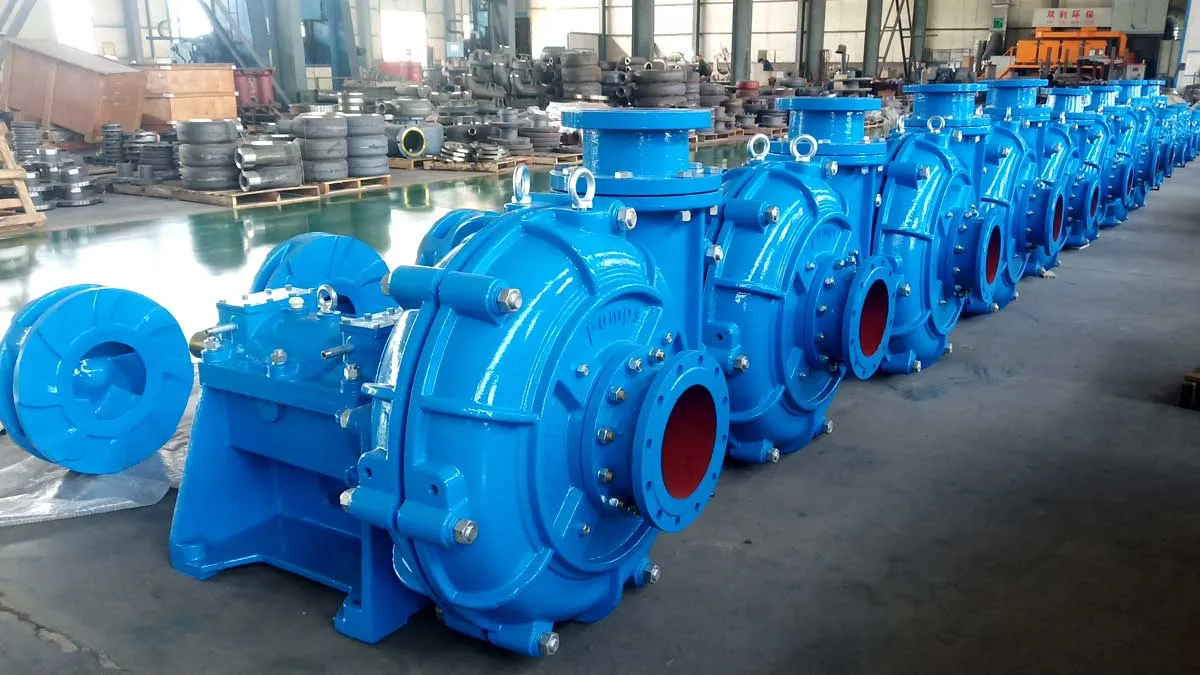
Choosing between heavy-duty and standard slurry pumping equipment depends largely on the characteristics of the material being transported and the demands of the application. While both designs can handle slurry, they are intended for different operating conditions and levels of abrasion.
A centrifugal slurry pump can be configured for different duties, but selecting the right type requires more than comparing basic flow and head ratings. Slurry concentration, particle size, hardness, operating hours, and expected wear should all be considered before making a decision.
What Is a Standard Slurry Pump?
A standard slurry pump is generally intended for applications with moderate solids concentrations and manageable abrasive conditions. It can be suitable for processes where the slurry does not impose exceptionally high wear or continuous heavy-duty demands.
These pumps can provide an effective balance between hydraulic performance, equipment size, maintenance requirements, and operating cost when the application falls within their intended range.
What Is a Heavy-Duty Slurry Pump?
Heavy-duty slurry pumps are designed for more demanding applications where abrasive solids, high concentrations, or extended operating periods create greater mechanical and hydraulic stresses.
They commonly feature robust construction and components designed to withstand severe wear. Such designs can be appropriate for demanding mining, mineral processing, dredging, and heavy industrial applications.
Key Differences Between the Two
The main difference is the severity of the operating environment each pump is designed to handle. Several factors should be evaluated when comparing them.
Wear Resistance
Heavy-duty designs generally place greater emphasis on resisting abrasive wear. They may use more robust wetted components and construction methods for applications involving hard or highly abrasive particles.
Standard designs can be suitable when wear rates are moderate. Using heavy-duty equipment for a relatively mild application may provide little practical benefit if the additional capacity is not needed.
Construction
Heavy-duty pumps are typically built to tolerate demanding operating conditions and prolonged exposure to abrasive materials. Their robust construction can make them suitable for continuous service.
Standard pumps may have a lighter configuration that is appropriate for less severe applications. The correct choice depends on actual process requirements rather than the pump’s classification alone.
Operating Conditions
Heavy-duty equipment is generally better suited to applications involving high solids concentrations, large particles, high flow rates, or long operating hours.
Standard equipment may be appropriate when slurry conditions are less severe and the system operates within moderate limits.
Maintenance
Heavy-duty pumps can be advantageous where unexpected downtime is particularly costly and abrasive wear is a major concern. Robust wear components may provide longer service intervals in demanding applications.
However, all slurry pumps require maintenance. Regular inspection of impellers, liners, casings, seals, and bearings remains important regardless of pump type.
When Is a Heavy-Duty Pump Better?
A heavy-duty pump may be the better option when the application involves severe abrasion or continuous operation under demanding conditions.
Typical situations include:
- High concentrations of abrasive solids
- Large or hard particles
- Continuous mining operations
- Long-distance slurry transport
- High-flow industrial processes
- Heavy-duty dredging
- Applications where downtime has significant consequences
The actual suitability should be confirmed using the required flow, head, slurry properties, and expected operating conditions.
When Is a Standard Pump Enough?
A standard slurry pump may be sufficient when the slurry is less abrasive and the operating conditions are moderate.
For example, an application involving relatively fine particles, lower solids concentration, or shorter operating periods may not require the additional construction associated with a heavy-duty design.
Choosing equipment that is appropriately matched to the application can avoid unnecessary initial costs and operating complexity.
Consider Slurry Concentration
Solids concentration is one of the most important factors in the decision. As the amount of solid material increases, the slurry becomes more demanding to transport and may create higher wear rates.
However, concentration should not be considered alone. Particle hardness, shape, size, and slurry density can have an equally important effect on pump performance and component life.
Consider Particle Size and Hardness
Large and hard particles generally cause greater abrasive wear than small and softer particles. Sharp particles can also create severe erosion as they pass through the pump.
If the slurry contains coarse, highly abrasive solids, a heavy-duty configuration may provide better durability. For finer and less abrasive materials, a standard design may provide an appropriate balance of performance and cost.
Compare Total Cost of Ownership
Initial purchase price should not be the only consideration. A less expensive pump may require more frequent replacement of wear components if it is exposed to severe slurry conditions.
Conversely, selecting a heavy-duty pump for a relatively mild application may result in unnecessary capital and operating costs.
Consider the complete ownership cost, including energy consumption, maintenance, spare parts, downtime, and expected service life.
Importance of Correct Pump Sizing
Neither heavy-duty nor standard construction can compensate for incorrect pump sizing. The selected equipment must provide the required flow and head while operating within an appropriate range.
An oversized pump may consume unnecessary energy and operate inefficiently. An undersized pump may struggle to meet process requirements and experience excessive stress.
The pump should therefore be selected according to the complete system curve and actual slurry conditions.
Which Option Is Better?
There is no universal answer. A heavy-duty slurry pump is generally better for severe abrasive conditions and continuous demanding service, while a standard pump can be the more practical choice for moderate applications.
The best option is the one that matches the slurry properties, hydraulic requirements, operating schedule, maintenance strategy, and total cost objectives.
Final Thoughts
The choice between heavy-duty and standard centrifugal slurry pumps should be based on application requirements rather than simply choosing the most robust option available. Heavy-duty designs can provide advantages in severe abrasive environments, while standard designs may offer an efficient solution for less demanding conditions.
Evaluating solids concentration, particle characteristics, flow rate, head, operating hours, wear expectations, and maintenance costs can help identify the most suitable pump configuration. Proper selection ultimately supports reliable operation and avoids paying for equipment capabilities that the application does not require.
