

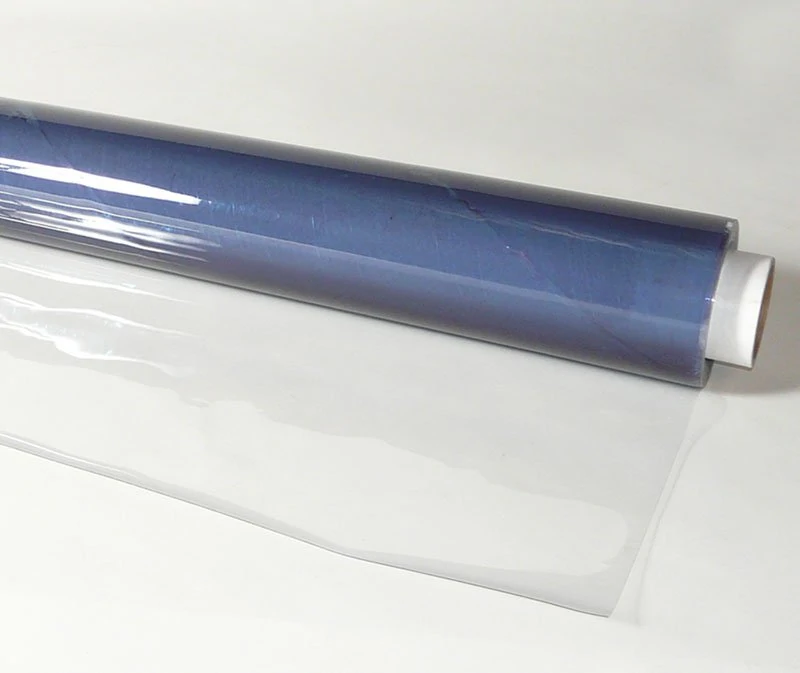
Material innovation continues to influence how manufacturers design, package, protect, and distribute products. Businesses across industrial and commercial sectors are looking for materials that offer improved performance, consistent quality, processing flexibility, and cost efficiency. Transparent plastic films remain important in this development because they combine product visibility with practical protective properties.
As manufacturing technologies evolve, Transparent PVC Film is also benefiting from improvements in formulation, processing, surface quality, and product customization. These developments are helping manufacturers meet more specialized requirements in packaging, construction, consumer goods, and industrial applications. Understanding these innovations can help businesses identify suitable materials and make better purchasing decisions.
1. Improved Optical Clarity and Surface Quality
One important area of development is the improvement of film transparency and surface consistency. In commercial packaging and display applications, the ability to see a product clearly can influence its presentation and perceived quality.
Manufacturers continue to refine formulation and production processes to reduce visible imperfections, improve clarity, and maintain more uniform surfaces.
These improvements can be valuable for:
- Retail packaging that displays products clearly.
- Protective covers for consumer goods.
- Transparent sleeves and document holders.
- Product display components.
- Packaging that requires visual inspection.
Optical performance varies by formulation and manufacturing process, so buyers should evaluate haze, clarity, color consistency, and surface finish when selecting a grade.
2. More Advanced PVC Formulations
PVC film performance depends significantly on its formulation. Manufacturers can adjust the composition to achieve different levels of flexibility, hardness, durability, and processing behavior.
Advances in formulation development are allowing suppliers to produce more application-specific film grades.
For example, some products may be designed for greater flexibility, while others are developed to provide a firmer structure or improved resistance to everyday handling.
The selection of stabilizers, plasticizers, and other additives can influence the final characteristics of the material. As a result, businesses can choose grades that better match their intended applications rather than relying on a single general-purpose product.
3. Development of More Durable Film Grades
Durability is a major consideration for industrial and commercial users. Materials used in transportation, packaging, and protective applications may experience repeated handling, bending, and contact with other surfaces.
Improvements in formulation and manufacturing control can help produce films with more consistent mechanical properties.
Depending on the grade, manufacturers may focus on:
- Better resistance to routine handling damage.
- More consistent tensile performance.
- Improved flexibility during bending.
- Greater resistance to surface marking.
- Better dimensional consistency.
These characteristics are particularly useful when film is processed at high volumes or used to protect products during storage and distribution.
However, performance should always be assessed against the requirements of the specific application.
4. Precision Manufacturing and Thickness Control
Manufacturing technology plays an important role in determining film quality. Variations in thickness can affect flexibility, strength, transparency, and processing performance.
Improved production controls and measurement systems can help manufacturers maintain more consistent thickness throughout a roll or sheet.
More precise thickness control offers several advantages:
- Greater consistency between production batches.
- More predictable processing behavior.
- Better control over material usage.
- Reduced variation in finished products.
- Easier quality inspection.
For businesses purchasing film in bulk, consistent specifications are especially important because even small variations may affect automated production processes.
5. Customization for Specialized Applications
One of the most useful developments in the PVC film industry is the ability to customize products according to specific customer requirements.
Instead of selecting only from standard thicknesses and finishes, buyers may be able to request particular material characteristics.
Customization options can include:
- Different thickness ranges.
- Various levels of flexibility.
- Specific surface finishes.
- Customized roll widths.
- Color variations and transparency levels.
- Formulations designed for particular processing requirements.
This flexibility allows manufacturers to match the material more closely to their products and equipment.
Before ordering customized film, businesses should confirm minimum order quantities, production lead times, technical tolerances, and sample availability.
6. Innovations in Surface Treatment and Printing Compatibility
Surface quality is important when PVC film is used for printed packaging, labels, decorative products, and commercial displays.
Developments in surface treatment can help improve the interaction between film and certain printing or finishing processes.
Depending on the grade and treatment, manufacturers may be able to achieve more suitable surfaces for:
- Printing and graphic applications.
- Decorative finishes.
- Lamination.
- Adhesive-based applications.
- Product identification and branding.
Not every PVC film is automatically suitable for every printing or bonding method. Buyers should confirm surface-treatment specifications and test compatibility with the inks, adhesives, and equipment used in production.
7. Better Compatibility with Automated Production
Modern factories increasingly rely on automated machinery to improve output and reduce manual handling. Packaging and converting equipment often requires materials with predictable thickness, flexibility, and feeding characteristics.
PVC film manufacturers can support these requirements through improved production consistency and application-specific grades.
For industrial users, suitable film may be processed through operations such as:
- Cutting and trimming.
- Folding and wrapping.
- Heat sealing.
- Thermoforming.
- Printing.
- Lamination.
The film’s performance depends on its formulation and the operating conditions of the equipment. Testing is essential before introducing a new material into a full production line.
8. Expanded Applications in Modern Packaging
Packaging remains one of the major commercial uses for transparent PVC film. Its ability to provide visibility while covering a product makes it suitable for selected packaging formats.
Developments in film quality and customization are supporting a range of packaging requirements.
Examples include:
Retail packaging: Transparent film can help customers view packaged products while providing a physical covering.
Protective sleeves: Suitable grades can be used for stationery, documents, and selected consumer products.
Display packaging: Clear material can support product presentation in retail environments.
Industrial packaging: Certain grades can protect components from dust and routine handling during storage and transportation.
The appropriate film should be selected according to the required protection, processing method, and applicable regulatory standards.
9. Greater Attention to Resource Efficiency
Manufacturers are increasingly examining how material selection and production processes influence waste and resource consumption.
In film manufacturing, improvements in thickness control, process monitoring, and production planning can help reduce unnecessary material variation and manufacturing waste.
For businesses using PVC film, practical resource-efficiency measures include:
- Selecting the correct thickness for the application.
- Optimizing cutting patterns to reduce offcuts.
- Improving production settings to limit rejected material.
- Using appropriate storage practices to prevent damage.
- Managing inventory to avoid unnecessary overstocking.
These measures can help lower material costs while supporting more efficient operations.
PVC recycling is also an important consideration. Although certain PVC materials can be recycled, availability depends on local recycling infrastructure, material composition, additives, and contamination. Businesses should investigate suitable collection and processing options rather than assume all film grades can enter the same recycling stream.
10. Specialized Requirements for Industrial Applications
Industrial users often need materials that meet specific operating conditions. A film suitable for general packaging may not be appropriate for applications involving heat, chemicals, mechanical stress, or prolonged environmental exposure.
As product development becomes more specialized, suppliers may offer grades with different combinations of flexibility, hardness, thickness, and other performance characteristics.
Potential industrial applications include:
- Protective covers for selected components.
- Flexible barriers and coverings.
- Equipment protection during storage.
- Transparent partitions and display elements.
- Custom-formed plastic products.
For demanding environments, buyers should request technical data and carry out application-specific testing before adopting a particular grade.
11. The Role of Quality Testing and Technical Documentation
Innovation is valuable only when the finished material performs consistently. Quality testing helps manufacturers verify whether a film meets the required specifications.
Depending on the intended application, relevant checks may include:
| Quality Parameter | Purpose |
|---|---|
| Thickness and tolerance | Checks material uniformity |
| Transparency and haze | Evaluates optical performance |
| Tensile properties | Assesses resistance to pulling forces |
| Elongation | Measures stretching behavior |
| Surface quality | Identifies scratches and visible defects |
| Thermal behavior | Supports processing decisions |
| Formulation documentation | Helps establish material suitability |
Suppliers should be able to provide relevant technical information and explain which properties are tested during production.
For food-contact, medical, or other regulated applications, buyers must also verify that the specific film grade has the necessary approvals and supporting documentation.
12. What Businesses Should Consider When Choosing an Innovative PVC Film
New material features do not automatically make a product suitable for every business. The most effective choice is the one that meets the actual requirements of the intended application.
Before purchasing, manufacturers and distributors should evaluate:
- Application requirements: Identify the product or process that needs the film.
- Material specifications: Confirm thickness, clarity, flexibility, and mechanical properties.
- Processing compatibility: Check whether the film works with existing equipment.
- Quality consistency: Review supplier testing procedures and batch tolerances.
- Customization options: Determine whether specialized specifications are available.
- Cost and supply: Compare total purchasing costs, minimum order quantities, and delivery schedules.
- Regulatory suitability: Confirm applicable standards for the intended market and use.
Requesting samples and conducting production trials can help businesses assess whether a new grade provides a meaningful improvement over their current material.
Conclusion
Innovations in transparent PVC film are focused on improving optical quality, formulation flexibility, manufacturing precision, surface performance, and application-specific customization. These developments are creating more options for businesses in packaging, consumer goods, construction-related products, and industrial manufacturing.
However, the value of any innovation depends on how well it matches the intended application. Manufacturers should carefully evaluate technical specifications, production compatibility, quality documentation, and supplier reliability before selecting a material.
By staying informed about developments in PVC film manufacturing and testing new grades under real production conditions, businesses can make more effective material decisions and support consistent product quality.
