

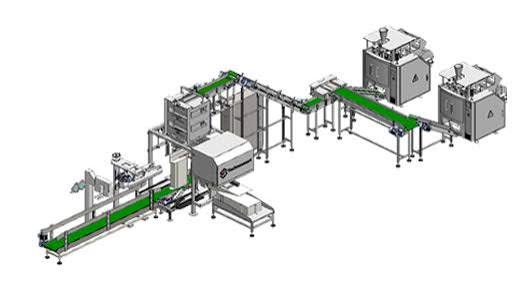
The packaging industry is evolving as manufacturers look for more efficient, flexible, and sustainable ways to prepare finished products for distribution. Increasing production demands, changing consumer expectations, labor challenges, and advances in automation are encouraging businesses to adopt new packaging technologies. As a result, end-of-line operations are becoming more intelligent, connected, and adaptable.
Modern End of Line Packaging Machinery is moving beyond traditional case packing, carton sealing, palletizing, and wrapping functions. Emerging technologies are introducing smarter controls, improved product handling, advanced inspection, and greater integration between production stages. Understanding these developments can help manufacturers prepare for future packaging requirements and make informed decisions about equipment investments.
1. Artificial Intelligence in Packaging Operations
Artificial intelligence is expected to play an increasingly important role in packaging automation. AI-powered systems can analyze production information, recognize patterns, and support faster operational decisions.
In end-of-line environments, AI may help identify packaging defects, monitor machine performance, and optimize equipment settings.
Potential applications include:
- Detecting incorrectly positioned cartons.
- Identifying damaged or incomplete packages.
- Analyzing machine performance data.
- Predicting potential equipment failures.
- Supporting production scheduling and optimization.
For example, an AI-enabled inspection system may analyze images of sealed cartons to identify irregularities that traditional inspection methods could miss. As these technologies develop, manufacturers may benefit from more consistent quality control and better visibility into packaging operations.
2. Advanced Robotics and Collaborative Robots
Robotics is transforming activities such as case packing, product sorting, palletizing, and material handling. New robotic technologies are improving flexibility and allowing manufacturers to automate tasks that previously required substantial manual involvement.
Traditional industrial robots are commonly used for repetitive operations in dedicated production areas. Collaborative robots, also known as cobots, are designed to support certain tasks in shared workspaces when suitable safety measures and risk assessments are in place.
Future robotic applications may include:
- Flexible carton loading.
- Automated product grouping.
- Mixed-product palletizing.
- Automatic package sorting.
- Pallet handling and transfer.
Improved gripping technology and more advanced vision systems may also allow robots to handle products with different shapes, sizes, and packaging characteristics.
3. Smart Sensors and Real-Time Machine Monitoring
Sensors are becoming more important in connected packaging environments. They collect information about machine conditions, product movement, positioning, temperature, pressure, and other operating parameters.
When connected to monitoring software, these devices can provide real-time information about packaging line performance.
Future developments may include more accurate detection systems, wireless sensor networks, and improved integration with industrial control platforms.
These technologies can help manufacturers:
- Identify machine interruptions quickly.
- Monitor conveyor movement.
- Detect unusual operating conditions.
- Improve product positioning.
- Track production performance.
- Reduce avoidable packaging errors.
Real-time monitoring can make it easier for operators and maintenance teams to respond to problems before they significantly affect production.
4. Predictive Maintenance and Intelligent Diagnostics
Traditional maintenance programs often depend on fixed service intervals or repairs after equipment failures. Predictive maintenance uses machine data and condition-monitoring technologies to estimate when components may require attention.
This approach can be particularly useful in facilities where packaging equipment operates for extended periods.
For example, vibration sensors may help identify developing bearing problems, while temperature monitoring can reveal unusual heating in motors or electrical components.
Future predictive maintenance systems may combine several information sources to provide more accurate equipment assessments.
Important developments include:
- Automated fault notifications.
- Condition-based servicing recommendations.
- Component wear analysis.
- Historical maintenance comparisons.
- Intelligent troubleshooting support.
These capabilities can help businesses plan maintenance activities more effectively and reduce unexpected downtime.
5. Internet of Things and Connected Packaging Lines
The Industrial Internet of Things (IIoT) connects machines, sensors, controllers, and software platforms so that equipment can exchange operational information.
In a connected packaging facility, different machines may share data about production speed, package counts, machine status, and material movement.
For example, a case packer may communicate with an upstream conveyor and downstream palletizer to coordinate production flow.
Future connected systems may offer:
- Centralized equipment monitoring.
- Remote performance visibility.
- Automated production reporting.
- Better coordination between machines.
- Integration with manufacturing execution systems.
- Improved operational data analysis.
This connectivity can help manufacturers manage complex packaging operations while providing a clearer picture of overall production performance.
6. Digital Twins for Packaging System Design
Digital twin technology creates a virtual representation of physical equipment, processes, or complete production systems.
Manufacturers can use digital models to examine how packaging equipment may perform under different operating conditions before making physical changes.
For end-of-line operations, digital twins may support:
Line layout planning: Evaluate machine placement, conveyor routes, and available floor space.
Production simulation: Study how changes in operating speed affect system performance.
Bottleneck analysis: Identify areas where product movement or machine capacity may limit output.
Maintenance planning: Examine potential equipment behavior under different operating conditions.
System optimization: Compare alternative configurations before implementing them.
As digital modeling tools become more accessible, manufacturers may use them more frequently when designing new automated packaging facilities.
7. Flexible and Modular Packaging Equipment
Manufacturers increasingly handle different products, package dimensions, and order configurations. Equipment that can accommodate these variations is becoming more valuable.
Modular packaging systems use separate machine sections that can be configured or expanded according to production needs.
A modular line may include independent case forming, packing, sealing, labeling, palletizing, and wrapping units connected through conveyors.
Future innovations may improve:
- Tool-free or simplified changeovers.
- Adjustable machine components.
- Interchangeable gripping systems.
- Modular conveyor configurations.
- Scalable automation controls.
- Integration of additional packaging stations.
This flexibility can help businesses respond to changing product portfolios without replacing an entire packaging line.
8. Machine Vision and Advanced Quality Inspection
Machine vision systems use cameras, lighting, and image-processing software to inspect products and packages.
Although visual inspection technology is already used in manufacturing, future improvements may increase detection accuracy and support more complex inspection tasks.
Potential applications include:
- Checking label position and readability.
- Detecting damaged cartons.
- Identifying missing packaging components.
- Verifying package orientation.
- Inspecting seals and closures.
- Confirming printed information.
Combining machine vision with AI may help inspection systems recognize more variations in package appearance.
However, inspection performance depends on camera quality, lighting conditions, image processing, product consistency, and system configuration.
9. Sustainable Packaging and Material Optimization
Environmental considerations are influencing packaging design and equipment development. Manufacturers are exploring ways to reduce unnecessary packaging materials, improve recyclability, and limit waste during production.
Future packaging machinery may provide better compatibility with lightweight cartons, recyclable materials, and alternative protective packaging solutions.
Several developments are particularly relevant:
Reduced Film Consumption
Advanced stretch wrapping systems may use improved film-control technology to apply the required amount of material while maintaining suitable load stability.
Recyclable Packaging Materials
Equipment manufacturers may continue improving machine compatibility with paper-based materials and recyclable packaging formats.
Energy-Efficient Machinery
Improved motors, drives, and control systems can help reduce energy consumption during packaging operations.
Waste Reduction
More accurate material feeding, sealing, and cutting mechanisms may reduce rejected packages and unnecessary packaging waste.
Sustainable performance should be evaluated across the complete packaging process, including material selection, transportation protection, energy use, and recyclability.
10. Autonomous Mobile Robots in Material Handling
Autonomous mobile robots (AMRs) are increasingly being explored for material transportation in manufacturing facilities and warehouses.
Unlike traditional fixed conveyor routes, AMRs can navigate designated environments using sensors, mapping technologies, and onboard control systems.
In end-of-line operations, they may transport empty pallets, move completed loads, or transfer materials between packaging stations and storage areas.
Potential advantages include:
- Flexible material movement.
- Reduced repetitive transportation tasks.
- Better coordination with warehouse operations.
- Adaptability to changing facility layouts.
- Integration with warehouse management systems.
Their suitability depends on floor conditions, traffic patterns, load requirements, safety arrangements, and the complexity of facility operations.
11. Improved Human-Machine Interfaces
Human-machine interfaces (HMIs) allow operators to interact with packaging equipment through control panels, displays, and software applications.
Modern interfaces are becoming more intuitive, making it easier for employees to monitor machine conditions, adjust approved settings, and identify operational problems.
Future HMI improvements may include:
- Clearer equipment status displays.
- Guided troubleshooting instructions.
- Multilingual operator interfaces.
- Remote monitoring capabilities.
- Improved alarm management.
- More accessible production data.
These developments may reduce the time needed to understand machine problems and support more efficient operator training.
12. Cloud-Based Data Management and Remote Support
Cloud-based platforms allow manufacturers to collect and review production information across connected equipment and facilities.
Instead of relying entirely on local machine displays, authorized personnel may access operational reports through centralized digital systems.
Possible applications include:
- Reviewing production statistics.
- Tracking equipment downtime.
- Comparing performance across facilities.
- Managing maintenance records.
- Monitoring selected machine conditions remotely.
- Supporting technical troubleshooting.
Remote access must be designed with appropriate cybersecurity controls, user permissions, and network protection. Manufacturers should also consider data ownership and system availability when selecting cloud-based solutions.
13. Advanced Palletizing and Load Stabilization Technologies
Palletizing and load securing remain important final stages of many packaging operations. New developments are focusing on flexible stacking, improved load stability, and better coordination with warehouse systems.
Robotic palletizers may increasingly support mixed-case arrangements and more complex stacking patterns. Improved sensors can help detect pallet positions and package dimensions, while automated wrapping systems can adjust suitable wrapping parameters.
Future developments may include:
- More adaptable robotic palletizing.
- Improved mixed-product handling.
- Automatic pallet inspection.
- Optimized stretch film application.
- Better load stability monitoring.
- Integration with automated storage systems.
These technologies can support safer handling and more consistent preparation of goods for transportation.
14. Cybersecurity for Smart Packaging Machinery
As packaging systems become more connected, cybersecurity is becoming an important part of equipment management.
Connected machines may communicate with factory networks, cloud platforms, enterprise systems, and remote support services. These connections can create additional security considerations.
Manufacturers should adopt appropriate safeguards, including:
- Controlled access to machine interfaces.
- Secure network configurations.
- Regular software and firmware updates.
- Strong authentication practices.
- Network segmentation where appropriate.
- Reliable backup and recovery procedures.
Future packaging systems will need to balance connectivity and operational convenience with protection against unauthorized access and disruption.
15. Integration with Smart Factories and Industry 4.0
Industry 4.0 focuses on connecting machines, software, data, and production processes to create more coordinated manufacturing environments.
End-of-line packaging systems are becoming an important part of this development because they connect finished-product handling with warehousing and distribution.
In a smart factory, packaging equipment may exchange information with production planning systems, quality management platforms, and warehouse software.
This integration can support:
- Coordinated production scheduling.
- Real-time output tracking.
- Automated material replenishment.
- Improved traceability.
- More efficient inventory management.
- Better production planning.
The effectiveness of smart factory integration depends on compatible communication standards, reliable networks, and well-designed data management processes.
16. How Manufacturers Can Prepare for Future Packaging Innovations
Adopting every new technology is not always practical or necessary. Manufacturers should focus on innovations that address real production challenges and offer measurable operational benefits.
A structured evaluation process can help businesses prepare for future developments.
Assess Existing Equipment
Review machine performance, downtime, maintenance costs, production capacity, and current automation limitations.
Identify Operational Priorities
Determine whether the main objective is higher throughput, improved packaging quality, reduced labor requirements, better flexibility, or lower material consumption.
Evaluate Compatibility
Check whether new technologies can integrate with existing machines, control systems, conveyors, and enterprise software.
Consider Scalability
Choose equipment and control platforms that can accommodate future production growth or additional packaging formats.
Review Supplier Support
Evaluate technical expertise, spare-parts availability, operator training, maintenance services, and system upgrade options.
Measure Long-Term Value
Compare the initial investment with expected productivity improvements, operating costs, maintenance requirements, and potential downtime reductions.
Conclusion
The end-of-line packaging machinery industry is moving toward greater automation, connectivity, flexibility, and sustainability. Artificial intelligence, robotics, predictive maintenance, digital twins, machine vision, and connected factory systems are creating new opportunities for manufacturers to improve packaging operations.
However, successful innovation depends on selecting technologies that match actual production requirements. Businesses should evaluate equipment compatibility, operating costs, maintenance needs, and future expansion plans before investing in new systems. As manufacturers explore these developments, Techflow Pack provides an industry reference for understanding packaging line equipment and the technologies supporting modern end-of-line operations.
