

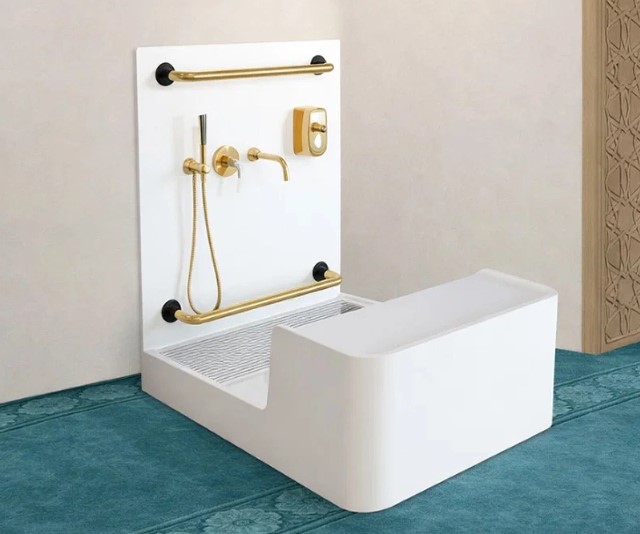
Choosing the right material for a wudu basin affects more than the appearance of a bathroom. The surface needs to handle regular water exposure, frequent cleaning, and the movements involved in washing the feet during ablution. Ceramic, natural stone, and solid surface each offer different benefits, so the best choice depends on the bathroom layout, maintenance expectations, and available budget.
When comparing options, homeowners should look beyond color and finish. A well-designed Bathroom Wudu basin needs a material that supports comfortable daily use and fits the surrounding fixtures. Understanding how each option performs helps prevent problems such as difficult cleaning, surface damage, or costly repairs after installation.
Ceramic Wudu Basins: Practical And Easy To Maintain
Ceramic remains a popular material for bathroom fixtures because it combines a smooth finish with straightforward maintenance. Manufacturers shape the basin and apply a glaze that creates a hard, non-porous surface. This makes ceramic suitable for areas that receive regular water exposure.
Benefits Of Ceramic
The glazed surface helps prevent ordinary dirt and soap residue from sticking easily. Homeowners can usually clean it with a soft cloth and a suitable bathroom cleaner.
Ceramic also comes in many shapes, sizes, and colors. This gives homeowners flexibility when matching a basin with existing tiles, countertops, and bathroom fittings.
Other advantages include:
- Easy cleaning: The smooth surface requires relatively little effort to maintain.
- Water resistance: A properly glazed ceramic basin does not absorb water through its finished surface.
- Consistent appearance: It is available in familiar finishes that suit different bathroom styles.
- Wide availability: Standard ceramic basins are commonly available in different dimensions and price ranges.
Limitations Of Ceramic
Ceramic can crack or chip when exposed to a strong impact. A dropped heavy object may damage the surface, and repairing visible chips can be difficult.
Standard ceramic shapes may also limit design flexibility. Homeowners who need an unusual basin depth, custom dimensions, or an integrated washing area may find fewer suitable options.
Natural Stone Wudu Basins: Distinctive Appearance And Solid Construction
Natural stone creates a different look from manufactured bathroom materials. Marble, granite, and other stones have individual patterns and color variations, giving each basin a distinct appearance.
Stone can suit bathrooms where the basin forms part of a larger interior design feature. It pairs well with natural tiles, wood finishes, and other materials that create a warm or traditional atmosphere.
Benefits Of Natural Stone
One of the main attractions of natural stone is its appearance. Veining, mineral patterns, and natural color differences give the basin a character that manufactured surfaces may not reproduce exactly.
Many natural stones also have substantial weight and a solid feel. When properly selected and installed, they can serve as durable bathroom fixtures for many years.
Natural stone may offer:
- Unique patterns: Each piece has natural variations in color and texture.
- Design appeal: Stone can complement traditional, luxury, and nature-inspired bathrooms.
- Material strength: Certain stones handle everyday use well when properly maintained.
- Custom fabrication: Stone specialists can cut many types into specific shapes and dimensions.
Limitations Of Natural Stone
Stone requires more attention than many non-porous materials. Some varieties absorb moisture and may develop stains when exposed to soap, oils, or other substances.
Sealing helps protect porous stone, although the treatment may need periodic renewal. Homeowners must also use suitable cleaning products because acidic cleaners can damage sensitive surfaces such as marble.
Weight is another important consideration. A heavy stone basin may need stronger wall supports, a reinforced countertop, or additional installation planning.
Solid Surface Wudu Basins: Flexible Design And Smooth Finishes
Solid surface materials consist of manufactured compounds designed for use in countertops, basins, and other interior applications. Their composition varies by manufacturer, but many products combine mineral fillers with resin to create a smooth and consistent surface.
This material is particularly useful for custom bathroom projects. It allows designers to create basin shapes that fit specific dimensions or connect visually with nearby countertops.
Benefits Of Solid Surface
Design flexibility is one of its strongest advantages. Manufacturers can produce different depths, widths, curves, and integrated forms, which helps when standard basin sizes do not suit the available space.
Many solid surface products have non-porous finishes that resist moisture and make routine cleaning easier. Some minor surface scratches can also be repaired through professional refinishing, depending on the product specification.
Key benefits include:
- Custom dimensions: Suitable for bathrooms with unusual layouts or specific installation requirements.
- Smooth appearance: Consistent color and finish create a clean visual effect.
- Integrated designs: Basins can connect with surrounding surfaces for fewer visible joints.
- Repair potential: Certain surface marks and minor scratches can be refinished.
Limitations Of Solid Surface
Solid surface products vary in quality, so homeowners should check the manufacturer’s specifications before buying. Some formulations may scratch or show heat damage more easily than others.
The material can also cost more than standard ceramic, particularly when the project requires custom fabrication. Installation quality matters because poor support or incorrect fitting may affect the basin over time.
Ceramic Vs Stone Vs Solid Surface: A Direct Comparison
Each material has a different balance of appearance, maintenance, design flexibility, and installation requirements.
| Feature | Ceramic | Natural Stone | Solid Surface |
| Appearance | Smooth and consistent | Natural patterns and variations | Uniform and customizable |
| Cleaning | Generally easy | Depends on stone type and sealing | Generally easy |
| Water protection | Strong when glaze remains intact | May require sealing | Often non-porous |
| Impact resistance | Can chip or crack | Depends on stone type | Varies by formulation |
| Custom shapes | More limited | Requires stone fabrication | High design flexibility |
| Maintenance | Relatively low | Often higher | Usually moderate to low |
| Cost | Often budget-friendly | Varies by stone and fabrication | Varies by quality and customization |
No material is automatically the best choice for every bathroom. Ceramic suits homeowners who want a familiar and practical fixture. Natural stone works well when appearance is a major priority and regular maintenance is acceptable. Solid surface is worth considering when custom dimensions and a consistent finish matter most.
Which Material Works Best For Different Bathroom Needs?
The right material depends on how the basin will be used and the type of renovation planned.
For Small Bathrooms
Small bathrooms often benefit from compact designs that fit into corners or narrow wall sections. Ceramic can be a practical choice when a suitable standard size is available.
Solid surface may be better when the basin needs custom dimensions or an integrated countertop. This can help make better use of limited space without adding unnecessary visual details.
For Family Bathrooms
A family bathroom needs a surface that handles frequent use and regular cleaning. Ceramic and solid surface are both worth considering due to their relatively straightforward maintenance.
The basin shape matters as much as the material. Choose a design with enough depth for foot washing and edges that do not make movement uncomfortable.
For Luxury And Contemporary Interiors
Natural stone can create a strong visual feature, especially when its colors coordinate with the flooring and wall finishes. Solid surface also suits contemporary bathrooms through its clean lines and custom forms.
The choice depends on the desired appearance. Stone provides natural variation, whereas solid surface offers greater consistency in color and shape.
For High-Traffic Ablution Areas
Mosques, community centers, and shared facilities need materials that tolerate frequent use. Maintenance access, replacement options, and resistance to everyday wear should influence the decision.
Ceramic can work well when standard replacement sizes are available. Solid surface may suit larger custom installations, particularly when the design includes several connected washing stations.
Natural stone can also be used, although the maintenance requirements and installation weight need careful consideration.
What To Check Before Buying A Wudu Basin
Material selection is only one part of the buying process. The basin also needs to suit the plumbing, room dimensions, and intended washing position.
Before making a purchase, review these details:
- Basin dimensions: Confirm the width, depth, and height against the available installation area.
- Foot clearance: Check that users can position their feet comfortably without hitting the basin edges.
- Surface finish: Ask about cleaning products and any special care requirements.
- Installation support: Confirm whether the wall, cabinet, or countertop can carry the basin’s weight.
- Drainage: Make sure the outlet connects properly to the existing plumbing.
- Warranty: Review the coverage for surface defects, cracks, and manufacturing issues.
- Maintenance: Understand the long-term care requirements before choosing a material.
Request material samples when possible. Seeing the finish under the bathroom’s actual lighting can help homeowners make a more informed decision.
Installation And Long-Term Care Matter
Even a suitable material may develop problems when installation does not follow the manufacturer’s requirements. The basin needs stable support, correctly fitted plumbing, and sealed connections around areas exposed to water.
Ceramic basins need protection from strong impacts during installation. Stone basins require suitable structural support and the correct sealing treatment where necessary. Solid surface products should follow the manufacturer’s guidance for cutting, joining, and mounting.
After installation, use cleaning products recommended for the chosen material. Avoid abrasive pads and harsh chemicals unless the manufacturer confirms they are suitable. Regularly check the drain, faucet connections, and surrounding sealant for leaks or wear.
When comparing products from suppliers such as kingkonree, homeowners should review the material specifications, available dimensions, finish options, and installation guidance rather than relying on appearance alone.
Final Thoughts
Ceramic, natural stone, and solid surface can all work well for wudu basins, although each serves different needs. Ceramic offers practical maintenance and familiar designs, stone provides natural character, and solid surface supports greater customization.
The best material is the one that fits the bathroom’s layout and the users’ daily routine. Consider cleaning requirements, installation support, water exposure, and long-term maintenance before making a decision. A careful comparison at the planning stage helps create a wudu area that remains comfortable and practical over time.
