

Introduction
Modern bathroom design has evolved beyond basic functionality to focus on comfort, visual appeal, efficient space utilization, and easy maintenance. Homeowners, architects, and interior designers increasingly look for materials that combine practical performance with contemporary aesthetics. Among the available options, solid surface materials have gained attention for their smooth finishes, design flexibility, and suitability for moisture-prone environments.
An example of this material category is KingKonree Solid Surface, which can be incorporated into different bathroom elements, including vanity tops, washbasins, bathtubs, and decorative wall panels. Its adaptability allows designers to create coordinated interiors while addressing the practical requirements of residential and commercial bathrooms.
1. Creating a Clean and Seamless Bathroom Appearance
One of the defining characteristics of modern bathroom design is the use of clean lines and uncluttered surfaces. Solid surface materials support this approach because they can be fabricated and joined to create nearly seamless installations.
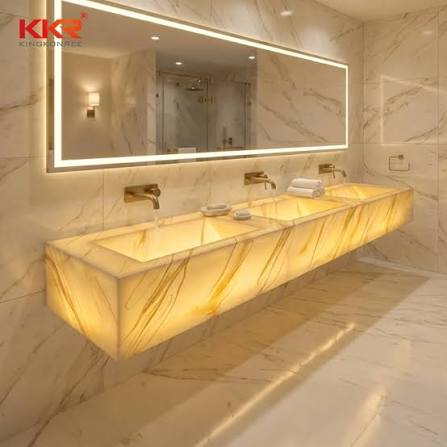
For example, a bathroom vanity can incorporate an integrated washbasin without prominent visible joints between the basin and countertop. This creates a continuous appearance that works particularly well in minimalist and contemporary interiors.
Seamless fabrication can also be used for wall-mounted features, shelving, and customized bathroom furniture. These design possibilities help reduce visual distractions and create a more organized environment.
2. Supporting Moisture-Resistant Bathroom Applications
Bathrooms experience frequent exposure to water, humidity, soap, and personal care products. Selecting materials that can handle these conditions is essential for maintaining their appearance and functionality.
Most solid surface products have a non-porous structure that limits liquid absorption. This characteristic makes them suitable for applications such as vanity countertops, washbasins, and selected wall installations.
However, proper installation remains important. Joints, plumbing connections, and supporting structures should be professionally finished to prevent water from entering vulnerable areas.
3. Offering Flexible Washbasin Designs
The washbasin is one of the most frequently used elements in a bathroom. Its shape, dimensions, and placement influence both the functionality and overall appearance of the space.
Solid surface materials can be fabricated into different basin configurations, including:
- Integrated countertop basins
- Rectangular vessel-style washbasins
- Oval and rounded basin designs
- Wall-mounted basin units
- Customized basins for compact bathrooms
These options allow designers to select fixtures that match the available space and interior theme. Integrated basin designs are particularly useful when a continuous countertop appearance is desired.
4. Improving Small Bathroom Space Utilization
Limited space is a common challenge in apartments, guest bathrooms, and compact residential properties. Modern bathroom planning therefore emphasizes efficient layouts and fixtures that provide practical functionality without making the room feel crowded.
Solid surface materials can be customized to accommodate unusual dimensions and smaller vanity areas. Narrow countertops, compact washbasins, and floating vanity designs can help make better use of available space.
Light-colored surfaces can also contribute to a brighter visual atmosphere. White, cream, and soft gray finishes work well with mirrors, glass partitions, and neutral wall tiles.
5. Providing Different Colors and Surface Finishes
Color coordination plays an important role in creating a balanced bathroom interior. Solid surface materials are available in various shades, patterns, and finishes, giving designers flexibility when developing different visual themes.
Popular choices include:
White and Neutral Finishes
White and other neutral colors are frequently used in contemporary bathrooms because they create a clean and spacious appearance. They can complement almost any flooring, wall tile, or bathroom accessory.
Marble-Inspired Patterns
Marble-inspired solid surface designs offer a decorative appearance that can complement luxury bathroom interiors. They provide an alternative to natural stone while allowing designers to maintain a coordinated surface finish.
Dark and Contrasting Colors
Dark gray, charcoal, and other deeper shades can introduce contrast into modern bathrooms. These finishes can work particularly well with light-colored walls, metallic fixtures, and wooden cabinetry.
Choosing a finish should involve considering the room’s lighting, dimensions, and existing materials rather than selecting a color in isolation.
6. Making Bathroom Cleaning and Maintenance Easier
Bathroom surfaces require regular cleaning because they come into contact with water, toothpaste, cosmetics, soap, and other everyday products.
The non-porous structure of solid surface materials helps reduce the absorption of common liquids and makes routine cleaning relatively simple. A soft cloth, water, and a suitable mild cleaning solution are generally sufficient for everyday maintenance.
Another useful characteristic is repairability. Minor scratches and certain surface imperfections can often be addressed through sanding and refinishing, depending on the product specification.
To maintain the surface over time, users should avoid harsh chemicals, abrasive cleaning tools, and direct exposure to excessive heat unless the manufacturer confirms that these are appropriate.
7. Complementing Modern Bathtub and Shower Areas
Solid surface materials can also contribute to the design of larger bathroom features. Depending on the product formulation and intended application, they may be used for bathtubs, shower wall panels, and surrounding decorative elements.
Solid surface bathtubs can provide smooth contours and distinctive shapes that complement contemporary bathroom layouts. Their appearance can be coordinated with matching washbasins and vanity tops to create a unified design.
For shower areas, suitable solid surface wall panels can provide a continuous finish with fewer visible joints than many traditional tile installations. Waterproofing behind the installation and proper sealing remain essential parts of the overall bathroom construction.
8. Combining Solid Surface with Other Interior Materials
Modern bathrooms often combine several materials to create visual depth and functional contrast. Solid surface works well alongside different interior finishes when their colors and textures are carefully coordinated.
Some effective combinations include:
- Wood and solid surface: Wooden cabinets introduce warmth, while smooth countertops create a balanced contemporary appearance.
- Glass and solid surface: Glass shower partitions help maintain an open feeling and complement seamless vanity designs.
- Metal and solid surface: Chrome, brushed nickel, and matte black fixtures can create attractive contrast.
- Ceramic tiles and solid surface: Textured wall or floor tiles can add visual interest alongside smooth solid surface installations.
These combinations allow designers to create bathrooms that feel distinctive without making the interior appear overly complicated.
9. Considering Durability and Installation Requirements
A bathroom material should provide reliable performance under normal everyday conditions. Solid surface products offer useful durability for many interior applications, but their performance depends on the composition, thickness, manufacturing quality, and installation method.
Before choosing a product, homeowners and project managers should evaluate:
- Material composition and technical specifications
- Resistance to moisture and common household chemicals
- Surface scratch and impact resistance
- Available thicknesses and design options
- Compatibility with bathroom fixtures
- Installation procedures and maintenance recommendations
Professional fabrication is especially important for integrated basins, customized vanity units, and curved bathroom features. Accurate measurements and suitable support structures help ensure that the finished installation performs as intended.
10. The Role of Solid Surface in Future Bathroom Design
Bathroom design continues to move toward greater customization, improved functionality, and coordinated interior finishes. Solid surface materials are well positioned to support these developments because of their ability to accommodate different shapes, dimensions, and design requirements.
Integrated sinks, floating vanity units, curved surfaces, and customized storage features are examples of design approaches that can benefit from fabrication flexibility.
Sustainability is another consideration influencing material selection. Product lifespan, manufacturing waste, material sourcing, and repairability should all be considered when evaluating the environmental impact of a particular solid surface product.
Conclusion
Solid surface materials support modern bathroom design by combining a smooth appearance, non-porous construction, customization possibilities, and relatively straightforward maintenance. Their versatility makes them suitable for vanity countertops, integrated washbasins, bathtubs, shower wall panels, and other bathroom features.
When selected according to the project’s functional requirements and installed professionally, these materials can help create bathrooms that are visually coordinated, practical, and comfortable to use. Understanding their advantages and limitations allows homeowners, designers, and contractors to make more informed decisions when planning contemporary bathroom interiors.
