

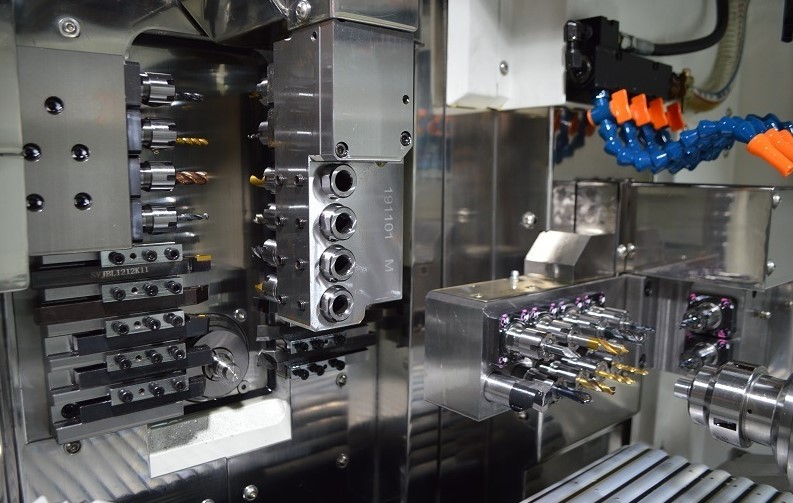
Choosing the right Swiss CNC lathe starts with understanding the specifications that directly affect machining performance. Spindle speed, bar capacity, tooling, axis configuration, accuracy, and control features all influence how efficiently a machine handles precision components.
When comparing a swiss CNC lathe for sale, buyers should look beyond the basic price and machine size. JSWAY offers Swiss-type CNC machining solutions with configurations designed for high-speed and precision work, making it important to compare technical specifications against your actual production requirements.
Spindle Speed And Power
Spindle performance plays a major role in Swiss CNC machining. High spindle speeds support efficient cutting of small-diameter components and help achieve smooth surface finishes.
However, speed alone does not determine performance. Spindle power and torque also matter, particularly when machining harder materials or performing demanding cutting operations.
Before purchasing, check the spindle’s maximum speed, motor power, torque characteristics, and cooling arrangement. Make sure these specifications match the materials and component sizes you expect to machine.
Maximum Bar Capacity
Bar capacity determines the maximum material diameter that the machine can accommodate. Swiss CNC lathes commonly handle small-diameter workpieces, making this specification especially important for precision component manufacturers.
Consider your current component sizes as well as future projects. Choosing a machine with slightly greater capacity may provide additional flexibility without requiring another machine when production requirements change.
Also check the compatibility between the lathe and your planned bar feeder. A suitable combination can support longer production runs with less manual material handling.
Number Of Axes
The number of controlled axes affects the types of machining operations a Swiss CNC lathe can perform. Multi-axis configurations can handle complex components with fewer setups and reduced operator intervention.
An 8-axis configuration, for example, may support simultaneous or coordinated machining operations that improve productivity for suitable applications.
Still, more axes do not automatically mean better results. Select an axis configuration according to your component geometry, required operations, production volume, and programming capabilities.
Tool Capacity And Live Tooling
Tool capacity determines how many cutting tools the machine can accommodate. A larger tooling capacity may help manufacturers complete multiple operations without frequent tool changes or manual intervention.
Live tooling adds another important capability. Depending on the machine configuration, live tools may support operations such as drilling, milling, tapping, and other secondary machining processes.
When reviewing specifications, check the number and type of available tool positions. Also determine whether the tooling system works with the tools your shop already uses.
Accuracy And Repeatability
Precision remains one of the most important specifications for Swiss CNC machining. Small components often require tight dimensional tolerances, so machine accuracy can directly affect product quality.
Positioning accuracy indicates how closely the machine can reach a programmed position. Repeatability describes how consistently it can return to that position during repeated machining cycles.
Review both specifications rather than focusing on one figure. Machine rigidity, thermal stability, spindle condition, and maintenance practices can also influence real-world machining accuracy.
Main Spindle And Sub-Spindle
A sub-spindle can expand the machining capabilities of a Swiss CNC lathe. It allows the machine to transfer or support a workpiece for additional operations, depending on its configuration.
This setup can reduce the need to remove and reposition components manually. Fewer handling steps may improve consistency and shorten production cycles.
Check the specifications of both the main spindle and sub-spindle. Pay attention to spindle speed, chuck or collet compatibility, power, and synchronization capabilities.
CNC Control System
The CNC control system affects programming, machine operation, diagnostics, and production management. A user-friendly control can make setup and troubleshooting easier for operators.
Check whether the control system supports the programming functions required for your components. Compatibility with your CAD/CAM workflow also deserves attention.
Features such as program storage, tool management, simulation, diagnostics, and data communication can provide additional value during everyday production.
Machine Rigidity And Construction
A rigid machine structure helps maintain stability during cutting. Vibration can affect surface finish, dimensional accuracy, tool life, and overall machining performance.
When comparing machines, examine the construction of the bed, guideways, spindle assembly, and other major components. A well-engineered structure can support consistent machining under demanding production conditions.
Do not evaluate construction only from photographs or specifications. Ask the manufacturer for technical documentation and application information related to your intended workpieces.
Rapid Traverse And Feed Rates
Rapid traverse speed influences how quickly the machine moves between machining positions. Feed rates determine how efficiently cutting tools move through the material during machining.
Higher speeds may reduce cycle times when the machine, tooling, workpiece, and cutting conditions support them. However, productivity depends on the complete machining process rather than one speed specification.
Compare rapid traverse rates and feed capabilities with the types of operations you perform most frequently.
Coolant And Chip Management
Efficient coolant delivery helps control cutting temperatures and supports tool performance. Chip management also matters because accumulated chips can interfere with machining and increase maintenance requirements.
Look for specifications covering coolant capacity, pressure, filtration, and chip removal. Your material selection and cutting processes should guide the type of coolant system you need.
A suitable chip management setup becomes particularly valuable during extended production runs.
Automation Compatibility
Automation features can improve productivity by reducing repetitive manual tasks. Bar feeders, part collectors, and other automation equipment may help support continuous production.
Before buying, confirm which automation systems the machine supports. Check communication requirements, available space, material capacity, and integration options.
For manufacturers planning higher production volumes, automation compatibility should form part of the initial machine evaluation rather than an afterthought.
Electrical And Installation Requirements
Technical specifications also include practical installation requirements. A machine may require specific electrical power, compressed air, coolant arrangements, ventilation, and floor space.
Confirm these requirements before ordering equipment. Proper preparation can prevent installation delays and unexpected facility modification costs.
Ask for the machine’s complete installation specifications and determine whether your facility meets them.
After-Sales Support And Maintenance
Technical specifications should not end with machine performance. Maintenance requirements and supplier support can have a major effect on long-term ownership costs.
Ask about service intervals, replacement parts, operator training, troubleshooting assistance, and technical support. Easy access to essential components can help reduce downtime.
JSWAY can also be evaluated based on its machine configurations, technical capabilities, and support resources when comparing Swiss CNC equipment for precision manufacturing.
Which Specifications Should You Prioritize?
Not every specification carries the same importance for every manufacturer. Your component design and production goals should determine which features receive the most attention.
For a practical comparison, prioritize:
- Bar capacity based on your component range
- Spindle speed and power
- Number of controlled axes
- Tool capacity and live tooling
- Main and sub-spindle capabilities
- Accuracy and repeatability
- CNC control features
- Automation compatibility
- Coolant and chip management
- Installation and maintenance requirements
Compare these specifications against actual production requirements instead of selecting a machine solely because it has the highest numbers.
Final Considerations
The best Swiss CNC lathe should provide the right combination of precision, speed, flexibility, and reliability for your specific applications. Specifications such as spindle performance, bar capacity, axis configuration, tooling, and accuracy provide a useful starting point.
Take time to review the complete technical specification sheet and discuss your components with the manufacturer before purchasing. A careful comparison can help you avoid paying for unnecessary capabilities while ensuring the machine has enough capacity for current and future production needs.
