

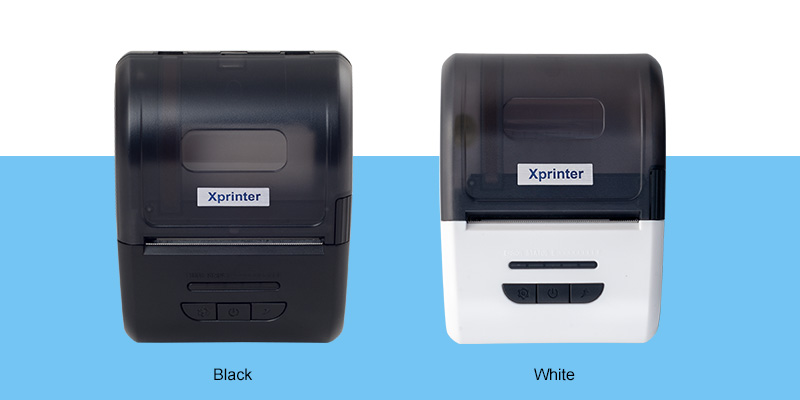
Mobile businesses often operate in locations where traditional checkout equipment is impractical. Food vendors, delivery services, market sellers, event operators, and field-service providers may need to complete transactions and provide printed records while moving between different locations.
A Portable Receipt Printer can support these workflows by allowing employees to produce receipts without relying on a fixed workstation. Compact designs, wireless connectivity, and rechargeable batteries make portable printing suitable for many on-the-go applications.
Supports Transactions Anywhere
One of the main benefits of portable receipt printing is the ability to complete transactions at the point of service. Employees can process payments and provide customers with printed receipts without returning to a permanent counter.
This flexibility can be particularly useful for businesses that operate at markets, festivals, customer locations, outdoor events, or temporary retail spaces.
Reduces Dependence on Fixed Equipment
Mobile businesses may not have enough space or infrastructure for a traditional checkout station. A compact printer can reduce the amount of equipment needed in a working area.
Instead of installing a dedicated printer at every location, employees can carry the printing equipment with them and use it where transactions take place.
Works With Mobile POS Systems
Portable printers can often connect with smartphones, tablets, and handheld POS terminals. Depending on the model, Bluetooth, Wi-Fi, or USB connections may be available.
This allows businesses to create a more integrated mobile workflow. Before choosing a printer, it is important to confirm compatibility with the POS software and operating systems already in use.
Helps Improve Customer Service
Providing a printed receipt immediately can make transactions more convenient for customers. Employees do not need to ask customers to wait while they return to a fixed printer.
For businesses that compete through fast and personal service, reducing unnecessary steps can contribute to a smoother customer experience.
Useful for Food Vendors and Mobile Retailers
Food trucks, market stalls, pop-up shops, and mobile retailers can benefit from equipment that takes up little space. A portable printer can be positioned alongside a mobile payment device without requiring a large counter.
Battery operation can provide additional flexibility when the business operates in locations without convenient access to electrical outlets.
Supports Delivery and Field Services
Delivery workers can use portable printers to provide customers with receipts, invoices, or transaction records at the point of delivery. Field-service professionals can similarly print documentation after completing work at a customer’s location.
This can reduce paperwork and eliminate the need to return to an office simply to produce a printed document.
Provides Greater Employee Mobility
Employees can carry a compact printer while moving between customers or service areas. This can be valuable when transactions occur across a large venue or multiple locations.
Wireless communication can further reduce cable-related limitations and make the overall setup easier to move.
Thermal Printing Can Simplify Operation
Many portable receipt printers use direct thermal printing. This technology uses heat-sensitive paper rather than traditional ink cartridges or toner.
The simpler printing mechanism can reduce the number of consumables employees need to carry. Businesses still need to maintain an adequate supply of compatible thermal paper and store it correctly.
Helps Save Space
Space is often limited in mobile businesses. A compact printer can fit into a small service area, vehicle, kiosk, or carrying case.
Its smaller footprint can make it easier to organize other essential equipment, such as payment terminals, smartphones, product supplies, or service tools.
What Mobile Businesses Should Consider
Portable printing offers several advantages, but the right device depends on the specific operating environment. Businesses should evaluate:
- Battery life and charging requirements
- Wireless connectivity
- POS and software compatibility
- Printing speed and quality
- Paper size and availability
- Printer weight and dimensions
- Durability and environmental protection
- Expected daily printing volume
A printer used occasionally at weekend markets may have different requirements from one used continuously by delivery or field-service employees.
Conclusion
A portable receipt printer can help mobile businesses complete transactions and provide printed records without depending on fixed checkout equipment. Its portability, wireless connectivity, battery operation, and compact design can support a wide range of mobile workflows.
The best results come from choosing a printer that matches the business’s actual workload and environment. By considering battery performance, connectivity, paper requirements, durability, and software compatibility, mobile businesses can build a more practical and efficient point-of-service setup.
