

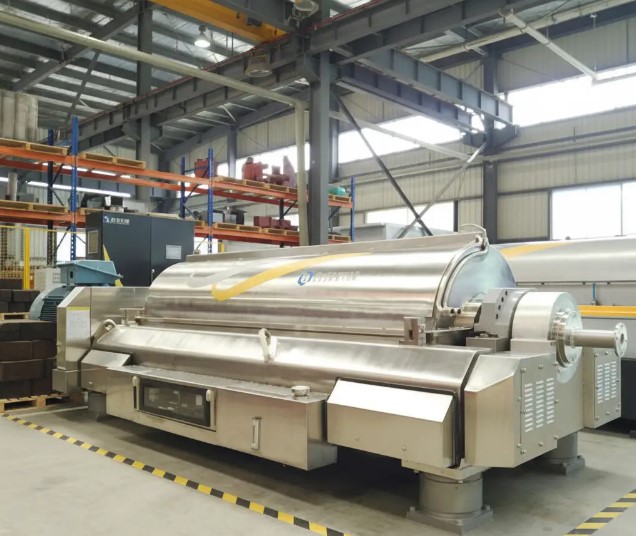
Slurries vary significantly across industrial processes. Some contain fine particles that settle slowly, while others include abrasive solids, high concentrations, or liquids with unusual viscosity. A decanter centrifuge must account for these differences to deliver dependable solid-liquid separation.
A skilled decanter centrifuge manufacturer evaluates the characteristics of each slurry before selecting equipment specifications. Factors such as particle size, solids concentration, flow rate, viscosity, and corrosiveness help determine the appropriate bowl design, scroll configuration, drive system, and wear protection.
Why Slurry Characteristics Matter
A slurry consists of suspended solids carried within a liquid. Its physical and chemical properties directly influence how a centrifuge performs during continuous operation.
For example, a slurry with dense mineral particles creates different demands from one containing lightweight organic solids. Highly abrasive materials may also cause faster wear on internal components.
Manufacturers therefore need detailed process information before recommending a specific machine. A standard configuration may work well for one application but perform poorly in another.
Analyzing the Feed Material
The customization process often starts with a detailed assessment of the slurry. Engineers need to understand what enters the centrifuge and what separation results the customer expects.
Important information may include:
- Solid concentration
- Particle size distribution
- Particle density
- Liquid density
- Slurry viscosity
- Feed temperature
- Flow rate
- Corrosive properties
- Required dryness of discharged solids
This information provides a foundation for selecting the right equipment configuration.
Adjusting Bowl Specifications
The rotating bowl serves as one of the most important components in a decanter centrifuge. Its diameter, length, rotational speed, and geometry influence separation performance and processing capacity.
A manufacturer may recommend different bowl dimensions depending on the slurry’s characteristics and required throughput. Higher-capacity applications may require a larger configuration, while certain separation processes may benefit from a different length-to-diameter ratio.
Bowl speed also matters because centrifugal force influences how quickly suspended particles migrate toward the solid phase.
Selecting the Right Differential Speed
The scroll conveyor moves separated solids toward the discharge section. The speed difference between the scroll and bowl, commonly called differential speed, affects both separation and solids residence time.
A manufacturer may adjust this parameter according to the behavior of the slurry. Lower differential speeds can provide more residence time for certain applications, while higher speeds may support greater solids transport.
The ideal setting depends on the balance between liquid clarity, solids dryness, throughput, and the physical properties of the feed.
Choosing Wear Protection for Abrasive Slurries
Mining, mineral processing, construction, and other industries may handle slurries containing abrasive particles. These materials can cause significant wear inside a centrifuge.
Manufacturers may therefore incorporate specialized wear-resistant materials or protective components in areas exposed to continuous contact with solids.
Potential protection can focus on components such as:
- Scroll flights
- Solids discharge areas
- Feed zones
- Internal surfaces
- Replaceable wear components
The exact solution depends on the abrasiveness and concentration of the material being processed.
Adapting Materials for Corrosive Slurries
Chemical composition also influences equipment selection. Some slurries contain substances that may attack standard metal surfaces or internal components over time.
A manufacturer may select alternative materials or protective treatments when corrosion presents a concern. The goal involves maintaining structural integrity while extending equipment service life.
Shenzhou Machinery considers application requirements when developing industrial separation equipment. Discussing the chemical characteristics of a slurry with the manufacturer helps identify suitable construction materials.
Matching the Drive System to the Application
The drive system controls the mechanical operation of the centrifuge and must handle the demands created by the feed material.
Slurries with high solids concentrations may place greater mechanical demands on the equipment. Manufacturers can evaluate torque requirements, operating speed, and process conditions when selecting an appropriate drive configuration.
An adequately matched drive system supports stable operation and helps prevent unnecessary mechanical stress.
Modifying Feed Zone Design
The feed zone introduces slurry into the rotating bowl. Its design influences how smoothly the material enters the separation area.
Poor feed distribution can create turbulence and reduce separation efficiency. Manufacturers may modify the feed arrangement according to the characteristics of the slurry and the desired operating conditions.
Proper feed distribution helps the centrifuge make better use of its available separation area.
Adjusting Solids Discharge
Different slurries produce solids with different characteristics. Some form relatively dry, dense cakes, while others remain wetter or contain sticky material.
The discharge arrangement must therefore suit the expected solids behavior. Manufacturers may consider scroll design, differential speed, discharge geometry, and wear protection when configuring this section.
These adjustments help maintain reliable solids transport without creating unnecessary blockages or excessive wear.
Considering Liquid Properties
The liquid phase also affects centrifuge performance. Viscosity, density, temperature, and chemical composition can change how quickly particles separate.
Higher-viscosity liquids may require different operating conditions from low-viscosity liquids. Temperature can also influence viscosity and therefore affect separation behavior.
Providing accurate liquid-property information allows engineers to make better equipment recommendations.
Using Process Testing Before Final Selection
Laboratory or pilot testing can provide valuable information when slurry behavior remains difficult to predict. Testing allows manufacturers to evaluate separation performance under controlled conditions.
A test may help determine suitable operating parameters, expected solids dryness, liquid clarity, and approximate processing capacity.
Testing can prove especially useful for new processes or slurries with unusual characteristics.
Balancing Performance With Operating Costs
Customization should not focus solely on maximum separation efficiency. Energy consumption, maintenance, wear rates, and replacement-part costs also affect the economics of an industrial centrifuge.
A manufacturer should consider the complete operating environment when recommending equipment. A configuration that delivers strong separation while controlling energy and maintenance requirements may offer greater long-term value.
How Manufacturers Approach Different Slurry Types
Although every application requires individual evaluation, certain slurry categories create recurring design considerations.
Mineral and Mining Slurries
Mineral slurries often contain dense and abrasive particles. Equipment may require robust construction and enhanced wear protection to withstand continuous processing.
Wastewater Sludge
Wastewater sludge can contain varying concentrations of organic and inorganic solids. Manufacturers may focus on throughput, polymer compatibility, solids dryness, and liquid separation.
Chemical Slurries
Chemical applications require careful attention to corrosion resistance and material compatibility. Operating temperature and chemical composition also influence equipment selection.
Food Processing Slurries
Food-related applications may require suitable materials, hygienic design considerations, and easy cleaning. Process conditions must align with the characteristics of the specific product.
Why Customization Improves Equipment Performance
A customized centrifuge configuration provides a closer match between the machine and the actual separation process. Proper equipment selection can improve throughput, separation consistency, solids handling, and component durability.
Customization also reduces the risk of purchasing equipment based only on generic specifications. The same centrifuge design does not necessarily deliver the same results across different slurry types.
Choosing an Experienced Manufacturer
The manufacturer’s engineering knowledge plays an important role in the customization process. Look for a supplier that asks detailed questions about your slurry instead of immediately recommending a standard machine.
Shenzhou Machinery offers industrial separation equipment for applications with different processing requirements. Working with an experienced supplier can help businesses identify suitable specifications before committing to an equipment purchase.
Final Thoughts
Different slurries require different centrifuge configurations because their physical and chemical properties can vary considerably. A manufacturer may customize bowl dimensions, differential speed, feed design, wear protection, construction materials, drive systems, and discharge arrangements according to the application.
The best approach starts with accurate slurry data and clear separation goals. By working with an experienced decanter centrifuge manufacturer and evaluating the complete process, businesses can select equipment that supports reliable performance and practical long-term operation.
