

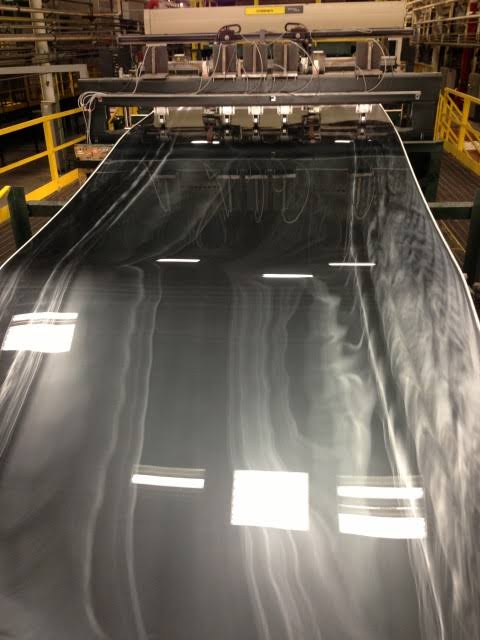
Solid surface materials have become an important choice in residential, commercial, and hospitality interiors. Their smooth appearance, design flexibility, and ability to be fabricated into different shapes make them suitable for countertops, bathroom vanities, reception desks, wall panels, and integrated sinks. However, the quality of these products depends on more than their visible finish. Raw material selection, production techniques, technical expertise, and quality control all influence the final result.
For buyers, selecting an experienced manufacturing partner can make a significant difference in product consistency and project reliability. An established Solid Surface Manufacturer is more likely to have developed the production knowledge, inspection procedures, and technical capabilities needed to meet different customer requirements. Understanding the value of manufacturing experience helps buyers make more informed sourcing decisions.
1. Better Understanding of Raw Materials
Solid surface products are engineered using a combination of mineral fillers, resins, pigments, and other additives. The quality and proportions of these ingredients influence the material’s appearance, workability, and physical characteristics.
Experienced manufacturers generally have a deeper understanding of how different raw materials behave during production. They can evaluate ingredient specifications, identify inconsistencies, and select suitable formulations for particular product requirements.
This knowledge helps reduce problems associated with unsuitable materials, inconsistent batches, or poor formulation control.
Buyers should ask manufacturers about their material composition, raw material inspection procedures, and available technical specifications before placing an order.
2. More Consistent Product Quality
Consistency is essential when purchasing solid surface sheets or customized components in large quantities.
Even small differences in color, thickness, texture, or finish can become noticeable when products are installed together. Such variations may create additional work during fabrication and affect the overall appearance of an interior space.
Experienced manufacturers are more likely to have established procedures for controlling production variables. These may include standardized formulations, calibrated equipment, documented operating conditions, and regular product inspections.
Consistent manufacturing practices help ensure that products remain closer to approved samples and specifications across different production batches.
3. Greater Control Over the Manufacturing Process
Solid surface manufacturing involves multiple stages, including material preparation, mixing, molding, curing, trimming, sanding, and polishing. Problems at one stage can affect the quality of the finished product.
An experienced production team understands how these stages interact and where potential defects may occur.
For example, incorrect mixing conditions can contribute to uneven material distribution, while inconsistent curing may affect the finished product’s characteristics. Poor finishing techniques can also create visible differences across a surface.
Manufacturers with established production experience can use process monitoring and appropriate operating procedures to reduce these risks.
4. Improved Surface Appearance and Finishing
The appearance of solid surface materials is an important consideration for architects, interior designers, and property developers.
A smooth, uniform surface helps create a refined appearance in kitchens, bathrooms, reception areas, and other interior spaces. Achieving this result requires suitable finishing equipment, controlled production methods, and skilled operators.
Experienced manufacturers understand how sanding, polishing, and edge processing influence the final finish.
They may also offer different surface options, including matte, satin, semi-gloss, and high-gloss finishes, depending on the product range.
Their knowledge can help buyers select an appropriate finish based on the intended application and maintenance expectations.
5. Fewer Manufacturing Defects
Manufacturing defects can increase costs, delay projects, and create complications during installation.
Potential issues in solid surface products include:
- Air bubbles or internal voids
- Uneven thickness
- Surface scratches or irregularities
- Inconsistent coloration
- Poorly finished edges
- Dimensional inaccuracies
- Visible defects in molded components
No manufacturing process is entirely free from risk, but experienced manufacturers are better positioned to identify common production problems and establish preventive controls.
They may use incoming material checks, in-process inspections, equipment maintenance, and final product evaluations to reduce the likelihood of defects reaching customers.
6. More Reliable Quality Control Systems
An effective quality control system is one of the most valuable results of manufacturing experience.
Rather than relying only on a final visual inspection, a professional manufacturer should monitor quality throughout production.
Typical inspection activities include:
- Checking incoming raw materials against specifications.
- Verifying ingredient measurements and formulation records.
- Monitoring mixing and curing conditions.
- Inspecting sheet dimensions and thickness.
- Examining surface appearance and finish.
- Reviewing customized products before packaging.
- Recording defects and corrective actions.
The specific tests used depend on the product and its intended application. Buyers should request relevant inspection records and test reports when technical performance is important to a project.
7. Better Customization Capabilities
Many modern construction projects require materials that fit specific dimensions, design concepts, and functional requirements.
Experienced manufacturers may have developed the technical knowledge needed to produce customized colors, patterns, thicknesses, shapes, and molded components.
Customization options can include:
- Special countertop dimensions
- Integrated sinks and washbasins
- Customized vanity tops
- Curved architectural surfaces
- Specific edge profiles
- Coordinated color selections
- Project-specific product designs
Experience is particularly useful when a design involves unusual shapes or multiple connected components. Manufacturers can help assess production feasibility and identify potential limitations before the order is confirmed.
8. More Effective Problem-Solving
Production challenges can arise even in well-managed manufacturing facilities. Material variations, equipment problems, dimensional errors, and unexpected design requirements may affect an order.
Experienced manufacturers have usually encountered a wider range of production situations. This practical knowledge can help them identify the cause of a problem and determine suitable corrective measures.
For buyers, this can mean clearer technical communication and more realistic solutions when changes are required.
A manufacturer should be able to explain the issue, outline available options, and communicate how corrective work may affect cost or delivery schedules.
9. Greater Understanding of Application Requirements
Different environments place different demands on solid surface products.
A kitchen countertop may require consideration of cleaning routines, everyday contact, and exposure to common household substances. A commercial washroom may involve frequent use and regular cleaning. A reception counter may place greater emphasis on appearance, dimensions, and integration with surrounding furniture.
Experienced manufacturers are more likely to understand these application differences.
They can help buyers review relevant material properties, finishing options, fabrication requirements, and maintenance considerations before selecting a product.
This guidance is especially valuable when the project involves several types of solid surface components.
10. More Reliable Production Planning
Product quality also depends on the manufacturer’s ability to manage production schedules and resources.
A company with established manufacturing operations may have more structured systems for inventory management, equipment maintenance, workforce planning, and order scheduling.
These systems help reduce avoidable interruptions and support more predictable production.
For large orders, buyers should confirm:
- Available production capacity
- Standard and customized order lead times
- Raw material availability
- Production scheduling procedures
- Inspection timelines
- Packaging and dispatch arrangements
Clear planning helps ensure that quality requirements are not overlooked when manufacturers are handling high order volumes.
11. Better Compliance and Technical Documentation
Experienced manufacturers may have more established procedures for maintaining technical records and supporting customer documentation requirements.
Depending on the product and destination market, relevant documents may include material specifications, test reports, quality management certificates, environmental documentation, and declarations of compliance.
These documents help buyers assess whether a product is suitable for a particular project.
It is important to verify that certificates are current and relevant. A company-level management certification does not automatically demonstrate that every product meets a specific performance requirement.
Buyers should request documentation that clearly identifies the product, test method, and applicable standard.
12. Improved Support for Fabrication and Installation
The manufacturing process does not end when a solid surface sheet leaves the production facility. The material must also be handled, fabricated, and installed correctly.
Experienced manufacturers can often provide useful guidance on cutting, bonding, edge finishing, thermoforming where applicable, and general handling practices.
For example, incorrect fabrication methods may create visible seams, uneven edges, or unnecessary material waste. Inadequate handling can also result in scratches or damage before installation.
Buyers should ask whether the supplier provides technical guidance, product handling recommendations, and installation-related documentation.
13. Better Packaging and Transportation Practices
Solid surface sheets and molded components can be damaged during storage and transportation if they are not handled properly.
Experienced manufacturers are more likely to understand the packaging requirements associated with different product dimensions and shipping arrangements.
Suitable packaging may involve protective films, foam materials, corner guards, reinforced cartons, pallets, or wooden crates.
For international shipments, buyers should also discuss loading procedures, container arrangements, handling instructions, and responsibility for transportation-related issues.
Good packaging practices help preserve product condition between the factory and the installation site.
14. Stronger Long-Term Business Relationships
Manufacturing experience can also support more stable business relationships.
Distributors, contractors, and developers often need to place repeat orders, maintain consistent product specifications, and coordinate multiple projects over time. Working with a manufacturer that understands these requirements can simplify communication and purchasing.
A dependable supplier should maintain clear records of product specifications, respond to customer inquiries, and communicate any changes that could affect future orders.
Long-term cooperation may also make it easier to coordinate customized products, sample approvals, and recurring production schedules.
15. How Buyers Can Evaluate a Manufacturer’s Experience
Years in business can be useful information, but they should not be the only measure of manufacturing capability. Buyers should examine practical evidence of the supplier’s production experience and quality management.
Consider the following evaluation points:
| Evaluation factor | What buyers should check |
|---|---|
| Industry experience | Years of relevant solid surface production |
| Product portfolio | Range of sheets, sinks, countertops, and components |
| Production facility | Equipment, organization, and manufacturing processes |
| Quality control | Inspection procedures and testing capabilities |
| Product samples | Consistency of color, thickness, and finish |
| Customization | Ability to meet special design requirements |
| Technical support | Availability of specifications and fabrication guidance |
| Certifications | Valid documents relevant to products and markets |
| Customer references | Evidence of previous projects and repeat business |
| Delivery performance | Realistic production and shipping schedules |
Requesting samples, reviewing technical documents, and discussing project requirements directly with the supplier can provide a clearer picture than relying on general marketing claims.
Conclusion
Choosing an experienced solid surface manufacturer matters because production knowledge influences nearly every aspect of product quality. From raw material selection and formulation to curing, finishing, inspection, and packaging, each stage requires suitable processes and technical understanding.
Experienced manufacturers can offer advantages in consistency, defect prevention, customization, problem-solving, and production planning. However, buyers should still verify these capabilities through product samples, relevant test reports, facility information, and clear communication.
A careful evaluation of manufacturing experience and actual quality management practices helps construction professionals and distributors select materials with greater confidence and reduce the risks associated with large or complex projects.
