

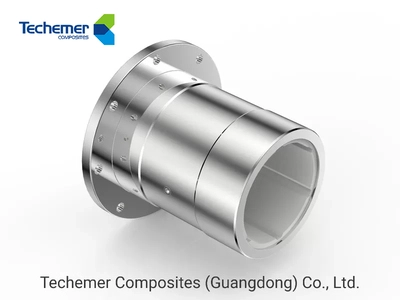
Hydropower turbines convert the energy of moving water into mechanical power, which is then used to generate electricity. Their performance depends on the coordination of several mechanical components, including runners, shafts, generators, and bearings. Although bearings may not directly produce electricity, their ability to support rotating assemblies with minimal friction and stable alignment has an important influence on overall equipment performance.
Modern hydro turbine bearings are designed to address demanding operating conditions, including heavy mechanical loads, continuous rotation, temperature variations, and challenging lubrication requirements. Improvements in bearing geometry, materials, lubrication systems, and monitoring technologies can reduce mechanical losses, improve reliability, and support more consistent hydropower generation.
The Role of Bearings in Hydropower Turbine Efficiency
Bearings support rotating shafts and help maintain their correct position during turbine operation. They manage radial and axial forces while allowing connected components to rotate smoothly.
When bearings operate correctly, they help reduce unnecessary friction, vibration, and mechanical instability. These conditions support efficient power transmission from the turbine runner to the generator.
Poor bearing performance can have the opposite effect. Excessive friction, misalignment, overheating, and vibration may increase mechanical losses and contribute to equipment deterioration.
Advanced bearing designs address these challenges through improved engineering and better control of operating conditions.
1. Improved Bearing Geometry Reduces Friction
Bearing geometry influences how loads are distributed and how effectively lubricant moves between supporting surfaces.
Traditional bearing arrangements may require modifications when operating conditions become more demanding or when equipment performance needs improvement.
Modern designs use carefully developed geometries to maintain suitable clearances, support load distribution, and promote effective lubrication.
Optimized Journal Bearing Geometry
Journal bearings support radial loads through a lubricant film between the rotating shaft and bearing surface.
Improvements in bearing clearances, surface profiles, and oil distribution can help establish more stable lubrication conditions.
A properly designed journal bearing can reduce excessive friction and support smooth shaft rotation.
Advanced Thrust Bearing Pad Designs
Thrust bearings manage axial forces generated by the turbine and rotating assembly.
Modern multi-pad thrust bearings may use carefully engineered pad profiles and pivot arrangements to distribute loads and maintain a stable oil film.
This can help reduce localized pressure and improve operating stability under the specified load conditions.
2. Advanced Materials Improve Wear Resistance
Bearing materials influence friction, thermal behavior, load capacity, and resistance to surface deterioration.
Modern bearing designs use materials selected according to the application rather than relying on a single material for every operating condition.
Common material options include:
- Bronze alloys
- White-metal bearing linings
- Specialized steel components
- Engineered polymer composites
- Other application-specific bearing materials
Each material offers different characteristics. For example, white-metal linings are used in many hydrodynamic bearing applications because of their conformability and compatibility with suitable shaft and lubrication arrangements.
Engineered polymers may be suitable for selected water-lubricated applications because of their corrosion resistance and water compatibility.
Choosing an appropriate material helps reduce wear and maintain bearing performance over extended operating periods.
3. Advanced Lubrication Systems Support Efficient Operation
Lubrication is one of the most important factors affecting bearing efficiency.
In hydrodynamic bearings, a lubricant film separates moving surfaces and supports the applied mechanical load. The quality and stability of this film influence friction, heat generation, and wear.
Modern lubrication arrangements can improve performance through better oil distribution, filtration, temperature control, and monitoring.
Improved Oil Distribution
Carefully designed oil passages help deliver lubricant to the required bearing surfaces.
Consistent oil supply supports the development of a suitable lubricating film and reduces the risk of localized lubrication problems.
Effective Filtration
Modern filtration systems help remove solid particles that could damage bearing surfaces.
Maintaining clean lubricant reduces abrasive wear and supports more reliable operation.
Temperature Regulation
Oil coolers and other thermal management arrangements help control lubricant temperature.
Maintaining suitable temperature conditions supports lubricant viscosity and helps preserve film performance.
4. Lower Vibration Improves Mechanical Stability
Vibration can reduce the reliability of turbine-generator equipment and contribute to additional mechanical stress.
It may develop because of rotor imbalance, shaft misalignment, hydraulic disturbances, loose components, or bearing deterioration.
Advanced bearing designs help control shaft movement and provide stable support under expected operating loads.
Improvements in bearing geometry, clearances, and load distribution can reduce certain vibration-related problems.
Lower vibration can also help protect connected components, including shafts, seals, couplings, and generator assemblies.
However, bearing design alone cannot eliminate all vibration. Proper rotor balancing, alignment, installation, and operating control remain essential.
5. Advanced Thrust Bearings Improve Axial Load Management
Thrust bearings play a particularly important role in many vertical-shaft hydropower installations.
They support the weight of rotating components and hydraulic thrust generated during turbine operation.
If axial forces are not distributed correctly, excessive pressure may develop on individual bearing surfaces. This can increase friction, temperature, and wear.
Modern thrust-bearing arrangements use improvements in pad geometry, surface materials, lubrication distribution, and load support.
These features help maintain the required shaft position and distribute axial forces more effectively.
Reliable thrust-bearing performance supports stable operation of the complete turbine-generator assembly.
6. Water-Lubricated Bearing Designs Support Specific Applications
Not every hydropower bearing requires conventional oil lubrication. Water-lubricated bearing designs are used in selected applications where the bearing materials and operating conditions are suitable.
These designs use water as the lubrication and cooling medium.
Specialized polymer composites and other water-compatible materials can provide the required wear characteristics in certain wet operating environments.
Potential advantages include reduced dependence on conventional lubricating oil and lower risk of oil leakage at the bearing interface.
However, water quality, particle contamination, operating speed, load capacity, and startup conditions must be carefully considered.
Water-lubricated bearings are not universally suitable replacements for oil-lubricated systems. Their application requires an appropriate engineering assessment.
7. Precision Manufacturing Improves Bearing Consistency
Advanced bearing designs depend on accurate manufacturing to achieve their intended performance.
Small deviations in bearing dimensions, clearances, and surface finish can influence lubrication and load distribution.
Modern manufacturing technologies help improve dimensional consistency and reduce variation between components.
Important production processes include:
- Computer numerical control machining
- Precision grinding
- Surface finishing
- Automated dimensional measurement
- Coordinate measuring
- Material inspection and testing
These processes help manufacturers produce components that meet specified engineering requirements.
Consistent manufacturing quality supports predictable bearing performance and reduces the risk of defects caused by dimensional inaccuracies.
8. Improved Sealing and Contamination Protection
Contamination is a major concern in bearing systems because solid particles and moisture can interfere with lubrication and damage supporting surfaces.
Advanced sealing arrangements help protect bearings from external contaminants and reduce lubricant leakage where applicable.
Depending on the bearing design, protective solutions may include specialized seals, labyrinth arrangements, protective covers, and improved housing configurations.
Effective contamination control helps maintain lubricant quality and reduces the likelihood of premature surface deterioration.
For hydropower facilities, these improvements are particularly relevant because moisture exposure and water-related contamination can affect equipment reliability.
9. Smart Sensors Enable Condition-Based Maintenance
Modern bearing systems can be supported by monitoring technologies that provide information about operating conditions.
Sensors may measure temperature, vibration, shaft displacement, and other relevant parameters.
These measurements allow operators to identify unusual changes and investigate possible bearing problems.
Temperature Monitoring
Temperature sensors help detect abnormal heat generation that may be associated with lubrication problems, excessive loading, or mechanical friction.
Vibration Monitoring
Vibration sensors provide information about rotor balance, alignment, and bearing condition.
Shaft Position Monitoring
Displacement measurements help evaluate shaft movement and identify changes in radial or axial positioning.
Data Analysis
Monitoring software can compare current measurements with historical operating patterns. This makes it easier to identify gradual deterioration and plan maintenance activities.
Condition monitoring does not replace physical inspection, but it provides additional information for making maintenance decisions.
10. Reduced Maintenance Requirements Improve Plant Availability
Bearing reliability influences how often turbine-generator equipment requires inspection, repair, or replacement.
Advanced designs can help reduce certain causes of premature deterioration through better load distribution, material selection, lubrication performance, and contamination protection.
When bearings operate reliably, hydropower facilities may benefit from:
- Fewer unexpected maintenance interventions
- Reduced equipment downtime
- More predictable overhaul planning
- Lower risk of secondary component damage
- Improved operational availability
These benefits depend on correct bearing selection, installation, and maintenance. Even advanced bearing designs require regular monitoring and suitable operating conditions.
11. Factors to Consider When Selecting Advanced Bearing Designs
Not every advanced bearing design is suitable for every turbine. Selection should be based on the mechanical requirements and operating environment of the installation.
Important factors include:
| Selection Factor | Engineering Consideration |
|---|---|
| Load capacity | Ability to support expected radial and axial forces |
| Rotational speed | Suitability for the turbine’s operating speed range |
| Bearing material | Resistance to wear, temperature, and environmental exposure |
| Lubrication method | Compatibility with oil or water lubrication |
| Dimensional accuracy | Correct fit, clearance, and alignment |
| Thermal performance | Ability to manage operating heat |
| Maintenance access | Ease of inspection and servicing |
| Monitoring requirements | Compatibility with condition-monitoring equipment |
Engineers should also consider startup conditions, transient loads, operating history, and manufacturer recommendations.
12. How Advanced Bearings Contribute to Overall Energy Performance
Bearing improvements support hydropower efficiency primarily by reducing mechanical losses and maintaining stable equipment operation.
Although the actual energy savings depend on the turbine design and operating conditions, several mechanisms contribute to better performance.
Reduced friction: Suitable materials and lubrication conditions help limit energy losses within the bearing interface.
Stable shaft positioning: Proper support helps maintain alignment between rotating components.
Lower mechanical vibration: Improved support can reduce unnecessary dynamic forces and protect connected equipment.
Better thermal management: Effective lubrication and cooling help maintain suitable operating conditions.
Higher equipment availability: Reliable bearings reduce the likelihood of unplanned shutdowns and support consistent electricity generation.
It is important to distinguish bearing efficiency from overall turbine efficiency. Bearings contribute to mechanical performance, but the plant’s total energy output also depends on hydraulic design, runner condition, generator performance, and operating conditions.
The Role of Bearing Manufacturers and Technical Expertise
Advanced bearing performance depends on the combination of design knowledge, material selection, manufacturing capability, and quality control.
Engineers evaluating bearing solutions should review dimensional specifications, load capacity, material properties, lubrication requirements, and application compatibility.
Technical resources from Techemer can help professionals explore industrial bearing applications and understand the considerations involved in selecting suitable components for hydropower equipment.
The final selection should be supported by verified engineering data and the requirements of the specific turbine installation.
Conclusion
Advanced bearing designs contribute to hydropower turbine efficiency by improving load distribution, reducing friction, supporting effective lubrication, and maintaining stable shaft positioning.
Developments in bearing materials, precision manufacturing, thrust-bearing geometry, sealing arrangements, and condition monitoring have created additional opportunities to improve equipment reliability.
However, the benefits of these technologies depend on selecting the correct design for the application and maintaining suitable operating conditions.
By combining advanced bearing engineering with accurate installation, effective lubrication, and regular condition monitoring, hydropower facilities can improve mechanical performance, reduce maintenance risks, and support reliable long-term electricity generation.
