

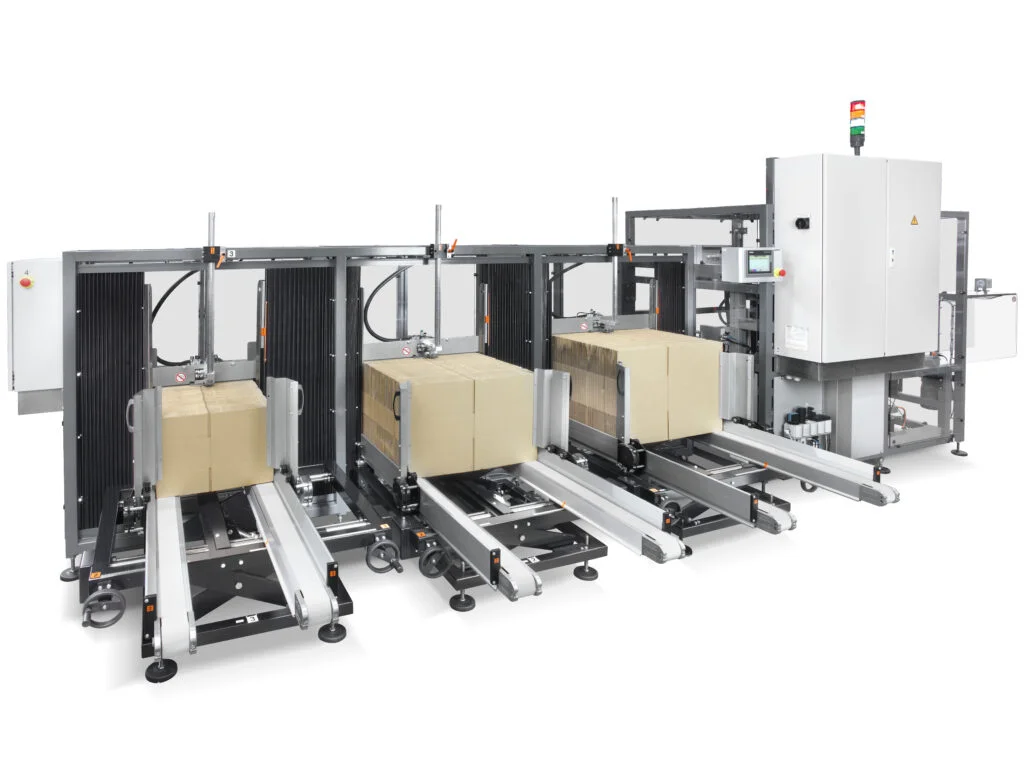
Manufacturing businesses constantly look for practical ways to control operating expenses while maintaining efficient production processes. Packaging is one area where repetitive manual activities can consume considerable time and labor. Preparing cartons individually requires employees to open flat cardboard blanks, fold their panels, and secure the bottoms before products can be packed. As production volumes increase, these tasks can become difficult to manage without affecting productivity.
An Automatic Case Erector provides an automated solution by performing these carton preparation activities through a coordinated mechanical process. By reducing the need for manual box assembly, this equipment helps manufacturers use their workforce more effectively, improve packaging consistency, and control certain operational expenses. Understanding its role can help businesses determine how carton erection automation fits into their cost-reduction strategies.
Understanding the Cost of Manual Carton Preparation
Manual carton assembly may appear simple, but it involves several repetitive activities that require continuous employee involvement. Workers must collect flat carton blanks, open them into box shapes, fold the bottom flaps, and apply tape or adhesive to secure the cartons.
In facilities with high packaging volumes, these activities can require a significant amount of labor. The process may also become inconsistent when employees work under demanding production schedules.
Manual carton preparation can contribute to several operational challenges:
- Higher labor requirements for repetitive packaging tasks.
- Slower carton preparation during busy production periods.
- Inconsistent folding and sealing results.
- Increased physical workload for employees.
- Potential delays between carton preparation and product loading.
Automating this stage helps manufacturers address these challenges and establish a more predictable packaging process.
1. Reduces the Need for Repetitive Manual Labor
One of the most important advantages of automatic carton erection is the reduction of direct manual involvement.
Instead of requiring employees to assemble every carton individually, the machine automatically feeds, opens, folds, and seals carton blanks. Operators primarily focus on monitoring the equipment, replenishing carton supplies, and responding to operational requirements.
This allows manufacturing facilities to allocate their workforce more effectively.
For example, employees who previously spent most of their shifts preparing empty cartons can be assigned to quality inspection, material handling, machine supervision, or other production activities.
Although automated equipment still requires trained operators, it reduces the amount of labor dedicated specifically to carton assembly.
2. Improves Employee Productivity
Labor efficiency is not simply about reducing the number of workers. It also involves making better use of employees’ time and skills.
Manual carton preparation can prevent workers from focusing on other important responsibilities because they must repeatedly perform the same assembly tasks.
An automatic case erector handles much of this repetitive work, allowing employees to concentrate on activities that require attention, decision-making, and supervision.
This can improve workforce productivity without necessarily increasing staffing levels as production requirements grow.
3. Reduces Labor-Related Operational Expenses
Employee wages and associated labor expenses are important considerations for manufacturing businesses. When carton preparation requires several workers, the overall cost of packaging operations can increase.
Automation can reduce the amount of direct labor required for this particular task. Depending on production volume, operating schedules, and existing staffing arrangements, these savings may contribute to lower packaging costs.
Businesses should evaluate labor expenses alongside equipment investment, electricity consumption, maintenance, and consumable materials to understand the actual financial impact.
4. Minimizes Carton Preparation Errors
Manual box assembly can produce inconsistent results, particularly when employees handle large quantities of cartons throughout long production shifts.
Common problems include incorrectly folded flaps, misaligned carton panels, and incomplete bottom sealing. These issues may require additional handling or replacement of defective cartons.
Automatic case erectors use controlled mechanical operations to form cartons according to predetermined settings.
This helps improve consistency and reduce errors associated with repetitive manual assembly.
Fewer preparation errors can also reduce the time employees spend correcting problems, supporting more efficient use of production resources.
5. Helps Reduce Material Waste
Packaging material costs can become significant when manufacturing facilities process large quantities of cartons.
Improper manual folding or sealing may damage carton blanks and make them unsuitable for use. Repeated handling can also contribute to material waste.
Automated carton forming helps maintain a more controlled preparation process. Accurate feeding, opening, and folding can reduce avoidable errors when the machine is correctly configured and compatible carton materials are used.
Although material savings depend on carton quality and operating conditions, reducing defective carton preparation can help businesses manage packaging expenses more effectively.
6. Supports Faster Production and Reduces Downtime
Packaging efficiency depends on the performance of every stage in the production line. If cartons are not prepared quickly enough, product loading and other downstream operations may experience delays.
An automatic case erector helps maintain a steady supply of formed cartons, reducing dependence on manual assembly speed.
When integrated properly with conveyors and automatic case packers, the machine can support a smoother flow of packaging materials.
This coordination helps reduce avoidable waiting time and allows production resources to operate more efficiently.
However, overall line performance still depends on the capacity and reliability of connected equipment.
7. Improves Workplace Ergonomics
Repeated carton assembly involves bending, lifting, folding, and other repetitive movements. Over time, these activities may contribute to physical fatigue and discomfort among employees.
Automating carton preparation reduces the frequency with which workers need to perform these tasks manually.
This can support better workplace ergonomics and help employees focus on machine monitoring and other responsibilities.
A safer and more comfortable working environment can also support workforce productivity. Nevertheless, proper machine guarding, operator training, and safety procedures remain essential.
8. Optimizes Packaging Workflow
An efficient packaging process requires different operations to work together without unnecessary interruptions.
An automatic case erector can be connected to conveyor systems, case packing machines, sealing equipment, and palletizing systems.
A typical automated workflow includes:
- Flat carton blanks are loaded into the machine magazine.
- The machine automatically selects and opens individual blanks.
- Bottom flaps are folded into the correct positions.
- Tape or adhesive secures the carton bottom.
- Formed cartons are transferred to the product loading station.
- Filled cases move toward final sealing and palletizing.
This coordinated process reduces unnecessary manual movement and supports better organization throughout the packaging line.
9. Reduces Long-Term Packaging Costs
Although installing automated equipment requires an initial investment, it can offer long-term financial benefits when used appropriately.
Potential cost advantages include:
- Reduced direct labor requirements.
- Lower expenses associated with manual carton preparation.
- Fewer defective cartons caused by inconsistent assembly.
- Reduced repetitive handling.
- Better utilization of production time.
- More organized packaging operations.
However, the actual return on investment depends on several factors, including machine purchase price, production volume, labor costs, maintenance expenses, and equipment utilization.
Manufacturers should calculate expected savings before making an investment decision.
10. Supports Business Expansion
As manufacturing businesses grow, their packaging requirements usually increase. A manual carton preparation process that works for smaller production volumes may become difficult to manage as output expands.
Automated case erection provides a more scalable approach to carton preparation.
Instead of increasing manual assembly resources in direct proportion to production growth, businesses can use automated equipment to support higher packaging demands within its rated capacity.
This makes automation particularly useful for manufacturers planning to increase output, introduce additional product lines, or expand their distribution operations.
Factors That Influence Cost Savings
Not every manufacturing facility will experience the same financial benefits from installing an automatic case erector. Several operational factors influence the potential savings.
Production Volume
Facilities that prepare large quantities of cartons generally have more opportunities to benefit from automation than operations with very low packaging volumes.
Current Labor Costs
The number of employees currently assigned to carton preparation and their associated labor expenses influence the potential financial benefits.
Machine Operating Capacity
The selected equipment should match the facility’s carton requirements. A machine with insufficient capacity may create bottlenecks, while excessive capacity can increase unnecessary investment costs.
Maintenance and Consumables
Tape, adhesive, replacement components, electricity, and routine servicing should be included when evaluating long-term expenses.
Equipment Integration
Proper integration with existing packaging machinery can improve production flow and help businesses achieve better utilization of their investment.
How to Calculate the Potential Return on Investment
Before installing automated carton preparation equipment, manufacturers should estimate the financial benefits and compare them with the total investment.
A basic return-on-investment calculation can be expressed as:
ROI (%) = (Annual Net Savings ÷ Total Investment Cost) × 100
Annual net savings should account for reduced labor and other operating expenses after subtracting additional costs associated with automation.
For example, a manufacturer should compare its current annual carton preparation expenses with the expected expenses after installation, including maintenance, electricity, and consumable materials.
This approach provides a more realistic picture of whether automation is financially suitable for the facility.
Conclusion
An automatic case erector helps manufacturing businesses reduce manual labor and control operational costs by automating repetitive carton preparation activities. Its ability to feed, open, fold, and seal cartons reduces the need for employees to assemble boxes individually while supporting consistent packaging results.
Beyond labor savings, the equipment can help minimize preparation errors, improve workplace ergonomics, reduce avoidable material waste, and support smoother production workflows.
The actual financial benefits depend on production volume, labor expenses, machine capacity, and maintenance requirements. By evaluating these factors carefully, manufacturers can determine whether automated carton erection is a practical investment for improving packaging efficiency and supporting long-term business growth.
