

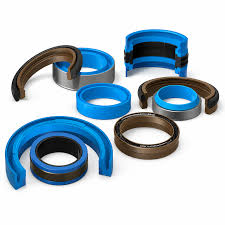
Hydraulic seals are small but essential components that help hydraulic systems maintain pressure, prevent fluid leakage, and protect internal parts from contamination. Their performance depends on several factors, including design, dimensions, operating conditions, and the materials used during manufacturing. Selecting an unsuitable material can lead to swelling, cracking, excessive wear, deformation, or premature seal failure.
Working with an experienced Hydraulic Seals Manufacturer helps equipment producers and industrial buyers identify materials that match their specific application requirements. Different hydraulic systems operate under different pressures, temperatures, movement speeds, and fluid conditions, making material selection an important part of achieving reliable sealing performance.
1. Understanding the Importance of Material Selection
Hydraulic seals operate in environments where materials are exposed to mechanical stress, fluid contact, friction, and temperature variations. Each material responds differently to these conditions.
For example, a seal used in a construction excavator may need strong abrasion resistance, while one used in specialized industrial equipment may require low friction or greater chemical compatibility.
Choosing the right material helps manufacturers develop products that can:
- Maintain effective sealing contact.
- Resist wear during repeated movement.
- Remain stable when exposed to hydraulic fluids.
- Withstand the required operating temperature.
- Resist deformation under compression.
- Provide suitable mechanical strength.
- Support the expected service life of the equipment.
Material selection should therefore begin with an understanding of the complete hydraulic system rather than relying only on the general properties of a particular polymer.
2. Common Materials Used in Hydraulic Seal Manufacturing
<AsyncImage query=”industrial hydraulic seals assorted rubber polyurethane PTFE polymer materials close up” aspectRatio=”16:9″ width=”100%”/>
Hydraulic seal manufacturers work with several elastomers and polymers, each offering different performance characteristics.
Nitrile Rubber (NBR)
Nitrile rubber is widely used in hydraulic sealing applications because of its flexibility and compatibility with many petroleum-based hydraulic fluids.
Its useful characteristics include:
- Good resistance to many mineral oils.
- Suitable elasticity for various sealing applications.
- Good general mechanical performance.
- Availability in different hardness grades.
NBR is commonly used for O-rings, rod seals, piston seals, and other industrial sealing components.
However, its suitability depends on the specific fluid and operating temperature. It may not be appropriate for every chemical or high-temperature application.
Polyurethane (PU)
Polyurethane is commonly selected for hydraulic applications that require strong mechanical performance and abrasion resistance.
Its key characteristics include:
- High resistance to wear.
- Good tensile strength.
- Useful resistance to tearing.
- Good load-bearing capability in suitable formulations.
PU is frequently used in demanding applications involving hydraulic cylinders, construction machinery, and material-handling equipment.
Its performance depends on the polyurethane formulation and its compatibility with the operating environment.
Polytetrafluoroethylene (PTFE)
PTFE is a high-performance polymer known for its low friction and broad chemical resistance.
Important characteristics include:
- Low friction during movement.
- Resistance to many chemicals.
- Good dimensional stability under suitable conditions.
- Low tendency to adhere to mating surfaces.
PTFE is used in specialized piston seals, rod seals, and backup components. Because it has different elastic properties from conventional rubber, some designs incorporate energizing elements to maintain sealing contact.
Fluorocarbon (FKM)
Fluorocarbon elastomers are used in applications requiring resistance to elevated temperatures and certain chemicals.
Their properties can include:
- Good resistance to many oils and fuels.
- Resistance to various chemicals.
- Suitability for selected high-temperature environments.
FKM is often considered for specialized industrial sealing applications. Its compatibility must still be verified against the actual fluid and temperature conditions.
Ethylene Propylene Diene Monomer (EPDM)
EPDM is useful in applications involving compatible water-based fluids and certain environmental exposures.
It offers good resistance to weathering, ozone, and many water-based environments.
However, it is generally not suitable for many petroleum-based hydraulic oils. Buyers should confirm compatibility before selecting it for a hydraulic system.
3. Matching Materials with Hydraulic Fluid Compatibility
Fluid compatibility is one of the most important considerations when selecting hydraulic seal materials.
Hydraulic systems may use mineral oils, synthetic fluids, water-glycol mixtures, phosphate ester fluids, and other specialized formulations. These fluids can interact differently with elastomers and polymers.
An incompatible material may experience:
- Excessive swelling.
- Shrinkage.
- Hardening or softening.
- Loss of elasticity.
- Changes in tensile properties.
- Surface deterioration.
For example, NBR is commonly suitable for many mineral-oil-based hydraulic systems, while EPDM is often considered for compatible water-based fluids.
Manufacturers should review the exact fluid composition and relevant material compatibility data before recommending a sealing compound.
4. Considering Operating Temperature Requirements
Temperature has a direct influence on material performance.
Hydraulic seals may experience heat generated by fluid movement, pressure losses, friction, and continuous equipment operation. Outdoor machinery may also operate in environments with significant seasonal temperature changes.
At elevated temperatures, some materials may lose mechanical strength or experience accelerated aging. At low temperatures, certain elastomers may become less flexible and struggle to maintain effective sealing contact.
How Material Selection Addresses Temperature Challenges
Manufacturers consider the expected minimum and maximum operating temperatures when recommending materials.
They may evaluate:
- Thermal stability.
- Low-temperature flexibility.
- Resistance to heat aging.
- Changes in hardness.
- Compression set.
- Compatibility with hydraulic fluids at operating temperatures.
The temperature range should reflect actual equipment conditions, including temporary temperature peaks rather than only normal operating levels.
5. Selecting Materials for Pressure Resistance
<AsyncImage query=”heavy duty industrial hydraulic cylinder piston rod seal assembly closeup” aspectRatio=”16:9″ width=”100%”/>
Hydraulic seals must maintain effective contact with surrounding surfaces while exposed to system pressure.
High-pressure applications can create mechanical stress and increase the risk of seal extrusion, particularly when material strength or installation clearances are unsuitable.
Material properties influence how a seal responds to these forces.
Important characteristics include:
- Hardness.
- Tensile strength.
- Tear resistance.
- Elastic recovery.
- Resistance to deformation.
- Extrusion resistance in the selected design.
Polyurethane is frequently considered for demanding hydraulic applications because of its mechanical strength and wear resistance. However, material choice alone does not guarantee high-pressure performance.
Seal geometry, backup rings, housing dimensions, and clearance gaps must also be evaluated.
6. Understanding Wear and Abrasion Resistance
Hydraulic seals often operate through repeated movement. Contact with piston rods, cylinder bores, and other mating surfaces creates friction that can gradually wear the sealing material.
Wear resistance is especially important in construction, agriculture, mining, and material-handling equipment.
Materials for Wear-Related Requirements
Polyurethane is commonly used where abrasion resistance and mechanical durability are important.
PTFE may be suitable for applications where low friction is a priority, although its mechanical behavior differs from elastomers.
Other materials may be selected depending on pressure, lubrication, movement speed, and surface conditions.
Manufacturers also consider the surface finish of the mating components because rough or damaged surfaces can accelerate seal wear regardless of material quality.
7. The Role of Material Hardness in Seal Performance
Material hardness influences how a hydraulic seal responds to compression and contact with surrounding surfaces.
A softer material may provide greater flexibility in certain sealing arrangements, while a harder material may offer better resistance to deformation or extrusion under suitable conditions.
However, selecting the highest available hardness is not always the best solution.
The correct hardness depends on factors such as:
- Operating pressure.
- Seal profile.
- Housing dimensions.
- Surface finish.
- Temperature.
- Required flexibility.
- Installation method.
Manufacturers commonly use Shore hardness testing to verify material consistency and confirm that compounds meet their specifications.
8. Matching Materials to Different Hydraulic Seal Types
Different sealing components perform different functions within a hydraulic system. Their material requirements may therefore vary.
| Seal Type | Main Function | Important Material Considerations |
|---|---|---|
| Piston seal | Prevents internal fluid bypass | Pressure resistance and wear performance |
| Rod seal | Prevents external fluid leakage | Elasticity, friction, and abrasion resistance |
| Wiper seal | Removes external contaminants | Wear resistance and suitable flexibility |
| Backup ring | Supports the primary seal | Resistance to deformation and extrusion |
| Wear ring | Guides moving components | Dimensional stability and wear resistance |
| O-ring | Provides static or selected dynamic sealing | Compression recovery and fluid compatibility |
A manufacturer should consider the role of each component when recommending a material rather than using one compound for every sealing application.
9. How Material Testing Supports Better Selection
<AsyncImage query=”industrial polymer rubber material laboratory hardness compression tensile testing” aspectRatio=”16:9″ width=”100%”/>
Material specifications provide useful information, but testing helps verify whether a compound meets the required properties.
Hydraulic seal manufacturers may use different testing methods depending on the material and application.
Hardness Testing
Measures resistance to indentation and helps confirm material consistency.
Tensile Testing
Evaluates tensile strength and elongation under controlled conditions.
Compression Set Testing
Determines how much permanent deformation remains after a material has been compressed for a specified period.
Fluid Compatibility Testing
Evaluates changes in material properties after exposure to selected hydraulic fluids.
Abrasion Testing
Assesses resistance to material loss caused by friction under defined test conditions.
Heat Aging Testing
Examines how exposure to elevated temperatures affects material properties over time.
Relevant ASTM and ISO methods can provide standardized procedures for particular tests. The appropriate method depends on the material and intended evaluation.
10. The Impact of Incorrect Material Selection
Choosing an unsuitable material can create several problems for hydraulic equipment.
Premature Wear: A material with insufficient abrasion resistance may deteriorate quickly during repeated movement.
Fluid-Related Damage: Incompatible hydraulic fluids can cause swelling, shrinkage, or changes in mechanical properties.
Excessive Deformation: Poor compression recovery may reduce sealing contact over time.
Cracking and Hardening: Unsuitable temperature resistance can accelerate material deterioration.
Leakage: Changes in material dimensions or mechanical properties can compromise the sealing interface.
Increased Maintenance Costs: Frequent seal replacement and equipment downtime can increase operating expenses.
Correct material selection helps reduce these risks, although proper design, installation, and maintenance remain equally important.
11. How Hydraulic Seals Manufacturers Help Customers Choose Materials
Selecting a suitable sealing material can be complicated when equipment operates under multiple conditions.
Manufacturers support this process by evaluating application specifications and recommending suitable materials based on technical requirements.
A typical material selection process may include:
- Identifying the hydraulic fluid type.
- Confirming operating and peak temperatures.
- Reviewing normal and maximum pressure.
- Evaluating movement speed and duty cycle.
- Checking environmental exposure.
- Reviewing seal dimensions and housing design.
- Comparing available material properties.
- Verifying suitability through testing where necessary.
Providing complete application information helps manufacturers avoid recommendations based on incomplete assumptions.
For customized sealing products, technical drawings, samples, and equipment specifications can provide additional guidance.
12. Material Selection for Different Industries
Different industries place different demands on hydraulic sealing materials.
Construction Industry
Excavators, loaders, bulldozers, and cranes operate under heavy loads and often encounter dust, dirt, and vibration.
Materials with suitable abrasion resistance and mechanical strength are important for these applications.
Agriculture Industry
Tractors, harvesters, and agricultural attachments work in outdoor environments where moisture, dust, and temperature variations are common.
Material selection should account for fluid compatibility and environmental exposure.
Mining Industry
Mining machinery may operate in highly abrasive conditions and experience demanding mechanical loads.
Durable materials and protective sealing arrangements are important for maintaining system reliability.
Manufacturing Industry
Industrial presses and production machinery may operate through repeated hydraulic cycles.
Materials should be selected according to pressure, temperature, movement frequency, and fluid conditions.
Marine Industry
Marine hydraulic systems may require materials suitable for specific fluids, moisture exposure, and operating temperatures.
Compatibility should be evaluated according to the actual equipment environment.
13. Important Questions to Ask Before Selecting a Material
Before ordering hydraulic seals, buyers should provide technical information and discuss material suitability with the manufacturer.
Useful questions include:
- Which material is compatible with the hydraulic fluid?
- What temperature range can the selected compound handle?
- Is the material suitable for the system’s operating pressure?
- How does it perform under repeated movement?
- What hardness range is recommended?
- Are material test reports available?
- Is a custom compound or sealing profile necessary?
- What installation conditions should be considered?
These questions help establish clear technical expectations and reduce the risk of selecting unsuitable products.
Conclusion
Material selection is a fundamental part of hydraulic seal manufacturing because it directly influences wear resistance, fluid compatibility, pressure performance, temperature stability, and service life. NBR, polyurethane, PTFE, FKM, and EPDM each offer different properties, making them suitable for different hydraulic applications.
Choosing the right material requires a careful evaluation of operating pressure, temperature, hydraulic fluid, movement, environmental exposure, and seal design. Manufacturers support this process through technical knowledge, material testing, and application-specific recommendations.
For industrial buyers, providing accurate equipment specifications and discussing material requirements before ordering can help ensure that hydraulic seals are suitable for their intended applications. The right combination of material, design, manufacturing quality, and installation practices contributes to dependable hydraulic system performance.
