

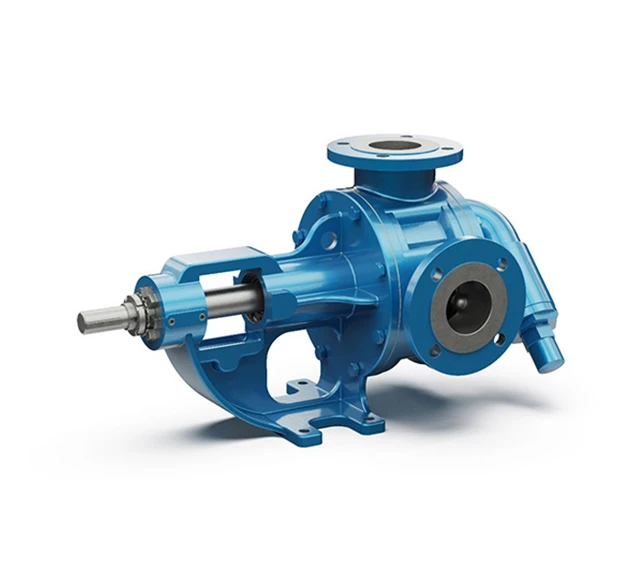
Gear pumps are widely used in industrial fluid-handling systems because they can provide steady, controlled fluid transfer across a range of operating conditions. They are commonly found in hydraulic equipment, lubrication systems, chemical processing machinery, fuel systems, and other applications where dependable positive displacement pumping is required.
Understanding the differences between pump designs is essential when evaluating equipment for a particular application. An experienced gear pump manufacturer can help buyers compare external and internal gear pump configurations based on fluid properties, flow requirements, pressure, temperature, and installation conditions.
What Is a Gear Pump?
A gear pump is a positive displacement pump that uses rotating gears to move fluid from an inlet to an outlet. As the gears rotate, fluid becomes trapped between the gear teeth and the internal surface of the pump housing.
The rotating gears transport the fluid toward the discharge port, where it is pushed into the connected system. Because a defined volume of fluid is moved with each revolution, gear pumps can provide relatively consistent flow.
Two common designs are external gear pumps and internal gear pumps. Although they use the same basic positive displacement principle, their construction and operating characteristics differ.
What Is an External Gear Pump?
An external gear pump typically uses two gears of similar size that rotate together inside a close-fitting housing. One gear is connected to the drive shaft, while the second gear rotates as it meshes with the first.
Fluid enters the suction side and fills the spaces between the gear teeth and housing. The fluid is then carried around the outside of the gears toward the discharge side.
External gear pumps are known for their relatively simple construction and compact design. They are widely used in hydraulic systems, lubrication equipment, fuel transfer, and general industrial machinery.
Advantages of External Gear Pumps
External gear pumps offer several practical characteristics:
- Compact and relatively simple construction
- Consistent positive displacement
- Suitable for many hydraulic applications
- Capable of handling a range of operating pressures
- Generally straightforward maintenance
- Availability in various displacement and mounting configurations
Their suitability still depends on the fluid, pressure, temperature, speed, and specific pump design.
What Is an Internal Gear Pump?
An internal gear pump uses two gears positioned differently from those in an external design. A smaller internal gear rotates inside a larger external gear, creating pumping chambers between the two components.
A crescent-shaped section or similar separator is commonly used to separate the suction and discharge areas. As the gears rotate, fluid enters the expanding spaces on the inlet side and is carried toward the outlet.
Internal gear pumps are often selected for applications involving viscous liquids because their operating characteristics can be well suited to thicker fluids.
Advantages of Internal Gear Pumps
Depending on the design, internal gear pumps can provide:
- Smooth fluid transfer
- Good handling of viscous liquids
- Relatively low pulsation
- Flexible operating characteristics
- Suitable performance for many industrial fluids
- Compatibility with various material and sealing configurations
As with external gear pumps, proper sizing and application matching are essential.
External vs. Internal Gear Pumps
The main difference between the two designs is the arrangement of the gears. External gear pumps use two externally meshing gears, while internal gear pumps use an internal gear rotating within a larger gear.
This difference affects the pump’s physical configuration, fluid-handling characteristics, operating range, and typical applications.
| Feature | External Gear Pump | Internal Gear Pump |
|---|---|---|
| Gear arrangement | Two externally meshing gears | Internal gear and larger external gear |
| Construction | Generally compact and simple | More complex gear arrangement |
| Typical applications | Hydraulics, lubrication, fuel | Oils, chemicals, viscous fluids |
| Flow characteristics | Consistent positive displacement | Smooth positive displacement |
| Viscous-fluid handling | Application dependent | Often well suited |
| Customization | Various configurations available | Various configurations available |
The table provides general guidance. Actual performance depends on the specific pump model and operating conditions.
Choosing Based on Fluid Viscosity
Viscosity is one of the most important factors when selecting a gear pump. The thickness of the fluid affects how easily it enters the pump, how much internal leakage occurs, and how much power is required.
Internal gear pumps are often considered for high-viscosity fluids such as heavy oils, resins, paints, and other thick industrial liquids. External gear pumps can also handle viscous fluids, but their suitability depends on the specific design and operating conditions.
The manufacturer’s recommended viscosity range should always be checked before selecting a pump.
Considering Pressure Requirements
Pressure requirements can help determine which pump configuration is appropriate. External gear pumps are commonly used in hydraulic systems where relatively high pressure and compact construction are important.
Internal gear pumps may also be used under pressure, but their suitability depends on the particular design and application.
Buyers should distinguish between maximum allowable pressure and normal operating pressure. Continuous operation near the upper limit can increase mechanical stress and accelerate wear.
Flow Rate and Operating Speed
Gear pump flow is influenced by displacement and rotational speed. Increasing speed generally increases theoretical flow, although actual output can be affected by internal leakage, fluid viscosity, pressure, and temperature.
Operating speed should therefore remain within the manufacturer’s recommended range. Excessive speed can increase heat generation, noise, mechanical wear, and energy consumption.
When comparing external and internal gear pumps, buyers should evaluate performance at the actual operating point rather than relying solely on maximum flow figures.
Material Selection
Pump materials should be compatible with the pumped fluid and operating environment. Housing and internal components may be manufactured from materials such as cast iron, stainless steel, aluminum, bronze, or specialized alloys.
Material selection becomes especially important when handling corrosive chemicals, abrasive fluids, high-temperature liquids, or fluids with specific cleanliness requirements.
Seals are equally important because incompatible sealing materials can deteriorate even when the main pump components remain unaffected.
Maintenance Considerations
Both external and internal gear pumps require appropriate maintenance to maintain reliable performance. The specific maintenance schedule depends on the pump design and operating environment.
Common practices include monitoring pressure and temperature, checking for leaks, maintaining fluid cleanliness, and inspecting seals and other wear components.
Contaminated fluid can accelerate wear on gears and bearings. Operating a pump outside its recommended pressure, speed, or temperature range can also shorten service life.
Installation Requirements
Correct installation is essential regardless of the gear pump configuration. Piping should be appropriately sized, connections should be properly sealed, and the pump should be correctly aligned with the drive system.
Excessive suction restrictions can reduce pump performance and may contribute to operational problems. Similarly, poor shaft alignment can increase mechanical stress on bearings and other components.
Installation procedures should follow the manufacturer’s technical instructions and the requirements of the complete system.
How to Select Between External and Internal Gear Pumps
The best choice depends on the application’s specific requirements rather than the pump type alone.
Consider the following factors:
- What type of fluid will be pumped?
- What is the fluid’s viscosity and temperature?
- What flow rate is required?
- What pressure will the pump normally operate at?
- What rotational speed is available?
- Are there space or mounting restrictions?
- What materials and seals are required?
- What maintenance and service requirements apply?
Answering these questions can narrow the selection and help identify the most appropriate pump configuration.
Questions to Ask a Gear Pump Supplier
Before purchasing, buyers should request detailed information about the proposed pump. Useful questions include:
- What is the recommended operating range?
- Which fluids and viscosity ranges are supported?
- What materials are available?
- What are the expected flow and pressure characteristics?
- What testing is performed before shipment?
- Are replacement components available?
- Can the pump be customized for specific requirements?
Clear technical information allows buyers to compare different products on a more meaningful basis.
Final Thoughts
External and internal gear pumps both provide reliable positive displacement pumping, but their different gear arrangements give them distinct operating characteristics. External gear pumps are widely used in hydraulic and general industrial systems, while internal gear pumps are often considered for smooth transfer of oils and other viscous fluids.
The correct choice depends on the complete application, including fluid properties, flow, pressure, temperature, speed, materials, and installation requirements. By evaluating these factors carefully and selecting equipment based on actual operating conditions, industrial buyers can choose a gear pump configuration that supports dependable and efficient system performance.
