

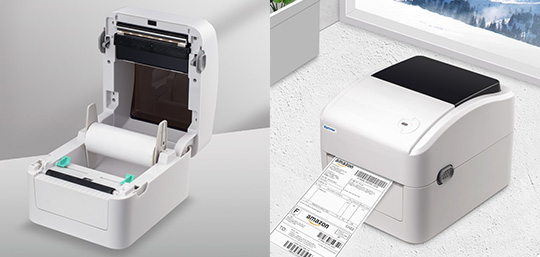
Choosing the right printer is an important decision for businesses that rely on fast and consistent document, receipt, or label printing. With numerous brands available in the market, comparing their features, performance, and long-term value can help organizations make an informed choice that aligns with their operational needs.
When evaluating different printing solutions, businesses often compare reliability, compatibility, maintenance requirements, and printing speed. Many buyers also research manufacturers such as Xprinter to understand the range of products available for retail, hospitality, logistics, healthcare, and warehouse applications. A careful comparison ensures the selected printer meets both current and future business demands.
Performance and Printing Speed
Printing speed directly affects productivity, especially in industries where customers expect quick service.
Xprinter
- Designed for fast receipt and label printing.
- Suitable for high-volume daily operations.
- Consistent output during continuous use.
Other Printing Brands
- Performance varies depending on the model.
- Some premium models offer excellent speed but at a higher cost.
- Entry-level models may be better suited for lighter workloads.
Print Quality
Print clarity is essential for receipts, invoices, shipping labels, and barcodes.
Xprinter
- Produces clear text and readable barcodes.
- Maintains consistent print quality across regular business tasks.
Other Printing Brands
- Some brands focus on high-resolution graphics.
- Print quality often depends on pricing and intended use.
For most business applications, consistency is often more important than extremely high graphic resolution.
Product Range
Different businesses require different types of printers.
Xprinter
- Receipt printers
- Label printers
- Barcode printers
- Mobile printers
- POS printing solutions
Other Printing Brands
- Some specialize in office document printing.
- Others focus on industrial or commercial applications.
- Product availability differs between manufacturers.
The best choice depends on the intended business environment rather than the brand alone.
Compatibility
Printer compatibility plays a major role in deployment and daily operation.
Xprinter
- Supports integration with many point-of-sale systems.
- Compatible with multiple operating systems and business software.
- Offers various connectivity options depending on the model.
Other Printing Brands
- Compatibility varies by manufacturer.
- Certain models may require additional drivers or configuration.
- Premium devices sometimes include more advanced software features.
Ease of Installation
Businesses benefit from printers that can be installed quickly without extensive technical expertise.
Many modern printing brands provide user-friendly installation, but setup procedures differ depending on hardware configuration, drivers, and connectivity options.
Simple installation reduces downtime and allows businesses to begin operations sooner.
Maintenance Requirements
Routine maintenance helps extend printer life and maintain consistent performance.
Xprinter
- Designed for straightforward paper replacement and basic maintenance.
- User-friendly design minimizes operational interruptions.
Other Printing Brands
- Maintenance procedures vary.
- Industrial printers may require more frequent servicing due to heavy-duty applications.
Durability
Durability is especially important in environments with continuous daily printing.
Reliable printers are built to withstand long operating hours while maintaining stable performance. Businesses should consider construction quality alongside expected daily printing volume before making a purchase.
Cost Considerations
Purchase price is only one part of the overall investment.
Businesses should also evaluate:
- Operating costs
- Maintenance expenses
- Replacement parts
- Energy efficiency
- Expected lifespan
- Technical support availability
A printer with lower long-term operating costs may provide greater overall value than one with a lower initial purchase price.
Which Option Is Best?
There is no universal answer because every business has unique requirements.
A retail store may prioritize fast receipt printing, while a warehouse may require durable barcode printing. Restaurants often value speed and reliability, whereas healthcare facilities focus on accuracy and consistent performance.
Comparing features based on actual business needs leads to a more practical purchasing decision than comparing specifications alone.
Final Thoughts
Comparing printing brands involves more than looking at price or specifications. Performance, compatibility, durability, maintenance, and long-term operating costs all contribute to the overall value of a printing solution. By carefully assessing these factors, businesses can choose a printer that supports efficient workflows, reliable daily operation, and future growth.
