

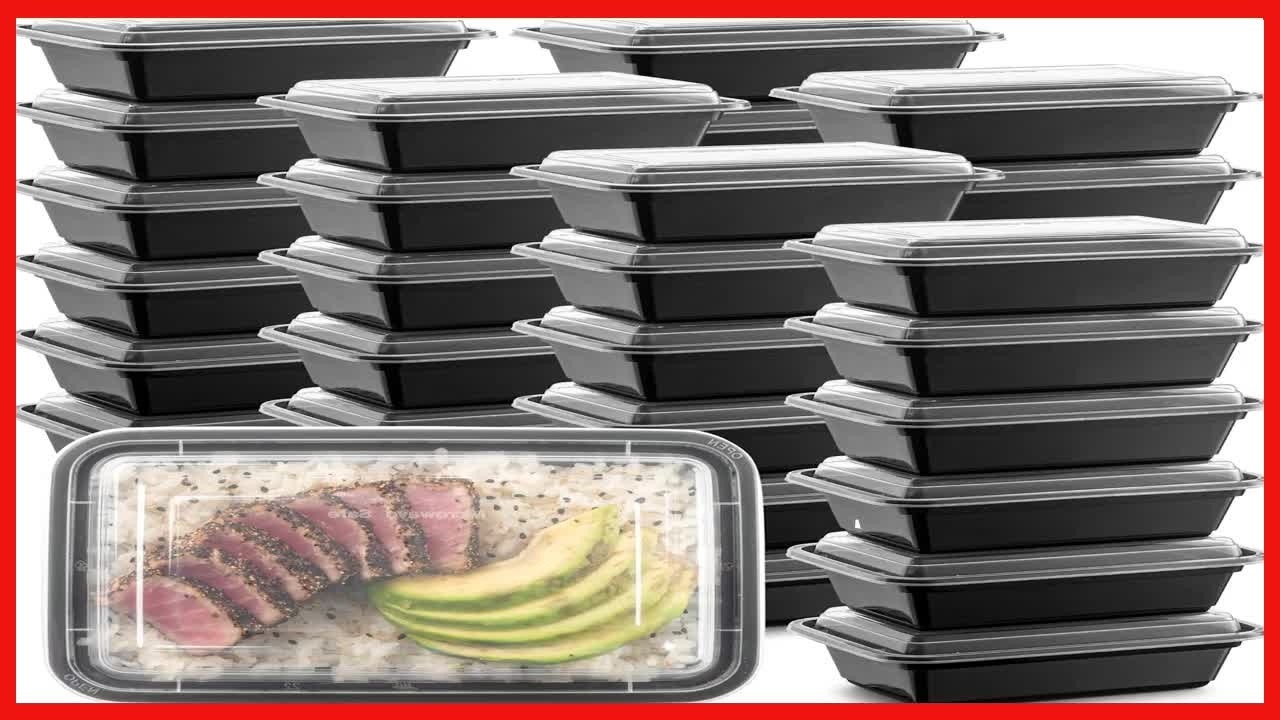
Buying food containers in bulk can help businesses maintain a steady packaging supply and simplify purchasing. However, large-volume orders require careful planning because the selected containers may need to support daily operations for weeks or months.
When purchasing a PP Food Container in large quantities, businesses should evaluate more than the unit price. Material suitability, product dimensions, quality consistency, storage requirements, delivery schedules, and supplier capabilities all deserve attention. LRpacking is one manufacturer businesses can consider when comparing PP container options for bulk purchasing.
Define Your Packaging Requirements First
Before contacting suppliers, determine exactly what the containers need to accomplish. Consider the type of food, portion sizes, storage conditions, transportation method, and how the packaging will be handled.
Having clear requirements makes it easier to compare products and avoid ordering containers that do not fit your operational needs.
Choose the Appropriate Material
Polypropylene is commonly used for food packaging because it can provide useful characteristics such as durability and relatively lightweight construction.
However, the specific material formulation and container design matter. Buyers should review product specifications and confirm that the selected containers are appropriate for the intended food-contact application.
Select the Correct Size
Bulk purchasing does not make an unsuitable container more practical. Capacity should match the portions or quantities being packed.
Businesses should consider both internal capacity and external dimensions. A container may hold the required amount of food but still be inconvenient if it takes up excessive storage or transportation space.
Compare Container Shapes
Shape can affect stacking, storage, filling, and delivery efficiency. Square and rectangular containers may make efficient use of shelf and shipping space, while round designs can be useful for specific foods.
Before placing a large order, test how the selected shape performs in the actual storage and handling environment.
Check Lid Compatibility
If containers are supplied with lids, confirm that the two components are designed to work together. Consistent lid fit is particularly important for takeaway foods, liquids, and products that will be transported.
Businesses should test closure performance before committing to a high-volume order.
Review Temperature Requirements
Food containers may be exposed to refrigeration, freezing, or heat depending on the application. Buyers should therefore confirm the recommended temperature range for the specific product.
Do not assume that every polypropylene container has identical temperature performance. Always follow the manufacturer’s stated specifications.
Evaluate Product Quality
When purchasing thousands of containers, even a small quality variation can affect a large portion of the order. Review the supplier’s approach to manufacturing consistency and quality control.
Important areas can include dimensional accuracy, material consistency, surface quality, structural strength, and lid compatibility.
Request Samples
Samples provide an opportunity to test the product before ordering in bulk. Businesses can fill the containers with actual food products and evaluate their performance under normal conditions.
Sample testing can cover:
- Filling and portioning
- Lid closure
- Stacking
- Refrigeration or other intended storage
- Transportation
- Labeling
- General handling
This practical assessment can reveal issues that may not be obvious from product descriptions.
Consider Minimum Order Quantities
Suppliers may have different minimum order requirements for standard and customized products. Businesses should understand these quantities before finalizing their purchasing plans.
Ordering substantially more packaging than needed can create unnecessary storage pressure and tie up purchasing budgets, while ordering too little may lead to frequent reorders.
Check Production Capacity
A supplier should be able to support the required order volume within a practical timeframe. Ask about production capacity, typical lead times, and the ability to handle recurring orders.
This becomes especially important for businesses that depend on uninterrupted packaging availability.
Plan Storage Space
Bulk purchases require adequate storage. Before ordering, calculate how much space the containers and lids will occupy in their shipping configuration.
Consider warehouse shelving, stacking arrangements, access for employees, and protection from conditions that could affect the packaging before use.
Review Packaging for Shipment
The way containers are packed for transportation can influence how efficiently they arrive and how easily they can be stored.
Ask how products are grouped, protected, and labeled for shipping. Appropriate packaging can help reduce the risk of damage and simplify receiving procedures.
Understand Delivery Timelines
Delivery planning is an important part of bulk purchasing. A low product price may not be useful if the containers cannot arrive when they are needed.
Discuss production lead times, shipping schedules, order processing, and any expected variations during periods of high demand.
Compare Total Purchasing Costs
Unit price is only one part of the overall cost. Businesses should also consider shipping, storage, customization, tooling where applicable, and potential costs associated with frequent reordering.
A complete cost comparison provides a clearer picture of the practical value of each bulk purchasing option.
Consider Customization Carefully
Customized containers can be useful when businesses require particular dimensions, colors, shapes, or other specifications. However, customization may involve additional development time, minimum quantities, or tooling costs.
Ask for complete details before approving a customized bulk order.
Think About Long-Term Availability
If a particular container becomes part of your regular packaging system, future availability matters. Sudden changes in dimensions, materials, or lid designs can create operational problems.
Discuss ongoing production and product consistency with the supplier if the containers will be used as a long-term packaging solution.
Establish Quality Expectations
Before placing a large order, make sure product specifications and quality expectations are clearly understood. Written specifications can provide a useful reference for future shipments.
Clear expectations can also make it easier to identify and address differences between samples and subsequent production batches.
Final Thoughts
Buying PP food containers in bulk requires careful consideration of product quality, size, material, lid compatibility, temperature requirements, storage, and delivery. The cheapest option is not necessarily the most practical if the packaging does not perform consistently or meet operational requirements.
By defining specifications, testing samples, reviewing supplier capabilities, and planning inventory and delivery requirements in advance, businesses can make bulk purchasing decisions that better support their food packaging operations.
