

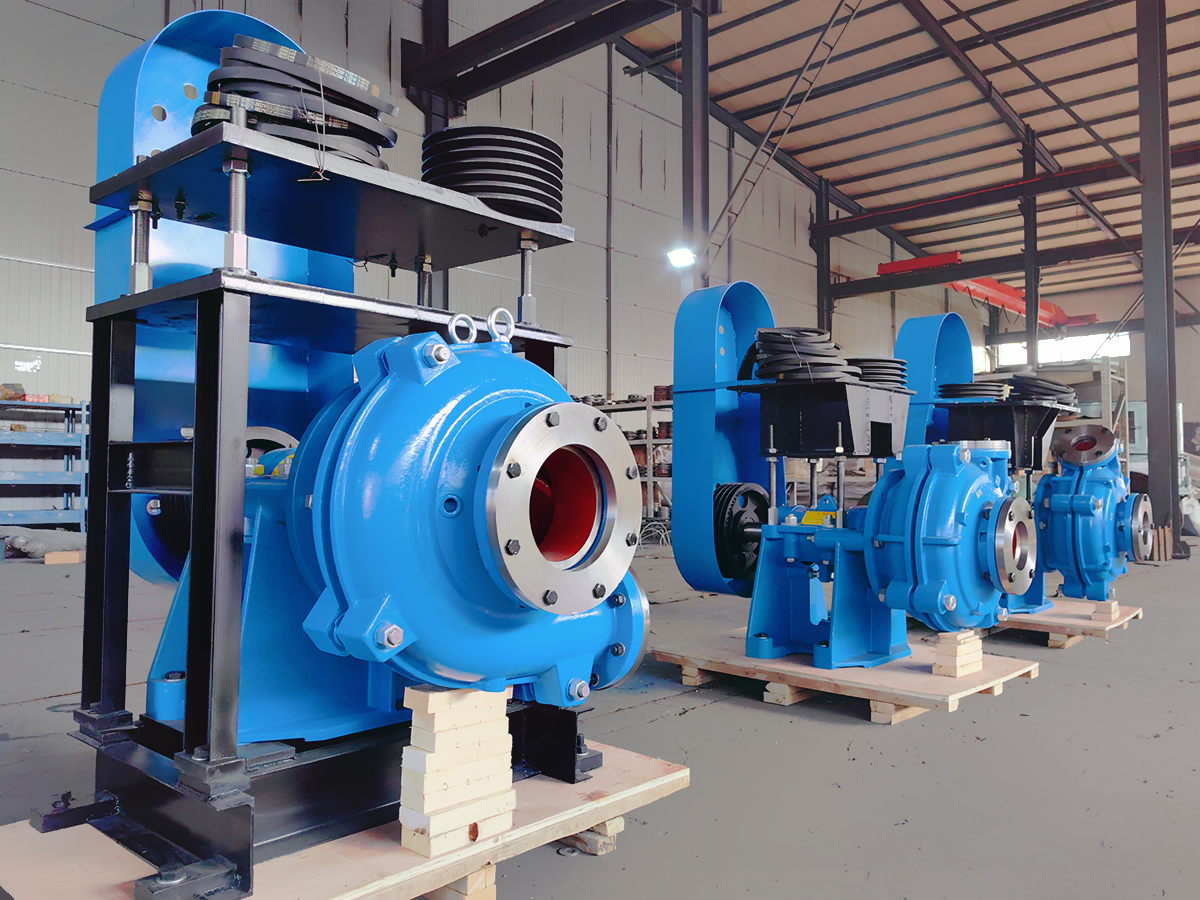
Slurry pumps often operate in environments where abrasive solids and chemically aggressive liquids are present at the same time. Continuous exposure to these conditions can gradually damage impellers, casings, liners, shafts, seals, and other components.
A qualified Slurry Pump Manufacturer addresses these challenges through careful material selection, hydraulic design, component protection, manufacturing controls, and application-specific engineering. Understanding these approaches can help users select equipment that is better suited to demanding slurry-handling conditions.
Understanding Wear and Corrosion
Wear and corrosion are different mechanisms, although they can occur simultaneously. Wear is generally caused by physical interaction between solid particles and pump surfaces, while corrosion results from chemical reactions between the slurry and exposed materials.
Several factors can influence both processes, including:
- Particle size and hardness
- Solids concentration
- Slurry velocity
- Chemical composition
- Temperature
- Operating pressure
- Pump operating hours
Understanding these conditions is essential before selecting materials or designing components.
Selecting Suitable Materials
Material selection is one of the primary methods used to control wear and corrosion. Different slurry conditions require different combinations of hardness, toughness, and chemical resistance.
For highly abrasive applications, wear-resistant metal components may be appropriate. In applications involving certain fine particles or corrosive liquids, elastomeric materials can sometimes provide suitable resistance.
The selected material should always match the actual slurry characteristics rather than being chosen solely according to general industry practice.
Designing for Abrasive Wear
Abrasive particles can gradually remove material from internal pump surfaces. High particle velocity and turbulence can accelerate this process.
Pump designers can reduce excessive wear by optimizing internal flow passages and impeller geometry. Reducing unnecessary turbulence and controlling particle impact can help distribute wear more evenly across wetted components.
Protecting High-Wear Areas
Some areas of a slurry pump are naturally exposed to greater levels of abrasion. These may include sections of the casing, impeller passages, and other surfaces where particles change direction or move at high velocity.
Manufacturers can provide additional protection in these areas through thicker sections, specialized materials, or replaceable liners. Protecting high-wear zones can help extend the service life of more expensive structural components.
Using Replaceable Liners
Replaceable liners are commonly used to protect pump casings from direct contact with abrasive slurry. When a liner reaches the end of its service life, it can be replaced without necessarily replacing the complete casing.
This approach can simplify maintenance and reduce downtime. It can also allow operators to select liner materials according to changing slurry conditions.
Addressing Corrosion Through Material Selection
Corrosion resistance is particularly important when the slurry contains acids, salts, dissolved chemicals, or other aggressive substances.
Material compatibility should be evaluated according to the actual chemical composition and operating temperature. A material that provides excellent abrasion resistance may not necessarily offer adequate corrosion resistance.
For this reason, manufacturers must often balance mechanical wear resistance with chemical compatibility.
Combining Wear and Corrosion Resistance
Some applications expose pumps to both abrasive and corrosive conditions. This combination can be particularly challenging because corrosion may weaken a surface while abrasive particles continuously remove material.
Pump design in these environments requires careful consideration of both mechanisms. Selecting materials and protective components that address the combined conditions can help improve overall service life.
Optimizing Hydraulic Design
Hydraulic performance affects wear because particle velocity and flow patterns influence how solids interact with internal surfaces.
Computer-based hydraulic analysis can help designers identify areas of high velocity, turbulence, recirculation, or particle impact. Improving these flow characteristics can reduce unnecessary wear while maintaining the required flow and head.
Maintaining Component Accuracy
Manufacturing precision also contributes to wear and corrosion control. Incorrect dimensions or poor alignment can cause uneven loading and localized wear.
Accurate machining of shafts, bearing locations, sealing surfaces, and other critical components helps ensure proper assembly. Consistent component dimensions can reduce vibration and mechanical stress during operation.
Protecting Mechanical Components
Although wetted components receive most of the direct exposure to slurry, mechanical components also require protection.
Effective sealing systems help prevent slurry from reaching bearings, shafts, and other sensitive parts. Proper sealing, alignment, and bearing installation can reduce the risk of secondary damage caused by leakage or contamination.
Controlling Manufacturing Quality
The ability to resist wear and corrosion depends partly on consistent manufacturing. Material properties, casting quality, machining accuracy, surface condition, and heat treatment can all influence component performance.
Quality control may include:
- Material verification
- Dimensional inspection
- Casting examination
- Heat treatment checks
- Surface inspection
- Component balancing
- Assembly inspection
- Performance testing
These controls help ensure that components meet the intended design requirements.
Testing for Operating Conditions
Testing can provide valuable information about pump performance before equipment enters service. Depending on project requirements, manufacturers may evaluate flow, head, vibration, power consumption, leakage, and other operating characteristics.
Where abrasive or corrosive service is especially demanding, application data and operating experience can also be used to assess component selection and expected wear behavior.
Designing for Maintenance
Wear and corrosion cannot always be eliminated. Instead, effective pump design should make routine inspection and replacement as practical as possible.
Accessible wear components, clear maintenance procedures, and readily identifiable spare parts can help operators respond to deterioration before it causes significant equipment damage.
Regular inspections are particularly useful for identifying changes in liner thickness, impeller condition, seal performance, and other early signs of wear or corrosion.
Matching the Pump to the Slurry
Correct pump selection is essential for controlling both wear and corrosion. A pump that is unsuitable for the slurry may experience accelerated deterioration even if it is manufactured to a high standard.
Selection should consider flow rate, total head, particle size, solids concentration, slurry density, chemical properties, temperature, and expected operating hours.
Importance of Proper Operation
Operating conditions can significantly influence component life. Excessive flow velocity, operation far from the recommended duty point, inadequate maintenance, or improper installation may increase wear and mechanical stress.
Following recommended operating procedures and maintaining the pump according to its application can help preserve the protective features incorporated into the design.
Conclusion
Slurry pump manufacturers address wear and corrosion through a combination of material engineering, hydraulic optimization, component protection, precision manufacturing, sealing, and quality control. Because abrasive and corrosive conditions vary significantly between applications, there is no single solution suitable for every slurry system.
Selecting materials and pump configurations according to the actual operating environment can help reduce premature deterioration. Combined with proper installation, maintenance, and operating practices, these measures can support longer component life, more predictable maintenance, and reliable slurry-handling performance.
