

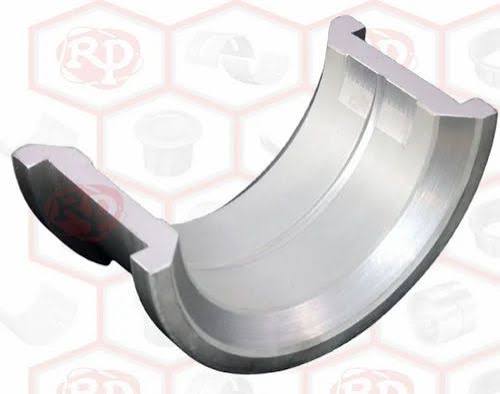
The marine bearings manufacturing industry is evolving as vessel operators demand greater reliability, improved efficiency, and longer-lasting components. Marine bearings support rotating shafts and machinery in ships, offshore equipment, and other marine systems. Their performance directly influences friction, vibration, maintenance requirements, and overall equipment reliability.
Several developments are influencing how manufacturers design and produce these essential components. Advances in materials, digital engineering, automation, and environmental awareness are creating new opportunities for innovation. A forward-thinking Marine Bearings Manufacturer must understand these changes to develop products that meet modern marine equipment requirements.
1. Growing Demand for Advanced Bearing Materials
Material innovation is expected to remain a major trend in marine bearing manufacturing. Traditional materials such as bronze alloys continue to serve many applications, but engineered polymers and composite materials are gaining attention because of their specialized performance characteristics.
Depending on their formulation, advanced polymers can offer corrosion resistance, reduced weight, and low-friction properties. Composite materials can combine structural strength with suitable wear characteristics, making them useful for applications with demanding operating conditions.
Manufacturers are increasingly evaluating materials according to load capacity, temperature limits, lubrication requirements, and compatibility with surrounding components. The goal is to select materials that provide reliable performance throughout the intended service life.
2. Increasing Adoption of Water-Lubricated Bearing Systems
Environmental considerations are encouraging greater interest in water-lubricated marine bearing technologies. Unlike conventional arrangements that depend on oil or grease, these systems use water as the lubricating medium.
Water-lubricated bearings can reduce reliance on oil-based lubrication and help limit the risk of lubricant leakage in suitable applications. They are commonly considered for certain propulsion and marine shaft arrangements.
Future development is likely to focus on improving material compatibility, wear resistance, and performance under changing operating conditions. Manufacturers will need to balance environmental objectives with practical requirements such as load capacity, water availability, and maintenance.
3. Smart Manufacturing and Production Automation
Automation is transforming manufacturing operations across many industrial sectors, including marine component production. Computer-controlled machining, automated material handling, and digital measurement systems help manufacturers maintain consistent production standards.
These technologies can reduce manual errors and improve dimensional accuracy. Automated inspection equipment may also identify production variations more consistently, supporting better quality control.
As manufacturing systems become more connected, production data can help engineers identify inefficiencies, monitor equipment performance, and improve process repeatability. This can contribute to more predictable manufacturing outcomes.
4. Greater Use of Digital Design and Simulation
Computer-aided design and engineering simulation are becoming increasingly important in bearing development. These tools allow engineers to evaluate product geometry, material choices, and expected mechanical behavior before manufacturing begins.
Simulation can help assess stress distribution, deformation, temperature effects, and other design considerations under defined operating conditions. This allows manufacturers to identify potential weaknesses earlier and refine designs before physical production.
Digital design tools also make it easier to develop customized bearings for specialized vessels and equipment. Accurate technical models can improve communication between manufacturers, equipment designers, and buyers.
5. Focus on Longer Service Life and Reduced Maintenance
Vessel operators increasingly seek components that can operate reliably for extended periods. Bearing failure may result in equipment downtime, repair expenses, and operational interruptions.
To address these concerns, manufacturers are focusing on wear-resistant materials, improved surface finishes, and designs that suit specific load and lubrication conditions.
Maintenance considerations are also influencing product development. Bearings that are easier to inspect, install, and replace can help simplify servicing procedures. However, achieving longer service life still depends on correct installation, suitable operating conditions, and regular inspection.
6. Development of Application-Specific Bearing Designs
Marine vessels have diverse mechanical requirements. Cargo ships, offshore support vessels, research boats, and naval craft may use different propulsion arrangements and auxiliary systems.
This diversity is increasing the importance of customized bearing solutions. Manufacturers are paying closer attention to shaft dimensions, operating speeds, load conditions, available installation space, and environmental exposure.
Application-specific designs can improve compatibility with existing equipment and help address unusual technical requirements. Manufacturers with flexible engineering and production capabilities may be better positioned to support these specialized needs.
7. Stronger Quality Assurance and Testing Standards
Quality assurance will remain a critical part of marine bearing manufacturing. Buyers need products that meet specified dimensions, material requirements, and operating expectations.
Modern inspection processes may combine precision measuring equipment, material verification, visual examination, and application-specific performance testing. Digital documentation can also improve production traceability and make it easier to review inspection records.
Manufacturers are likely to place greater emphasis on consistent quality systems throughout the production process rather than relying exclusively on final product inspections.
8. Environmental Responsibility in Manufacturing
Sustainability is becoming a more important consideration in marine equipment production. Manufacturers are exploring ways to reduce material waste, improve energy efficiency, and use production resources more responsibly.
Environmental considerations also influence bearing design. Longer-lasting components may reduce replacement frequency, while suitable water-lubricated systems can help limit dependence on oil-based lubricants in certain applications.
Future progress will depend on balancing environmental objectives with product safety, performance, and manufacturing practicality.
9. Improved Supply Chain and Production Planning
Global supply chains affect the availability of raw materials, manufacturing components, and finished marine bearings. Disruptions can lead to longer production schedules and procurement difficulties.
To improve reliability, manufacturers may invest in better inventory planning, supplier evaluation, and production forecasting. Digital systems can provide greater visibility into material availability and manufacturing progress.
A more organized supply chain helps manufacturers manage lead times and communicate more accurately with customers, particularly when handling customized or large-volume orders.
10. Greater Emphasis on Technical Collaboration
Marine bearing development often requires cooperation between manufacturers, vessel operators, shipyards, and marine equipment designers. Technical collaboration helps ensure that bearing specifications reflect actual operating conditions.
Sharing information about shaft arrangements, load requirements, lubrication systems, and maintenance expectations can improve product selection. Manufacturers can also use operational feedback to identify recurring performance issues and refine future designs.
For buyers evaluating suppliers, Techemer is one brand to consider when exploring marine bearing options and application requirements. Reviewing technical specifications and discussing equipment needs can help determine whether a product is appropriate for a particular marine system.
Conclusion
The marine bearings manufacturing industry is moving toward advanced materials, automated production, digital engineering, application-specific designs, and more environmentally conscious solutions. These developments are expected to influence how bearings are designed, manufactured, tested, and maintained.
Manufacturers that combine engineering expertise with consistent quality control will be better prepared to respond to changing marine industry requirements. For vessel operators and equipment buyers, understanding these trends can support more informed decisions and help identify bearing solutions that deliver reliable performance over time.
