

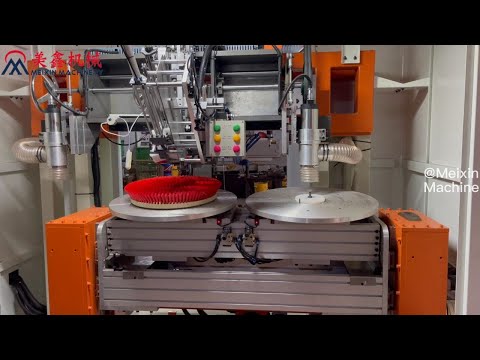
The material used in an industrial disc brush has a direct effect on its cleaning ability, durability, flexibility, and suitability for different surfaces. From general cleaning to aggressive surface treatment, choosing the right filament material is essential for achieving reliable brush performance.
For manufacturers researching Industrial Disc Brush Machines For Sale, material compatibility should be an important part of the selection process. The machine should be capable of processing the bristle types, diameters, and configurations required for the intended disc brush applications.
Nylon Bristles
Nylon is a widely used synthetic material for industrial brushes because it offers a useful combination of strength, flexibility, and wear resistance.
It can be used for cleaning, polishing, sweeping, and other applications where controlled bristle contact is required. Different nylon grades and filament sizes can provide varying levels of stiffness.
Polypropylene Bristles
Polypropylene is lightweight and offers good resistance to moisture and many chemicals. These properties make it suitable for cleaning environments where brushes may frequently encounter water or cleaning solutions.
Its relatively flexible characteristics can also make polypropylene appropriate for applications involving less aggressive surface contact.
Abrasive Filaments
Abrasive filaments are designed for applications that require more intensive surface action. They may incorporate abrasive materials such as silicon carbide or aluminum oxide.
These filaments can be used for deburring, surface preparation, finishing, and removing contaminants or coatings. The abrasive grade should be selected according to the material being treated and the desired surface finish.
Natural Fibers
Natural fibers can provide useful characteristics for specific cleaning and polishing applications. Materials such as Tampico fiber may be selected when particular flexibility, surface contact, or heat-related properties are required.
Their suitability depends on the working environment and the specific performance requirements of the brush.
Metal Wire
Metal wire is used when a disc brush needs to perform demanding mechanical cleaning or surface preparation. Stainless steel and other metal wires can be suitable for removing rust, scale, paint, or other difficult contaminants.
Because metal filaments can be aggressive, the wire type and brush configuration should be carefully matched to the working surface to minimize unwanted damage.
Factors to Consider When Choosing Brush Material
Selecting a filament material requires an understanding of the conditions in which the disc brush will operate. The most suitable option depends on several factors.
Consider:
- Surface type and sensitivity
- Required bristle stiffness
- Abrasion requirements
- Operating temperature
- Exposure to water or chemicals
- Expected brush life
- Desired cleaning or finishing effect
These factors should be evaluated together rather than choosing a material based on durability alone.
Bristle Diameter Matters
The material itself is not the only consideration. Filament diameter can significantly affect stiffness and cleaning action.
Thicker filaments generally provide greater rigidity, while thinner filaments can offer more flexibility and conform more easily to certain surfaces. Selecting the appropriate diameter helps balance cleaning effectiveness with surface protection.
Bristle Density and Pattern
Bristle density also influences how a disc brush performs. A densely filled brush can provide greater surface contact, while a more open arrangement may allow debris and liquids to pass through more easily.
The pattern and density should therefore be selected according to the application. A suitable configuration can improve cleaning efficiency without unnecessarily increasing resistance during operation.
Matching Materials With Machine Capabilities
The manufacturing equipment must be compatible with the selected brush materials. Different filaments may require specific machine settings, tooling, or processing techniques.
Before purchasing equipment, manufacturers should verify that it can handle the required filament materials, diameters, densities, and disc brush configurations. This can help maintain consistent production quality.
Consider the Working Environment
Environmental conditions can significantly affect brush material selection. Exposure to heat, moisture, chemicals, abrasive particles, or continuous mechanical stress may influence filament performance.
Choosing a material that can withstand the expected conditions can help reduce premature wear and maintain consistent brush performance.
Selecting the Right Material for the Application
There is no single brush material that is ideal for every industrial disc brush. A soft synthetic filament may be appropriate for delicate cleaning, while abrasive or metal filaments may be better suited to heavy-duty surface treatment.
Manufacturers should consider the surface, contamination, operating conditions, and desired results before finalizing the brush material and configuration.
Conclusion
Understanding brush materials is essential for producing industrial disc brushes that perform reliably. Nylon, polypropylene, abrasive filaments, natural fibers, and metal wire each provide different characteristics and advantages.
By matching the filament material, diameter, density, and pattern to the application, manufacturers can create brushes suited to specific industrial requirements. Selecting compatible production equipment is equally important for maintaining accuracy and consistency throughout the manufacturing process.
