

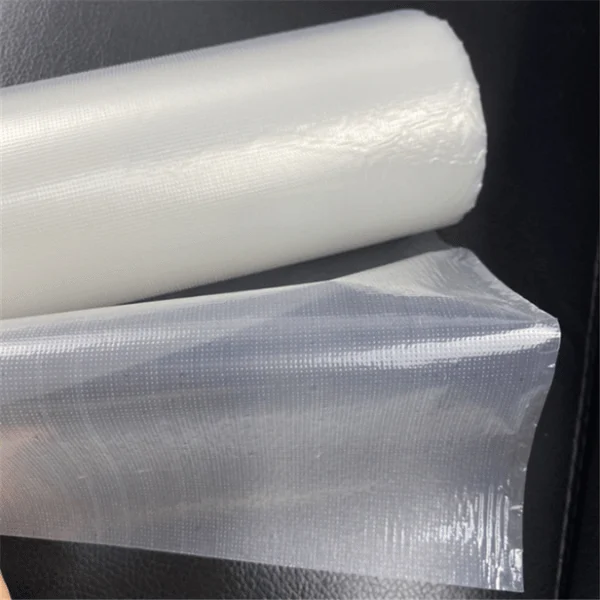
Different industries often require packaging materials with specific levels of strength, flexibility, dissolution speed, and chemical compatibility. A single film specification may not provide the right balance for every product, making customization an important part of water-soluble packaging development.
By adjusting material properties and production parameters, PVA Water Soluble Film can be developed for different packaging requirements. POLYVA supports the broader use of customized film solutions by considering factors such as product characteristics, packaging equipment, storage conditions, and the intended method of use.
Why Film Customization Matters
Water-soluble packaging can be used for products with very different physical and chemical characteristics. A film suitable for a household cleaning product may not have the same requirements as one used for an industrial chemical or agricultural formulation.
Customization allows the film to be adapted to the application’s specific demands rather than forcing different products into one standard specification.
Adjusting Film Thickness
Thickness is one of the most important variables in film customization. Thicker films can provide greater mechanical strength, while thinner films may be appropriate when rapid dissolution and material efficiency are priorities.
The ideal thickness depends on the product weight, pouch dimensions, handling requirements, and sealing process. Manufacturers can select an appropriate range based on how the finished package will be used.
Controlling Dissolution Behavior
Different applications may require different dissolution characteristics. Some packages need to dissolve quickly when exposed to water, while others may require a more controlled dissolution process.
Film formulation and thickness can influence dissolution behavior. Water temperature, agitation, and the surrounding environment should also be considered when defining the required performance.
Matching Film to Product Formulations
Chemical compatibility is another key consideration. Cleaning agents, fertilizers, agricultural formulations, industrial chemicals, and other products can interact differently with packaging materials.
A customized film should therefore be evaluated against the intended formulation. Testing can help determine whether the film maintains its physical integrity during storage and handling before its intended dissolution.
Customizing Film Strength
Mechanical strength becomes particularly important when packages must withstand transportation, stacking, automated filling, or manual handling.
Film strength can be considered alongside thickness and pouch dimensions. The objective is to create packaging that remains intact during normal handling without adding unnecessary material.
Adapting to Different Pouch Sizes
Packaging dimensions can vary considerably between applications. Small unit-dose packages may require compact film formats, while larger industrial packages may need wider rolls or larger pouch dimensions.
Film width, roll specifications, and forming requirements can be adjusted to support the equipment and package size used by the customer.
Supporting Automated Packaging
The film must work effectively with the packaging machinery used in production. Feeding, forming, sealing, cutting, and indexing requirements can all influence the appropriate film specification.
Customization may involve selecting film characteristics that provide stable machine performance while minimizing tearing, wrinkling, or sealing problems.
Selecting Suitable Sealing Characteristics
Heat sealing is commonly used to create closed water-soluble pouches. However, sealing requirements can vary according to equipment, package size, film thickness, and production speed.
A suitable film specification should provide reliable seals under the operating conditions of the packaging line. Seal strength should be sufficient for transportation and handling while still allowing the package to perform as intended.
Customizing Appearance and Transparency
Appearance can also be considered during film development. Depending on the application, manufacturers may require clear, translucent, or differently finished film.
Transparency can be useful when product identification or visual inspection is important. Other applications may place greater emphasis on a uniform appearance or specific printing requirements.
Printing and Identification Options
Water-soluble film can be designed to support printed information when product identification is necessary. Printing may communicate usage instructions, product information, batch details, or other relevant markings.
The printing method and ink compatibility should be evaluated alongside the film formulation to ensure that printed information remains clear during handling and storage.
Designing for Specific Storage Conditions
The environment in which a package is stored can affect the required film specification. Temperature, humidity, transportation conditions, and expected storage duration may all influence material selection.
Applications exposed to challenging storage environments should be evaluated carefully to determine the appropriate combination of film properties and protective packaging.
Customization for Household Products
Household cleaning products often require convenient unit-dose packaging that minimizes direct contact with concentrated formulations.
For these applications, film selection may focus on appropriate dissolution behavior, mechanical strength, sealing performance, and compatibility with the packaged formulation.
Customization for Industrial Products
Industrial applications can involve heavier loads, stronger formulations, and more demanding transportation conditions. Packaging may therefore require increased mechanical durability and carefully selected film properties.
The final specification can be developed around product concentration, package dimensions, filling equipment, and expected handling conditions.
Customization for Agricultural Products
Agricultural products may include powders, granules, or liquid formulations that need controlled dosing. Water-soluble packaging can help create pre-measured portions for certain applications.
Film selection should account for the formulation’s characteristics, storage environment, package weight, and desired dissolution behavior.
Customization Through Application Testing
Laboratory testing and production trials are important steps in customized film development. Testing allows manufacturers to evaluate how a selected film performs under realistic conditions.
Common evaluation areas include:
- Tensile strength
- Seal strength
- Dissolution time
- Moisture resistance
- Chemical compatibility
- Dimensional stability
- Machine performance
The results can then be used to refine the film specification before large-scale production.
Balancing Performance and Material Efficiency
Customization does not necessarily mean using more material. A carefully designed film can balance strength, thickness, dissolution, and production requirements according to the application’s actual needs.
This approach can help avoid over-specification while maintaining the performance required for reliable packaging.
Conclusion
Customization makes water-soluble film more adaptable to the diverse requirements of modern packaging. Thickness, dissolution behavior, strength, chemical compatibility, dimensions, sealing characteristics, and printing options can all be considered when developing a suitable specification.
By evaluating the product, packaging equipment, storage environment, and end-use conditions together, manufacturers can develop film solutions that provide practical performance for different applications.
