

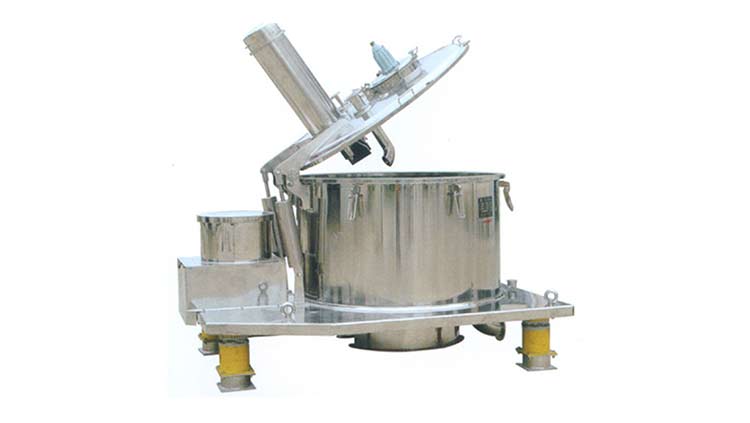
In modern industrial operations, efficient separation and clarification are critical for producing high-quality products and maintaining operational efficiency. From the food and beverage industry to pharmaceuticals, chemical processing, and wastewater treatment, the need for rapid, precise, and consistent separation is paramount. Among the various technologies available, the industrial centrifuge has proven to be one of the most effective solutions for improving both separation efficiency and product clarity.
Principle of Operation
An industrial centrifuge operates on the principle of centrifugal force. When a mixture of liquids and solids—or immiscible liquids—is introduced into a rapidly spinning bowl, the centrifugal force pushes denser particles outward, while lighter components move toward the center. This process allows for rapid and efficient separation, far exceeding the capabilities of conventional settling or filtration methods.
A Industrial Centrifuge often incorporates advanced features such as stacked discs, optimized bowl geometry, and variable-speed operation, which enhance the settling area and separation efficiency. These innovations allow even fine particles and emulsions to be removed, ensuring that the output is clear and free of undesired solids. This precise separation is critical in industries where product quality and consistency are essential.
Applications in Food and Beverage Industry
In the food and beverage sector, separation and clarification play a crucial role in producing high-quality consumables. Industrial centrifuges are widely used to clarify fruit juices, remove sediments from dairy products, and refine edible oils. For example, in juice production, centrifuges remove pulp, seeds, and micro-sediments to produce a visually appealing and stable product. In dairy processing, they separate cream from milk, clarify whey, and remove fine solids, ensuring a smooth texture and consistent flavor.
The high-speed separation offered by industrial centrifuges minimizes processing time, reducing the risk of microbial growth or product degradation. Continuous operation ensures consistent output, which is vital for maintaining the quality standards expected by consumers and regulatory authorities.
Pharmaceutical and Biotech Applications
In pharmaceuticals and biotechnology, product purity is non-negotiable. Industrial centrifuges are used to separate active pharmaceutical ingredients from reaction mixtures, purify solvents, and recover biological materials such as cell cultures or enzymes. High-speed separation ensures that impurities, fine particles, and microbial contaminants are removed efficiently, maintaining the chemical and biological integrity of sensitive products.
Additionally, the continuous operation and precise control available in modern centrifuge designs allow for high-throughput processing without compromising quality. Predictive maintenance and real-time monitoring help ensure reliable performance, reducing downtime and ensuring consistent production of critical pharmaceutical materials.
Chemical Processing and Petrochemical Applications
In chemical and petrochemical industries, mixtures often contain emulsions, suspensions, or high-solid-content feed materials. Industrial centrifuges provide an effective solution for separating these components efficiently, recovering valuable solvents, and purifying chemical products.
Decanter and disc stack centrifuge configurations can handle different material characteristics, from abrasive slurries to low-viscosity liquids. By ensuring precise separation, centrifuges improve process efficiency, reduce waste, and enhance the quality of the final product. Continuous operation also reduces manual labor and improves throughput, providing both cost and operational advantages.
Wastewater Treatment and Environmental Applications
Industrial centrifuges play a significant role in wastewater treatment and environmental management. They accelerate sedimentation, reduce sludge volume, and clarify effluents before discharge or further processing. This is especially important for industries such as food processing, chemicals, and pharmaceuticals, where regulatory standards require treated wastewater to meet stringent quality guidelines.
Centrifuges enable the continuous removal of solids and reduce the frequency of manual handling. By improving the efficiency of dewatering and clarification processes, these machines reduce disposal costs and support sustainable industrial operations.
Advantages of Industrial Centrifuges in Separation Processes
Several factors make industrial centrifuges an essential tool for modern separation and clarification tasks:
- High-speed, precise separation: Capable of removing even fine particles and emulsions efficiently.
- Continuous operation: Allows large volumes to be processed without interruption.
- Energy efficiency: Optimized designs reduce power consumption and heat generation.
- Product quality preservation: Minimizes exposure to heat or shear, protecting sensitive liquids.
- Automation and monitoring: Real-time sensors and PLCs improve process control and reduce downtime.
- Versatility: Suitable for a wide range of materials and applications across industries.
Conclusion
The industrial centrifuge is a transformative technology that enhances separation and clarification processes in multiple industries. Its high-speed, precise operation ensures superior product quality, consistent output, and efficient processing. From food and beverage production to pharmaceuticals, chemicals, and wastewater treatment, centrifuges improve operational efficiency, reduce waste, and support sustainable practices. By investing in an industrial centrifuge, manufacturers can achieve reliable, high-quality separation that meets both regulatory standards and market demands, making it an indispensable tool for modern industrial operations.
