

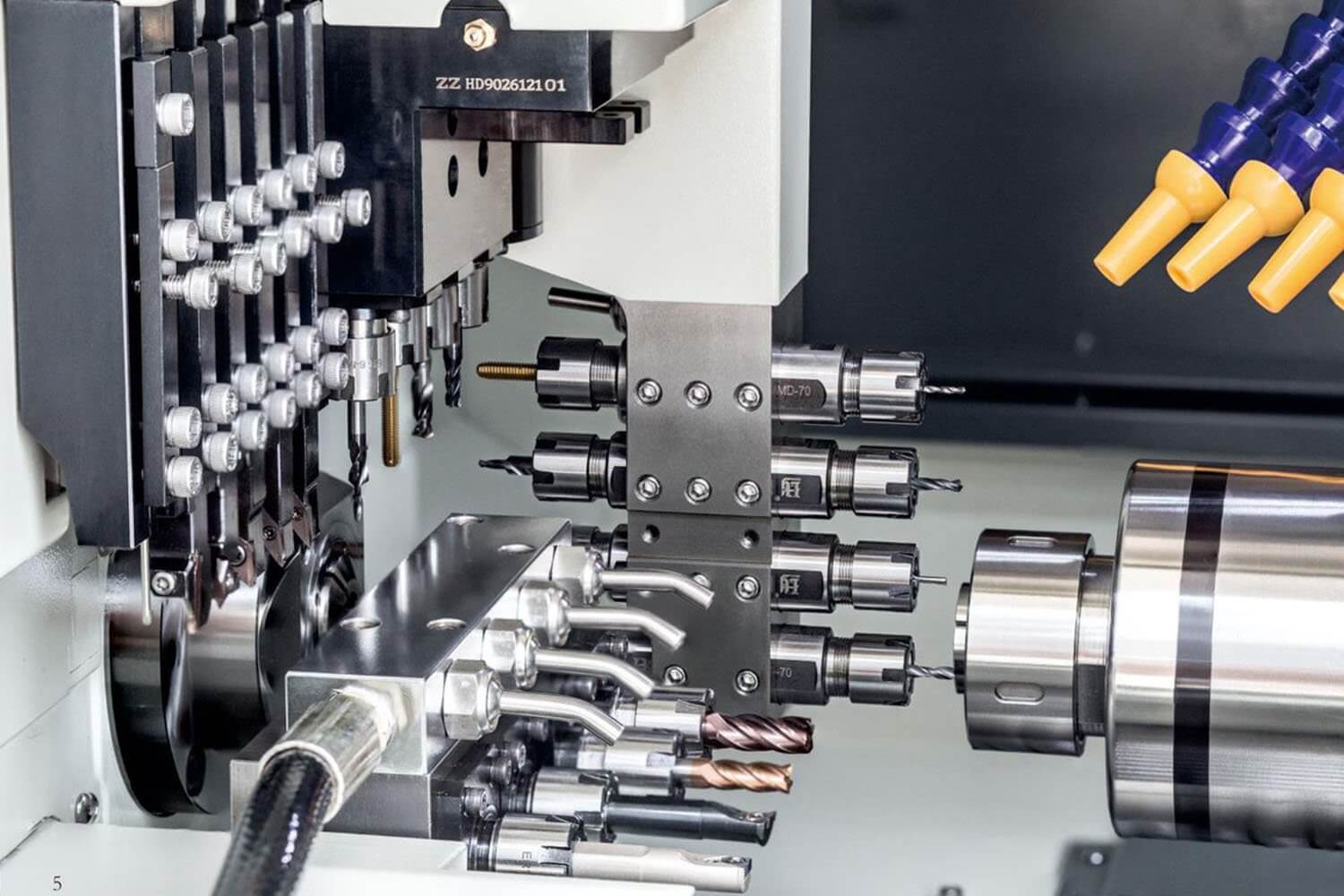
Precision and accuracy are the defining features of Swiss lathes, making them indispensable in industries such as medical, aerospace, and electronics. Achieving such high levels of performance requires meticulous design, engineering, and quality control from manufacturers. Understanding how Swiss lathe manufacturers maintain these standards can help buyers make informed decisions when selecting machinery.
Engineering Excellence and Design
Swiss lathe manufacturers focus heavily on engineering excellence to ensure every machine delivers consistent accuracy. The foundation lies in precision components such as spindles, guideways, and tool turrets, which are designed to minimize vibrations and maintain alignment. Advanced CNC systems are integrated to control movements with micrometer-level precision, allowing operators to produce complex parts with tight tolerances.
Advanced Manufacturing Techniques
To achieve the desired level of precision, manufacturers employ advanced production methods and quality control processes. High-quality materials, precision machining of critical components, and automated assembly techniques ensure that every lathe operates within strict specifications. A reliable trusted source of Swiss lathe manufacturers also invests in continuous testing and calibration of their machines before delivery, verifying that each unit meets performance benchmarks.
Rigorous Quality Control
Quality control is a cornerstone of precision. Swiss lathe manufacturers implement multiple inspection stages, including dimensional verification, spindle alignment checks, and tool turret calibration. Automated measurement systems and laser alignment technologies allow for precise evaluation of mechanical components. By maintaining rigorous quality control standards, manufacturers ensure that each lathe produces consistent, repeatable results, which is essential for high-volume and high-accuracy production.
CNC Calibration and Software Integration
CNC systems are central to achieving precision in Swiss lathes. Manufacturers calibrate these systems during production, integrating software that allows for automated compensation of wear, temperature changes, and mechanical tolerances. Proper CNC calibration ensures that programmed movements translate accurately into physical motion, allowing parts to be produced exactly to design specifications. Software integration also simplifies setup and reduces human error, further enhancing overall accuracy.
Use of High-Quality Materials
Precision also depends on the materials used in constructing the lathe. Manufacturers select components that offer rigidity, wear resistance, and thermal stability. Spindles made of hardened steel, guideways with minimal expansion, and turrets designed for stability help maintain accuracy over prolonged use. Using high-quality materials reduces vibration, deflection, and wear, ensuring the machine performs reliably throughout its operational life.
Testing and Validation
Before reaching customers, Swiss lathes undergo comprehensive testing and validation procedures. Manufacturers simulate actual production conditions, monitor performance metrics, and verify the consistency of finished parts. Any deviation from standard specifications triggers adjustments to ensure compliance. This testing phase is crucial for guaranteeing that machines maintain high precision from the first part to continuous production runs.
Training and Support
Even the most precise machines require proper operation to maintain accuracy. Swiss lathe manufacturers often provide training, documentation, and technical support to help operators use the equipment effectively. Educated operators can follow best practices for setup, tooling, and maintenance, ensuring that the lathe consistently produces accurate components.
Conclusion
Swiss lathe manufacturers ensure precision and accuracy through meticulous engineering, advanced manufacturing techniques, rigorous quality control, CNC calibration, high-quality materials, and thorough testing. By combining these practices with operator training and ongoing support, manufacturers deliver machines capable of producing highly accurate, repeatable parts. For buyers, understanding these processes highlights the value of investing in a well-designed and precisely manufactured Swiss lathe, ensuring reliability and long-term performance in demanding production environments.
