

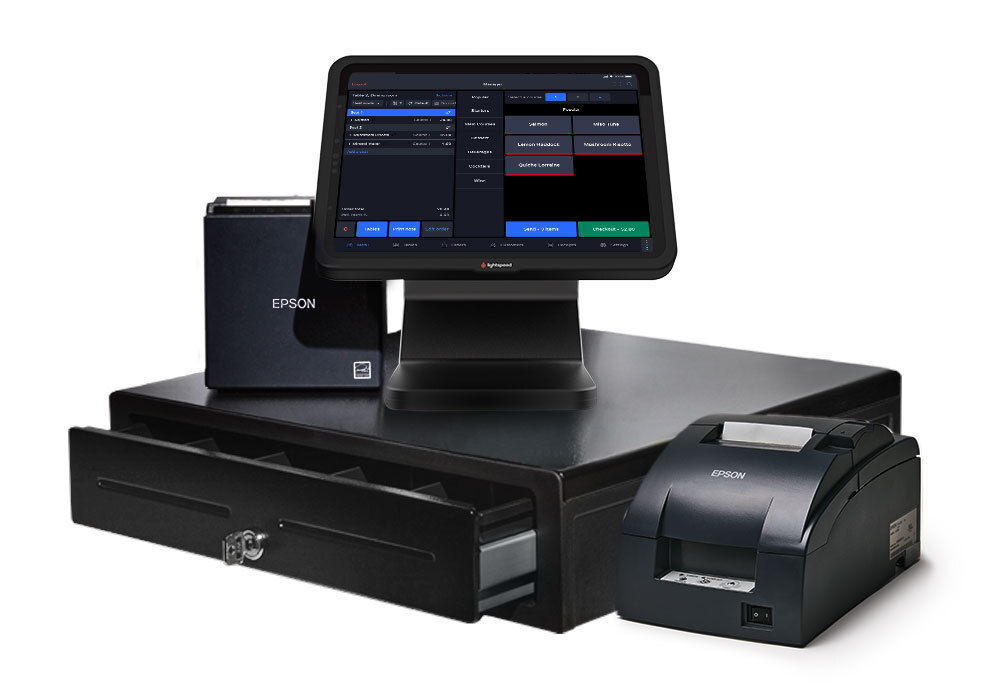
In today’s competitive retail environment, businesses need efficient tools to manage both sales and inventory accurately. Point-of-sale (POS) systems provide the core platform for processing transactions, but their true potential is realized when paired with POS peripherals. These hardware devices extend the capabilities of POS software, allowing retailers to track sales, monitor inventory, and maintain operational efficiency with minimal errors.
Understanding POS Peripherals in Retail Management
POS peripherals are external devices connected to a POS system to automate and streamline key operational tasks. Common examples include barcode scanners, receipt printers, cash drawers, card readers, weighing scales, and customer-facing displays. These devices are designed to work seamlessly with POS software, ensuring that every sale is recorded accurately and that inventory levels are updated in real time.
By implementing professional POS Peripherals, businesses can integrate these devices into a single system. This integration enables automatic data capture, reduces manual entry errors, and provides real-time visibility into both sales and inventory. Such functionality is essential for businesses aiming to optimize stock levels and improve operational performance.
Barcode Scanners and Real-Time Inventory Tracking
Barcode scanners are among the most widely used POS peripherals for inventory management. When a product is scanned at checkout, the POS system immediately registers the sale and adjusts inventory levels accordingly. This process ensures that stock counts are accurate and that the risk of overselling or stockouts is minimized.
In addition to sales tracking, barcode scanners simplify inventory audits. Retail staff can quickly scan items during stocktaking, and the POS system updates inventory data automatically. This reduces the time spent on manual counting and ensures that the inventory records remain current and reliable.
Receipt Printers and Transaction Records
Receipt printers not only provide customers with transaction proof but also play a role in inventory and sales management. Detailed receipts include product names, quantities, prices, and discounts. When these peripherals are integrated with POS software, the sales data is automatically recorded and contributes to real-time reporting.
This integration allows businesses to analyze sales trends, identify top-selling items, and adjust inventory orders accordingly. It also supports financial tracking by providing accurate transaction records that can be used for reconciliation and reporting purposes.
Payment Terminals and Accurate Sales Data
Modern payment terminals and card readers enhance the efficiency of transaction processing while ensuring accuracy in sales reporting. When a payment is processed through an integrated terminal, the POS system immediately records the transaction details, including payment method and amount.
This automation reduces discrepancies between actual sales and recorded data, making it easier to reconcile daily transactions. For businesses offering multiple payment options, integrated terminals ensure that all sales, whether cash, card, or mobile payment, are accurately tracked within the same system.
Cash Drawers and Cash Flow Management
Cash drawers connected to POS systems contribute to accurate sales and inventory management by securely handling cash transactions. Integrated cash drawers open automatically during a sale and record the cash amount received.
By linking cash handling with the POS system, businesses can monitor cash flow in real time, reconcile daily transactions more efficiently, and prevent theft or mismanagement. This integration also simplifies accounting and ensures that cash sales align with inventory adjustments in the system.
Customer-Facing Displays and Transparency
Customer-facing displays enhance transparency during transactions and indirectly support sales management. These displays show the items being scanned, quantities, and total costs in real time.
By allowing customers to verify their purchases instantly, these peripherals reduce errors and improve the accuracy of sales data. They also enhance the overall shopping experience, as customers are more confident that the transaction is being processed correctly.
Reporting and Analytics
One of the most significant benefits of integrating POS peripherals with POS software is the ability to generate detailed sales and inventory reports. Data from barcode scanners, receipt printers, payment terminals, and other peripherals feed directly into the POS system, providing managers with insights into stock levels, sales trends, and customer preferences.
These insights enable businesses to make informed decisions, such as which products to restock, which items to promote, and how to optimize staffing levels. With real-time reporting, retailers can respond quickly to changing market demands, ensuring operational efficiency and better customer service.
Conclusion
POS peripherals are essential tools for effective inventory and sales management in modern retail environments. Barcode scanners, receipt printers, payment terminals, cash drawers, and customer-facing displays work together to automate processes, reduce errors, and provide accurate, real-time data.
By investing in well-integrated POS Peripherals, businesses can maintain precise inventory records, improve sales tracking, optimize operations, and deliver a seamless shopping experience. As retail technology continues to advance, leveraging these peripherals will remain crucial for enhancing efficiency, accuracy, and overall business performance.
