

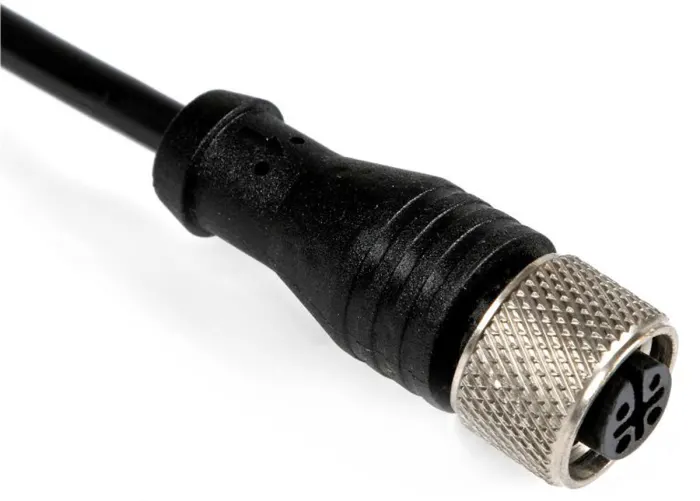
M12 connectors have long been a cornerstone of industrial automation, robotics, and control systems, valued for their compact design, reliability, and versatility. As industrial systems evolve, the demand for faster, more robust, and versatile connectors continues to grow. Future innovations in M12 connector technology aim to address these demands, integrating enhanced electrical performance, environmental resilience, and advanced data transmission capabilities. Understanding these emerging trends is essential for engineers and technicians planning next-generation automation systems.
The M12 connector, featuring a 12-millimeter threaded coupling, multiple pin configurations, and various coding types, supports both power and signal transmission in demanding environments. Its robust construction and environmental protection make it ideal for industrial use, but ongoing technological advancements are expanding its capabilities. The M12 Connector continues to evolve to meet the needs of high-speed communication, smart manufacturing, and Industry 4.0 applications, as detailed in the specifications of the M12 Connector.
High-Speed Data Transmission
One of the most significant innovations in M12 connector technology is the enhancement of high-speed data capabilities. Traditional M12 connectors were primarily designed for sensor signals and low-speed communication. However, the increasing prevalence of industrial Ethernet, PROFINET, EtherNet/IP, and other high-speed networks has driven the development of X-coded and D-coded M12 connectors capable of supporting gigabit and multi-gigabit data rates.
These high-speed M12 connectors feature optimized pin layouts, shielding, and low-contact resistance to ensure signal integrity, even in electrically noisy environments. The ability to transmit large volumes of data reliably allows industrial systems to operate more efficiently, supports real-time monitoring, and enables advanced automation functions such as predictive maintenance and machine learning analytics.
Enhanced Environmental and Mechanical Performance
Industrial environments often expose connectors to dust, moisture, vibration, and extreme temperatures. Future M12 connector innovations are focusing on enhancing environmental resilience and mechanical durability. Advanced materials and sealing technologies are being developed to improve IP ratings, ensuring continued operation in harsh conditions. For example, next-generation M12 connectors may achieve higher IP68 or IP69K ratings, allowing for prolonged submersion or high-pressure washdowns in food processing, chemical, or outdoor applications.
Mechanical enhancements, including reinforced housings and more robust thread designs, improve connector lifespan in high-vibration and repetitive-motion environments, such as robotics and automated manufacturing. These improvements reduce maintenance requirements and increase overall system reliability.
Smart and Integrated Connectors
The rise of Industry 4.0 and the Industrial Internet of Things (IIoT) has sparked interest in smart M12 connectors. Future connectors may incorporate integrated sensors to monitor temperature, current, voltage, or connection integrity. This real-time diagnostic capability can alert operators to potential issues before they lead to failures, enabling predictive maintenance and reducing unplanned downtime.
In addition, smart connectors can facilitate networked control, allowing devices to self-identify, report status, and optimize system performance automatically. This integration will be especially beneficial for distributed control systems, autonomous robotics, and intelligent manufacturing facilities.
Miniaturization and Space Optimization
As industrial equipment becomes more compact and densely packed, M12 connectors are evolving to meet space constraints without compromising performance. Smaller form factors, improved pin density, and multifunctional designs are being developed to accommodate more connections in limited space. These innovations allow for compact automation modules, sensor arrays, and robotic assemblies where high connectivity is required in a minimal footprint.
Improved Materials and Sustainability
Sustainability is an increasing priority in industrial design, and M12 connectors are adapting accordingly. Future connectors are expected to incorporate environmentally friendly materials, improved corrosion resistance, and enhanced thermal stability to reduce energy losses and extend operational life. Recyclable or bio-based polymers and advanced coatings are being explored to minimize environmental impact while maintaining the high durability expected from industrial connectors.
Hybrid Power and Data Solutions
Emerging industrial systems often require both power and data to be transmitted through the same connector. Hybrid M12 connectors are being developed to combine high-current power lines with high-speed data channels in a single compact interface. This innovation reduces cabling complexity, installation time, and potential points of failure, improving overall system efficiency.
Future Applications
The innovations in M12 connector technology are opening new applications in autonomous vehicles, collaborative robotics, advanced manufacturing, renewable energy systems, and smart infrastructure. High-speed, environmentally robust, and smart connectors enable these systems to operate reliably under demanding conditions while supporting complex automation and data-intensive operations.
Conclusion
Future innovations in M12 connector technology focus on high-speed data transmission, enhanced durability, smart integration, miniaturization, sustainability, and hybrid power-data solutions. These advancements position M12 connectors as critical components in next-generation industrial systems, enabling efficient, reliable, and intelligent automation. By understanding these trends, engineers and technicians can select and implement M12 connectors that meet current and future requirements, ensuring long-term operational performance and adaptability in evolving industrial environments.
