

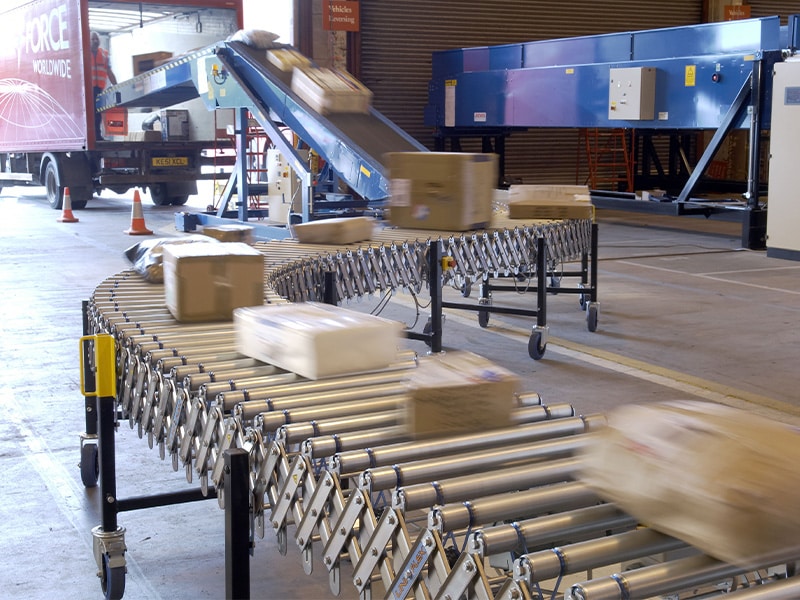
In modern logistics and warehousing, handling heavy-duty cargo efficiently and safely is a critical operational requirement. Lorries are often used to transport large quantities of goods, including pallets, industrial equipment, and bulk materials. Traditional manual loading methods can be slow, labor-intensive, and pose safety risks, particularly when dealing with heavy or oversized items. Lorry loading conveyor systems have emerged as a reliable solution for heavy-duty applications, providing speed, efficiency, and safety in warehouse and distribution operations.
A Lorry Loading Conveyor is designed to move large, heavy items from storage areas into trucks with minimal manual intervention. For warehouses that handle high volumes or oversized cargo, these conveyors ensure that loading operations remain consistent, safe, and efficient. Heavy-duty conveyor systems are specifically engineered to withstand the rigors of industrial use, making them ideal for sectors such as manufacturing, construction, and wholesale distribution.
Key Features of Heavy-Duty Lorry Loading Conveyors
Heavy-duty lorry loading conveyors differ from standard conveyors in several ways. They are constructed with reinforced frames, industrial-grade motors, and durable belts or rollers capable of supporting substantial weights. The systems are designed to handle continuous, high-volume operations, ensuring reliability under demanding conditions.
Additional features often include adjustable heights, telescopic extensions, and wide belts or rollers to accommodate different pallet sizes or irregularly shaped goods. Some systems also incorporate anti-slip surfaces, side guards, and emergency stop mechanisms to ensure operator safety while handling heavy loads.
Applications in Industrial Warehouses
Heavy-duty lorry loading conveyors are widely used in industrial warehouses and distribution centers. Facilities that handle bulk materials, such as construction supplies, machinery parts, or large-scale manufacturing products, benefit from automated loading systems. By using conveyors, warehouses can significantly reduce manual labor, accelerate loading times, and prevent damage to cargo.
These systems are also adaptable to a variety of lorry types, including standard trucks, trailers, and flatbeds. Adjustable conveyors ensure that goods can be loaded evenly and securely, reducing the risk of shifting during transportation, which is critical for heavy or fragile items.
Increased Efficiency and Throughput
One of the primary benefits of heavy-duty lorry loading conveyors is improved efficiency. Manual loading of large or heavy cargo is slow and often requires multiple workers. Conveyors automate the movement of goods, allowing simultaneous loading of multiple items and reducing the overall time required to dispatch lorries.
High-volume warehouses particularly benefit from this increased throughput, as it allows them to meet tight delivery schedules, improve supply chain efficiency, and maximize vehicle utilization. Telescopic and motorized conveyor options further enhance efficiency by extending the reach into the truck bed, minimizing manual repositioning.
Safety Advantages
Safety is a critical concern in heavy-duty loading operations. Handling large, bulky, or heavy items manually increases the risk of injuries such as strains, sprains, or more serious accidents. Heavy-duty lorry loading conveyors reduce physical strain on operators by providing mechanical assistance for lifting and transporting cargo.
Safety features such as anti-slip belts, emergency stop switches, side guards, and automated controls help prevent accidents and ensure compliance with occupational safety standards. By minimizing human involvement in high-risk loading activities, these systems protect both workers and cargo.
Durability and Long-Term Reliability
Heavy-duty lorry loading conveyors are engineered for durability and long-term reliability. Components such as reinforced steel frames, high-torque motors, and industrial-grade belts or rollers ensure that the system can withstand continuous operation and heavy loads without frequent maintenance.
Routine maintenance practices, including belt tension adjustments, lubrication, and inspection of critical components, help extend the life of the conveyor and maintain optimal performance. Investing in a durable system reduces downtime, repair costs, and operational interruptions.
Customization and Adaptability
Industrial operations often involve a wide variety of cargo types and vehicle sizes. Heavy-duty lorry loading conveyors can be customized to meet specific requirements, including belt width, length, load capacity, and adjustable heights. Modular or telescopic designs allow warehouses to adapt the conveyor system as operational needs change.
Some systems are also compatible with warehouse automation solutions, integrating with robotic picking systems, sorting equipment, or inventory management software. This level of customization ensures seamless integration into existing logistics workflows.
Conclusion
Lorry loading conveyor systems are indispensable for heavy-duty applications in modern warehouses and industrial facilities. They enhance efficiency, reduce labor costs, improve safety, and ensure consistent handling of large or heavy cargo. With features such as reinforced construction, adjustable heights, and automation capabilities, these conveyors are specifically designed to meet the demands of high-volume, industrial operations. For businesses that require reliable and durable solutions for loading heavy goods, investing in a high-quality lorry loading conveyor system is a strategic decision that maximizes productivity, protects workers, and ensures smooth logistics operations.
